Finding Montessori Nearby
In today’s fast-paced world, many families are searching online for “Montessori near me” or “Montessori school near me,” hoping to find enriching educational opportunities for their children. It’s not uncommon for parents to seek out resources that align with their values and expectations for their child’s development. At Montessori Maria, we provide a helpful guide for locating Montessori-inspired learning environments around the world, ensuring you can find the right fit for your family.
What is Montessori?
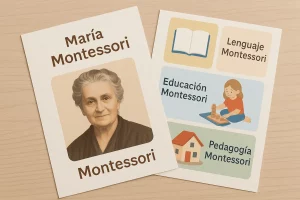
The Montessori approach to education was developed by Dr. María Montessori, an Italian physician and educator, who believed in fostering a natural curiosity within children. Rather than traditional, teacher-led methods, the Montessori method places emphasis on self-directed, experiential learning, allowing children to develop at their own pace. This approach is grounded in respect for the individual child, their interests, and their ability to learn through their own experiences.
The Montessori Environment
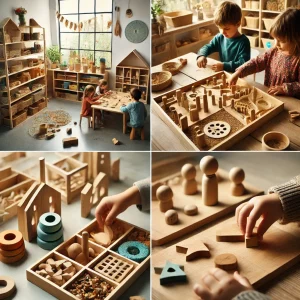
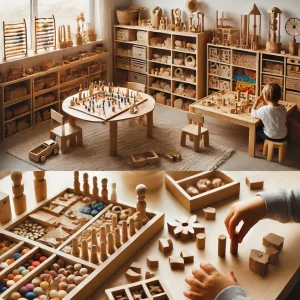
One of the most significant aspects of the método Montessori is the prepared environment. Classrooms are designed to be engaging and accessible, filled with child-sized furniture, materials, and resources that stimulate exploration and learning. Furthermore, classrooms generally feature a variety of mixed-age groups, which allows younger children to learn from older peers, while older children bolster their understanding by teaching concepts to younger students.
Real-Life Applications of Montessori at Home
Many parents are curious about how to integrate Montessori principles at home. Consider a family, the Johnsons, who discovered Montessori when they were struggling with their four-year-old son, Ben. He was exhibiting behaviors associated with independence struggles, like refusing to get dressed alone or choose his snacks. After researching, they came across the Montessori philosophy and decided to implement some ideas in their daily routine.
Creating a Montessori Home Environment
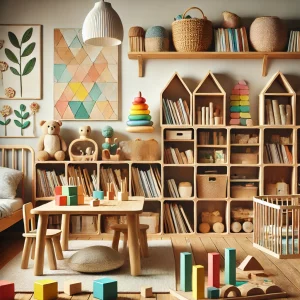
The Johnsons transformed a corner of their living room into a learning space tailored to Ben’s interests. They included low shelves filled with engaging Montessori materials—craft supplies, puzzles, and books—easily accessible for him to explore. They encouraged him to dress independently by providing clothing options he could choose from himself, rather than laying out his clothes each morning. This small adjustment made a world of difference for Ben. He felt empowered by the freedom of choice, easily learning to trust his own abilities.
The Role of Independence in Montessori Education
Fostering independence is a hallmark of pedagogía Montessori. Parents who adopt these principles can assist their children in developing self-sufficiency. For instance, when another parent, Linda, faced daily battles with her six-year-old daughter, Mia, over homework, she feared that Mia was becoming too dependent on her. After attending a local Montessori workshop, Linda learned to guide rather than perform tasks for her daughter. Linda started to introduce a routine where Mia could manage her time for homework, choosing when and where to do it herself. With a little encouragement, Mia blossomed into a more confident learner.
Error as a Learning Tool
In Montessori education, mistakes are considered an essential part of the learning process. Children are encouraged to engage with materials and solutions without the fear of failure. The Johnson family embraced this idea when Ben tried to assemble a puzzle. Initially frustrated, he soon discovered the joy of experimenting. Rather than stepping in to help right away, they allowed him to struggle for a bit. Eventually, he figured it out and felt immense pride. This moment not only deepened his problem-solving skills but also reinforced his independence.
Montessori Schools: What to Expect
If you’re considering formally enrolling your child in a Montessori school, you may wonder what to expect. Montessori schools prioritize child-led learning, with educators acting as guides rather than traditional instructors. As a parent, it is essential to observe the school environment and assess if it aligns with your values. You can find Montessori schools and centers through our website using the Montessori near me section.
Curriculum and Activities
In a Montessori curriculum, activities are often hands-on, drawing from real-life experiences. For example, children might partake in activities such as cooking, gardening, or science experiments. In attending a Montessori school, parents will notice that children often work collaboratively and freely choose their activities, enhancing their creative problem-solving skills and allowing them to delve deeply into their interests.
The Importance of Community in Montessori
Another essential facet of Montessori education involves community engagement. Many Montessori schools encourage parents and families to be an active part of the learning process, fostering connections that improve communication between home and school. At the Montessori School in Terni, Umbria, for example, the staff organizes workshops for parents to better understand the Montessori approach and how they can apply it at home.
Using Technology in Montessori
As technology continues to evolve, many wonder how it fits into the Montessori methodology. Traditionalists may advocate for limited screen time, but innovative programs aim to combine technology with Montessori principles to create engaging experiences. For instance, some schools use interactive software and applications that align with Montessori philosophies, allowing children to explore subjects while practicing independence and critical thinking. It’s crucial to remain mindful of the balance, ensuring that technology complements rather than overshadows hands-on, experiential learning.
Helpful Resources for Parents
If you’re eager to learn more about how to implement Montessori practices in your daily life, check out our other articles on the Montessori Maria website. We offer insight into various aspects of the Montessori philosophy, providing valuable information for parents and educators striving to foster an enriching learning environment. You can start with articles like Understanding the Montessori Method and Understanding María Montessori.
Engaging with the Montessori Community
In your journey exploring Montessori, don’t hesitate to engage with others in the community. Connecting with other parents, educators, and specialists can help you gain insights and support. It’s empowering to know that you are part of a larger movement focused on child-centered education, and your experiences can contribute to a broader understanding of this transformative approach.
Final Thoughts
Exploring Montessori involves much more than just searching for a school; it’s about fostering an environment of independence, curiosity, and respect for children. Whether you introduce Montessori principles at home or enroll your child in a Montessori school, embracing these ideas can lead to profound transformations in your family dynamics and your child’s learning journey. Remember, resources are readily available—leveraging the insights on the Montessori Maria website and utilizing our AI assistant, MarÍA, can provide you personalized guidance on your Montessori journey.
As you continue to seek knowledge and insights about Montessori, remember that the process is just as important as the outcome. Embrace the journey and the evolution of your child’s learning experience as you nurture their independence and curiosity.