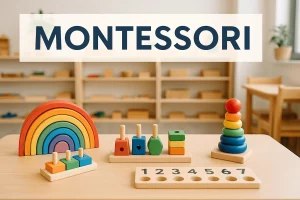
Introduction to the Montessori Method
In recent years, there has been a noticeable increase in interest regarding the Montessori method, with parents and educators frequently searching for “Montessori near me” or “Montessori school near me.” These common queries reflect a growing global demand for accessible Montessori resources and schools. For those looking to explore Montessori education options, our Montessori locator provides a valuable tool to find nearby schools and resources, including international examples like Oberursel, Germany.
Principles of the Montessori Method
The Montessori method, developed by Dr. María Montessori, is founded on several key principles that encourage children to learn at their own pace in an environment that promotes independence, respect, and collaboration. The core ideas of the Montessori method include:
- Child-Centered Learning: Emphasizing the child’s natural curiosity and desire to learn.
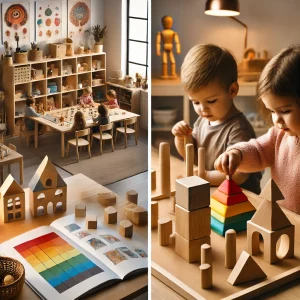
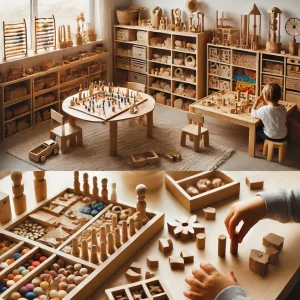
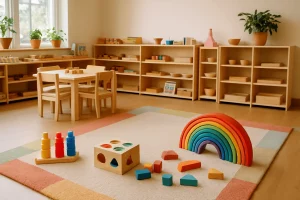
- Prepared Environment: Designing spaces that enhance autonomy and facilitate learning.
- Mixed-Age Classrooms: Allowing children to learn from and teach one another.
- Hands-On Learning: Utilizing tactile and engaging materials to foster understanding.
- Respect for the Child: Recognizing each child as a unique individual with their own learning styles and rhythms.
The Importance of Autonomy
At the heart of the Montessori method lies the idea of promoting autonomy in young children. For instance, consider a morning routine at home that embodies Montessori principles. Parents can create an environment where children choose their own clothes from a low-hanging rack, prepare their breakfast with minimal assistance, and even decide when to start their daily activities. This not only fosters independence but also builds confidence as children learn to make decisions and take responsibility for their actions.
Real-Life Classroom Scenarios
In a typical Montessori classroom, you would find mixed-age groups where older children help teach younger ones, reinforcing their own knowledge while facilitating social skills and collaboration. For example, during a project on plant biology, a six-year-old might explain the life cycle of a seed to a younger classmate, fostering a sense of community and shared learning. This approach enhances peer learning, helping all children develop important interpersonal and cognitive skills.
Accessing Montessori Resources
Understanding the Montessori method is vital for parents and educators who want to implement these principles at home or in a school setting. For a deeper dive into the philosophy and techniques, refer to our resource todo lo que necesitas saber sobre el método Montessori. Here, you will find a plethora of information that outlines the practical aspects of Montessori education and how to integrate its principles into daily routines.
Montessori Pedagogy
The pedagogy underlying the Montessori method is transformative for both children and educators. It emphasizes observation of children to tailor educational experiences to their individual needs. To explore more about this revolutionary approach, check our guide on pedagogía Montessori, which offers insights into creating an effective learning environment.
Benefits of the Montessori Method
Studies have shown that children who engage in the Montessori method often demonstrate enhanced academic performance, greater motivation, and improved social skills compared to their peers in traditional education systems. This holistic development aligns not just with cognitive growth but also emotional and social wellbeing.
Building Emotional Intelligence
Emotional intelligence is a key component of Montessori education. Children learn to identify their feelings and those of others, which is crucial for personal and social development. Activities designed to promote empathy and cooperation are integral to the Montessori experience, as children are encouraged to express their thoughts and emotions constructively.
Implementing Montessori Principles at Home
For parents interested in incorporating Montessori principles into their parenting style, consider creating a prepared environment at home. This could include setting up learning stations, providing age-appropriate materials, and fostering an atmosphere where children feel empowered to explore their interests.
Everyday Applications
From encouraging your child to take part in meal preparation to allowing them to help with household chores, small, everyday practices can make a significant difference. It promotes responsibility and gives children a sense of belonging within the family unit.
Conclusion
The Montessori method offers a transformative approach to education that prioritizes the child’s natural interests and promotes self-directed learning. By understanding the core tenets of Montessori education and exploring practical applications at home and in the classroom, parents and educators can better support children’s developmental journeys.
For additional resources and support, visit our Montessori Maria website and its AI assistant MarÍA, which provides personalized guidance and information tailored to your needs.
Further Reading and Resources
To learn more about the Montessori philosophy, check out our other articles, such as Understanding Montessori: A Guide for Parents and Educators, Understanding Montessori Pedagogy, and Understanding Montessori Education.
As the world continues to embrace diverse educational methodologies, the Montessori method remains a cherished and effective choice for nurturing the next generation of learners.