Introducing Montessori Pedagogy
Many families begin their journey into the world of Montessori education by searching for terms like “Montessori near me” or “Montessori school near me.” It’s a natural step for parents seeking a nurturing and effective educational approach for their children. At the Montessori Maria website, we offer a global Montessori locator that helps you find local educational environments tailored to the Montessori philosophy. For instance, you can check out specific examples like our locator for Oberursel, Germany, to find the best fit for your child’s educational needs.
Understanding the Principles of Montessori Education
Montessori pedagogy is built upon several key principles that have made it a transformative approach in education. These principles include the prepared environment, autonomy, observation, and sensory learning. Let’s delve deeper into these principles and see how they can be practically applied in real-life educational settings.
The Prepared Environment
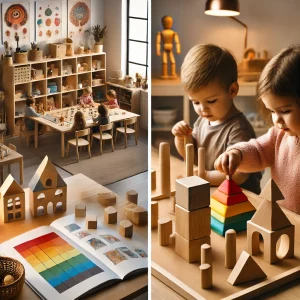
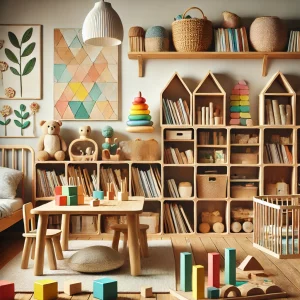
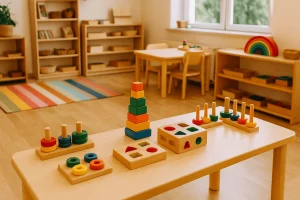
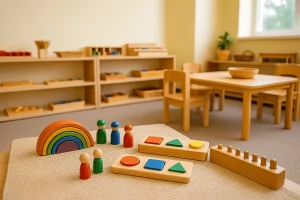
The prepared environment is a cornerstone of Montessori education. It refers to a classroom that is designed to facilitate independent learning and exploration. Imagine a traditional classroom where desks are arranged in rows, limiting movement and interaction. In a Montessori environment, the layout is different; materials are accessible on low shelves, inviting children to engage with them freely.
Practical Application
For example, during a transition from a traditional classroom to a Montessori setting, a student teacher might rearrange the furniture to create cozy reading nooks and learning stations for different subjects. This adaptation encourages children to select activities based on their interests, fostering self-direction. Students might learn to select a math material that piques their curiosity without always relying on direct instruction from the teacher.
Autonomy
Autonomy in Montessori education means allowing children to make choices about their learning. This principle acknowledges that children learn best when they are engaged in activities that interest them. Instead of following a rigid curriculum, students can explore topics at their own pace.
Practical Application
Let’s envision a scenario where a teacher is planning their first Montessori environment. Instead of deciding on a set schedule, they will create a flexible plan that allows children to choose between a science experiment, a reading corner, or an art project during their work cycle. This autonomy not only boosts engagement but also develops decision-making skills.
Observation
Observation is a vital part of the Montessori method. It involves teachers watching children to understand their interests, strengths, and areas that may require additional support. Effective observation allows educators to tailor their interactions accordingly.
Practical Application
For instance, in a new Montessori classroom, a teacher might spend the first weeks observing how students interact with different materials. During this time, they might notice that some children have a strong interest in nature. In response, the teacher could introduce more biology-related activities, stimulating further exploration.
Sensory Learning
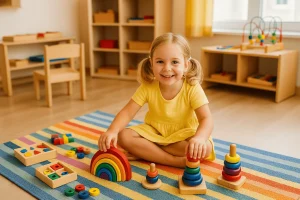
Sensory learning lies at the heart of Montessori education. This concept is about allowing children to learn through their senses, engaging them in hands-on experiences that promote deeper understanding and retention.
Practical Application
An example of sensory learning can be found in a classroom where children are encouraged to work with materials that stimulate their senses. For instance, a child learning about shapes may use textured blocks to explore different geometrical forms. Meanwhile, another student could explore sounds through musical instruments, enhancing their auditory recognition while associating it with tangible experiences.
The Role of the Educator in Montessori
In the Montessori model, the educator’s role shifts from a traditional instructor to a facilitator of learning. This means they guide students rather than dictate what the students should learn. They create an atmosphere of respect, support, and enthusiasm for continuous personal exploration.
Building a Community
A community within a Montessori classroom thrives on collaboration and connection. Older children often take on mentorship roles, helping younger children with their tasks. This nurtures a sense of community and belonging, essential for personal and social development.
Resources for Further Learning
For those new to the Montessori approach, resources are critical. A great place to start is our introduction to Montessori pedagogy, where you can learn more about the foundational concepts and their application. Additionally, the complete guide to Montessori pedagogy provides a thorough overview for those interested in exploring the subject more deeply.
The Influence of María Montessori
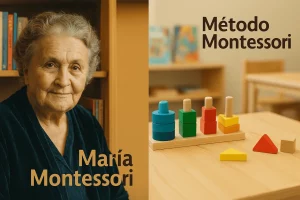
To fully grasp the philosophy of Montessori, it’s essential to understand the life and work of María Montessori. Her insights and research laid the groundwork for this educational approach, emphasizing respect for the child and the belief that each child is a natural learner.
Final Thoughts on Montessori Pedagogy
To wrap up, Montessori pedagogy offers parents, educators, and teacher-training students a transformative approach to education. By implementing principles such as the prepared environment, autonomy, observation, and sensory learning, we can create rich learning experiences that cater to the individual needs and interests of children. If you are on the lookout for a Montessori school, don’t hesitate to visit our Montessori near me tool to find the best educational environment for your child.
For more insights into the Montessori method, consider visiting our recent articles:
- A Comprehensive Guide to Montessori Education for Parents and Educators
- Understanding María Montessori: A Guide for Parents and Educators
- Understanding Montessori: A Comprehensive Guide for Parents
- Montessori Pedagogy: A Comprehensive Guide for Parents, Educators, and Teacher-Training Students
- Montessori Education: A Comprehensive Guide for Parents and Educators