Introduction: The Montessori Search
In today’s world, parents are increasingly searching for “Montessori near me” or “Montessori school near me” as they seek educational guidance rooted in innovative teaching methods. The Montessori approach, developed by Dr. María Montessori, offers a unique framework emphasizing independence, respect, and a child-centered learning environment. Our website provides a Montessori locator and helpful guides that can assist families in finding quality Montessori institutions tailored to their children’s needs.
A Brief Biography of María Montessori
Born on August 31, 1870, in Chiaravalle, Italy, María Montessori was a physician and educator who revolutionized early childhood education. Her passion for understanding how children learn led her to observe them in natural settings, resulting in the development of the Montessori Method — a framework focusing on experiential, hands-on learning. After years of research and refinement, her ideas gained traction globally, establishing schools that implement her pedagogical principles. Discover more about her incredible life and contributions in our article, “María Montessori y su legado.”
Understanding the Montessori Method
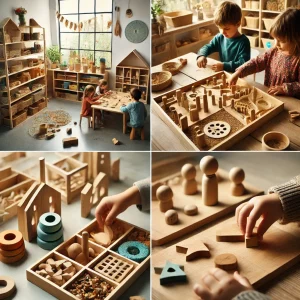
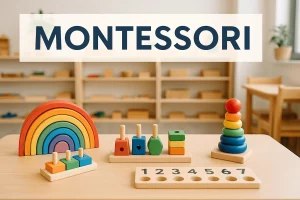
The método Montessori is predicated on the idea that children learn best in environments tailored to their unique developmental stages. One of the cornerstones of the method is the prepared environment, which encourages exploration and independence. This approach provides children with the freedom to choose their learning activities within a structured framework, fostering creativity, problem-solving skills, and a deeper love for learning.
Real-Life Example: A Teacher’s Classroom Transformation
Consider an elementary school teacher, Ms. Smith, who decided to reorganize her classroom according to Montessori principles. Instead of traditional rows of desks, she arranged tables in clusters, allowing students to collaborate and share ideas. She added various learning stations for math, language, science, and art, and ensured these materials were accessible at child height. Ms. Smith found that her students were more engaged and took ownership of their learning. This transformation not only affected student behavior but also enhanced their critical thinking and social skills.
The Importance of Independence at Home
For parents looking to adopt Montessori principles at home, fostering independence is key. Simple changes can significantly impact a child’s sense of autonomy. For instance, creating a prepared environment in a child’s room can help them navigate their space confidently. Parents can set up low shelves with accessible books and toys, ensuring the child can choose their activities without needing assistance. This simple setup encourages children to explore and learn through self-directed activity.
Real-Life Example: Redesigning a Child’s Room
Imagine parents Jenny and Mark, who decided to redesign their daughter Lily’s room. Inspired by the Montessori method, they removed the solid crib and installed a floor bed, allowing Lily to get in and out independently. They also placed a low table and chairs within reach, where Lily could enjoy art and reading. By enabling Lily to take charge of her environment, they noticed she became more responsible and creative in her play.
Understanding Montessori Pedagogy
The pedagogía Montessori emphasizes respect for the child as an individual and recognizes that each child is born with a unique path of development. This philosophy holds that educating a child is not merely about imparting knowledge but rather guiding them in exploring and discovering concepts independently. This individualized learning process cultivates a sense of self-esteem as children realize their capabilities.
Building a Community: Sharing Montessori Insights
As more families and educators seek to implement Montessori principles, community sharing becomes crucial. Online forums and local meetups allow parents and educators to exchange strategies, success stories, and challenges. Engaging with others who practice or are interested in the Montessori method can provide additional resources for troubleshooting and enhancing your understanding. For instance, our understanding Montessori guide is designed to help parents embark on this educational journey.
The Role of Guidance in Montessori Education
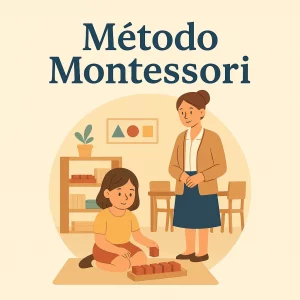
In the Montessori classroom, the teacher serves as a guide rather than a traditional instructor. This shift changes the dynamic between teacher and student, promoting a respectful learning environment that recognizes student autonomy. Educators trained in the Montessori method are equipped to prepare the environment, introduce materials, and observe students’ individual learning paths. Additionally, they modify their teaching styles to accommodate each child’s specific needs, ensuring no learner is left behind.
Real-Life Example: Teacher Training in Action
Take Mr. Johnson, a high school science teacher who attended a Montessori training program. He learned how to create hands-on science labs that allowed students to engage directly with materials. By incorporating inquiry-based assessments, he noticed that students were more motivated and enthusiastic about experiments. Mr. Johnson’s experience highlights how Montessori training can shift conventional teaching methods toward a more interactive and exploratory style.
Resources for Parents and Educators
If you’re exploring the Montessori philosophy, consider reaching out to our AI assistant, MarÍA, who can provide personalized guidance and insight on implementing these principles at home or in the classroom. You can find her on the Montessori Maria website. Furthermore, visiting local Montessori schools can provide firsthand insight into how these principles come to life in a structured setting.
Further Reading and Exploration
To deepen your understanding of Montessori principles, check out our articles such as “Understanding Montessori Pedagogy” and “Understanding the Montessori Method.” These resources provide comprehensive insights into the Montessori approach and will empower both parents and educators to create environments that nurture independent, lifelong learners.
Conclusion: The Montessori Journey
Embarking on the Montessori journey can transform how children learn and develop. Whether you’re a parent seeking to reimagine your child’s playroom or an educator looking to enrich your classroom, implementing Montessori principles can lead to remarkable changes. Remember to leverage resources, seek community support, and remain open to the possibilities of child-led exploration. We invite you to explore our additional resources, including “Exploring the World of María Montessori” and “a Comprehensive Guide for Parents” to further your journey in the world of María Montessori.