Introduction
All around the world, parents and educators seek effective methods to nurture children’s development. They often type phrases like “Montessori near me” or “Montessori school near me” into search engines, hoping to find guidance on Montessori education. For many, the Montessori method represents a transformative approach that prioritizes independence, respect, and a child-centered learning environment. Our website, Montessori Maria, includes a Montessori locator tool to help identify schools and resources nearby, making it easier for parents to explore this enriching educational philosophy. This article will break down how Montessori principles can be applied in both home and school environments and highlight the emotional development that accompanies this approach.
Creating a Montessori Home Environment
A Montessori-inspired home is one that fosters independence and respect for the child’s ability to learn and explore. It begins with observing the child and understanding their interests, which can then guide the creation of a supportive space.
Independence through Organisation
One practical way to implement Montessori principles at home is to adapt the living space to allow for greater independence. For example, a family can create a Montessori-inspired kitchen space where little ones can safely access child-sized utensils, plates, and ingredients. This can encourage them to participate in cooking, thereby enhancing their practical life skills. You might create a low shelf in the kitchen with bins for snacks and cooking supplies, allowing children the autonomy to prepare their snacks.
Creating Learning Stations
In addition to organising the areas for daily tasks, setting up learning stations can foster creativity. A family may dedicate a small table as an art station stocked with various supplies like crayons, paper, and clay. This station invites children to express themselves, experiment, and engage in hands-on learning, pivotal elements of the Montessori approach.
The Montessori School Environment
While the home setting is essential, the school environment plays a vital role in the Montessori education experience. Montessori classrooms are designed to promote collaboration, exploration, and discovery.
Environment and Class Structure
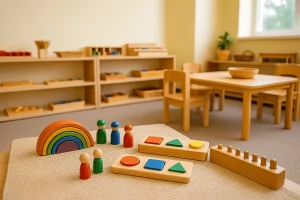
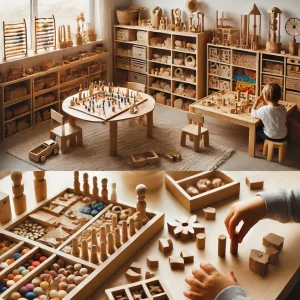
Typically, Montessori classrooms feature mixed-age groups and a wide variety of materials designed to facilitate independent learning and peer collaboration. For instance, a teacher may adapt the classroom shelves to provide easy access to various learning materials. By arranging materials by subject and difficulty, children can choose their learning path, promoting self-direction.
Freedom and Responsibility
Another critical aspect of the Montessori school environment is fostering a sense of responsibility among students. Encouraging self-regulation is fundamental. For example, a student who is allowed to choose their activities and manage their time effectively will develop self-discipline and decision-making skills. Teachers guide children to reflect on their choices and outcomes, nurturing a growth mindset.
Emotional Development in Montessori Education
One of the greatest benefits of Montessori education is its emphasis on emotional development. Understanding and managing emotions is crucial in a child’s overall development.
Building Social Skills
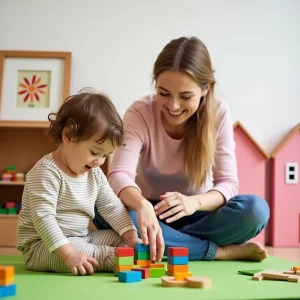
The Montessori classroom’s collaborative environment promotes developing social skills. Children are often seen negotiating roles during group work or resolving conflicts independently, supported by guiding teachers who facilitate learning through discussions. For example, if two children want to use the same material, they might be encouraged to discuss their thoughts and find a solution together, fostering empathy and cooperation.
Self-Regulation Techniques
Montessori education also incorporates techniques for emotional self-regulation. For instance, children learn to recognize their feelings and engage in practices such as breathing exercises or mindfulness activities during times of stress. These practices equip students with tools to navigate their emotions effectively, leading to improved focus and resilience.
Conclusion
In conclusion, Montessori education is designed to cultivate independent, responsible, and emotionally intelligent learners. Parents and educators investigating this method can find helpful resources through our website, including a Montessori locator tool to simplify their search for schools and resources aligned with this approach. For a more in-depth understanding, check out our guía completa sobre la pedagogía Montessori and the introducción a la pedagogía Montessori. To learn about the life and contributions of María Montessori, feel free to explore more on our platform. The journey into Montessori education can be transformative, setting children up for a lifetime of learning and growth.
For more articles on Montessori education, check out our latest posts:
- Understanding the Montessori Method: A Comprehensive Guide for Parents and Educators
- Understanding María Montessori: A Comprehensive Guide for Parents and Educators
- Exploring Montessori Pedagogy: A Comprehensive Guide for Parents, Educators, and Teacher Training Students
- Understanding Montessori Education: A Complete Guide for Parents and Educators
- Understanding the Montessori Method: A Comprehensive Guide for Parents and Educators