The Growing Interest in Montessori Education
In today’s fast-paced world, parents and educators are increasingly searching for effective educational methods that cater to the individual needs of children. Phrases like “Montessori near me” and “Montessori school near me” reflect a global desire for accessible Montessori resources that can truly enhance learning experiences. By prioritizing child autonomy, individualized learning, and a carefully prepared environment, the Montessori method continues to resonate across the globe. If you’re seeking Montessori resources or schools in your area, our website offers a comprehensive Montessori locator with international examples, such as those found in cities like Oberursel, Germany, which you can explore here.
Fundamental Principles of the Montessori Method
The Montessori method, conceptualized by Dr. María Montessori in the early 20th century, is grounded in several key principles:
- Respect for the Child: Each child is regarded as capable of self-directed learning and should be treated accordingly.
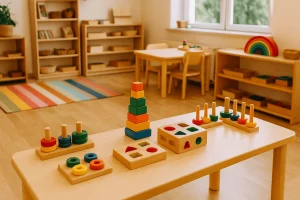
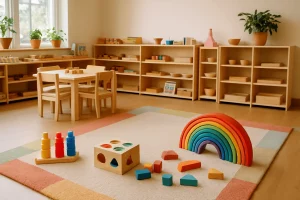
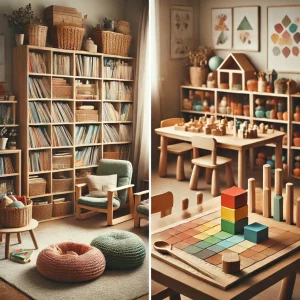
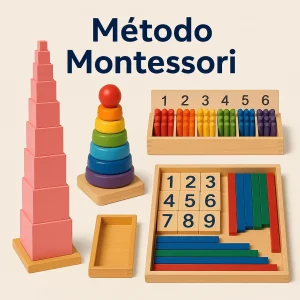
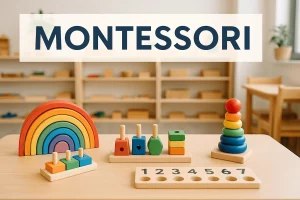
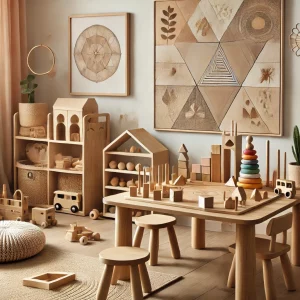
- Prepared Environment: The learning environment is carefully designed with materials suited to a child’s developmental stage.
- Mixed-Age Classrooms: Children of varying ages learn from each other, fostering collaboration and mentoring.
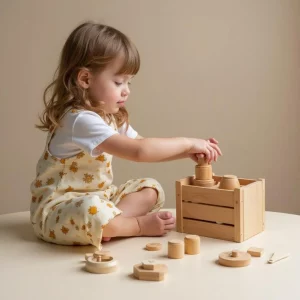
- Independence: Children are encouraged to explore and learn at their own pace, fostering a sense of autonomy.
Real-Life Application: Morning Routine at Home
To illustrate these principles in action, consider a typical morning routine in a Montessori household. In a Montessori-inspired home, children might start their day independently. Instead of relying on parents for every task, a child could rise at their appointed time, dress themselves, and choose their breakfast from healthy options laid out on a low counter. This autonomy nurtures responsibility and decision-making skills—core elements of the Montessori method.
Real-Life Application: The Mixed-Age Classroom
Within a Montessori classroom setting, you would find a mixed-age group, typically spanning three years. For instance, younger children may be engaged in sensory activities while older peers work on more advanced tasks, such as collaborative projects. This setup allows children to learn from one another, enhancing their social interaction and helping to create a community in the classroom. Rather than solely receiving direct instruction from teachers, the children guide their own learning journeys, embodying the essence of pedagogía Montessori.
The Role of Educators and Parents
Understanding the Montessori method is essential for both educators and parents. Teachers must be trained to recognize subtle cues in the child’s interests and to provide appropriate resources that support growth without pushing the child beyond their limits. Parents also carry a significant role as they reinforce the principles of the Montessori method at home. This partnership encourages consistency and strengthens the child’s learning experience.
Challenges and Misconceptions
There are several misunderstandings about the Montessori method that deserve clarification. One prevalent misconception is that Montessori education means children can do whatever they want without guidance. In reality, while children do have the freedom to choose their activities, they do so within a structured environment designed to promote meaningful learning.
Another challenge is the perception that the Montessori method is not rigorous enough to prepare students for traditional educational settings. Evidence suggests otherwise, as research indicates that Montessori students often outperform their peers in standardized assessments, reflecting the effectiveness of this approach.
Benefits of the Montessori Method in Today’s World
In a world that often values rote memorization and standardized testing, the Montessori method offers a refreshing alternative that prioritizes critical thinking and creativity. Children educated with this approach tend to develop strong social skills, emotional intelligence, and a genuine love of learning. They are less likely to experience burnout and anxiety, which is prevalent among students in conventional educational settings.
The Importance of Community in Montessori Education
Montessori education thrives on community involvement. From parents to educators, everyone plays a role in shaping the educational landscape. Schools often collaborate with families to help create resources and support systems that enhance the overall learning experience. By engaging with the local community, Montessori schools foster connections that benefit not only the children but also the families and neighborhoods at large.
Continuing Your Montessori Journey
For those looking to delve deeper into the Montessori philosophy, consider further reading and engaging with available resources. Our website, Montessori Maria, features a wealth of information about the principles and practices of the método Montessori as well as insights on how to implement these strategies at home. To facilitate this journey, we’ve also developed our AI assistant, MarÍA, to provide personalized advice and resources tailored to your needs.
Conclusion
Ultimately, whether you’re a parent, educator, or simply someone interested in educational methodologies, the Montessori method offers transformative tools for nurturing the potential of every child. As you explore your options, remember that resources like the Montessori locator can help you find suitable Montessori schools or resources nearby. Engaging with this enlightening approach not only contributes to the individual child’s development but also enriches the broader educational community.
If you’re interested in more insights about the impact of María Montessori or wish to understand more about the educational framework, check out our comprehensive guides on Montessori education for parents and educators, such as this one or this one. Each resource provides valuable information that can enrich your understanding and implementation of the Montessori method.