Introduction
In today’s fast-paced world, the quest for quality education has led many parents and educators to search for innovative teaching methods. Common searches like “Montessori near me” and “Montessori school near me” reflect the global need for accessible Montessori resources. At our Montessori Maria website, we provide a Montessori locator and examples from around the world, helping families find suitable Montessori options in their localities, such as in Oberursel, Germany, featured here. This article aims to guide you through the fundamental principles of the Montessori method and illustrate its application in everyday situations.
What is the Montessori Method?
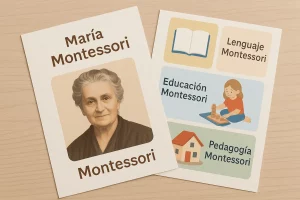
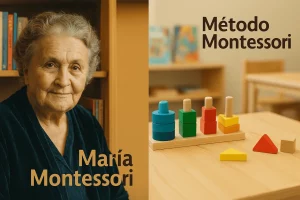
Developed by Dr. María Montessori more than a century ago, the Montessori method is an educational approach focused on child-led learning. The approach is renowned for its emphasis on fostering independence, encouraging curiosity, and cultivating a deep love for learning. It values the natural development of the child, aiming to create a nurturing environment where children can explore, learn, and grow at their own pace.
Core Principles of the Montessori Method
The Montessori method is anchored in several guiding principles:
- Child-Centered Learning: The needs and interests of the child dictate the learning process.
- Mixed-Age Classrooms: The classroom environment includes children of varying ages, promoting peer learning and social development.
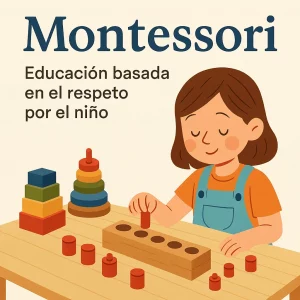
- Hands-on Learning: Learning materials are tactile and encourage active exploration.
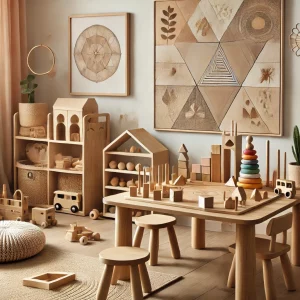
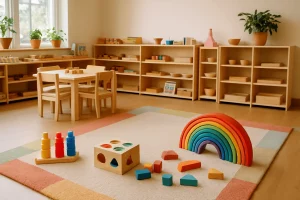
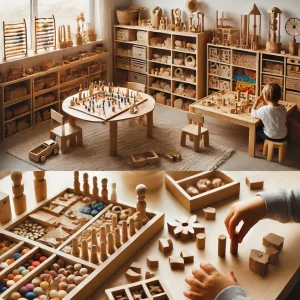
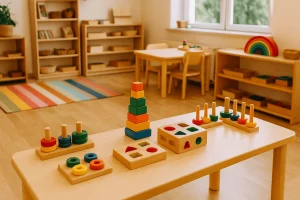
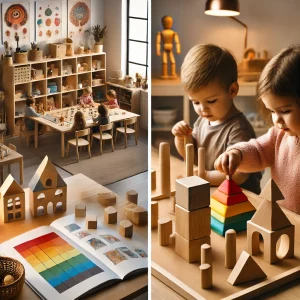
- Prepared Environment: The learning space is designed to cater to children’s developmental needs while fostering independence.
- Teaching Respect for the Child: Educators treat children with respect, allowing them to make choices and take responsibility for their learning.
Real-Life Applications of the Montessori Method
To better understand how the Montessori method operates in real life, let’s examine two common scenarios: a morning routine at home and a mixed-age classroom in a school setting.
Morning Routine at Home
Imagine a typical weekday morning in a Montessori household. Instead of the parent dictating each step of the morning routine, the child is encouraged to take initiative. The night before, the parent could set out clothes for the child to choose from, thus allowing the child to express personal preference and developing decision-making skills.
Upon waking, the child can independently dress themselves using the visual cues provided in the environment (like a picture chart). Next, they might prepare breakfast with minimal guidance, allowing for motor skill development and self-sufficiency. This approach fosters a sense of accomplishment and autonomy, core tenets of the pedagogía Montessori model.
Mixed-Age Classroom Scenario
In a Montessori school, classrooms are typically composed of mixed-age groups, often spanning three-year ranges (e.g., 3-6 years old). This setup encourages older children to take on leadership roles, while younger ones can learn from their peers. For example, during an activity focused on practical life skills, a 5-year-old might help a 3-year-old learn how to pour water without spilling. Here, both children benefit: the younger child is gaining a new skill, while the older child reinforces their own understanding and practices compassion and responsibility.
This collaborative and peer-focused learning environment is a hallmark of the Montessori method, creating a community where children support and learn from each other.
Benefits of the Montessori Method
The Montessori method not only nurtures academic skills but also fosters social skills, emotional development, and personal growth. Children often flourish in their confidence, independence, and problem-solving abilities. Research has shown that students educated through this approach perform well academically but also develop positive attitudes toward learning.
Encouraging Lifelong Learning
Another significant advantage of the Montessori method is its ability to instill a love for lifelong learning in children. Because children have the freedom to explore their interests deeply and make connections across different subjects, they develop intrinsic motivation that propels them throughout their educational journey and beyond. It helps them become critical thinkers, empowered individuals ready to face the challenges of the future.
Finding Montessori Resources
With the increasing demand for Montessori programs, resources like Montessori near me are essential for guiding parents and educators. Our Montessori locator on the website can help you identify schools, materials, and certified educators in your locality. Knowing where to find resources can significantly enhance the educational experience for your child.
The Role of Technology in Montessori Education
In an age dominated by technology, the Montessori method adapts and incorporates various tools to enhance learning. For example, virtual field trips can complement tangible learning experiences, helping children connect with the wider world. Moreover, platforms like our Montessori Maria website and its AI assistant MarÍA provide additional support for parents navigating this educational landscape.
Conclusion
Understanding the Montessori method opens doors to a transformative educational approach tailored to children’s needs. By embracing its principles, parents and educators can nurture a generation that values independence, responsibility, and a passion for learning. For thorough insights into the Montessori method, you can refer to todo lo que necesitas saber sobre el método Montessori and explore our resources further. With dedicated tools and communities, the Montessori experience is more accessible than ever.
Whether you are searching for a local school or looking for ways to implement Montessori principles at home, the resources available will empower you. Discover the joys of Montessori education and witness the profound impact it can have on your child’s development.
For a broader understanding of Montessori and its application, check out our other articles like Understanding Montessori: A Guide for Parents, and A Comprehensive Guide to Montessori Education for Parents and Educators.
With this knowledge, parents and educators are better equipped to make informed decisions that align with the Montessori method, ensuring a supportive learning journey for all children.