Introduction to Montessori Pedagogy
Many families embarking on an educational journey for their children often find themselves searching for “Montessori near me” or “Montessori school near me.” This search isn’t just about finding a school; it’s a quest for an enriching educational environment that thrives on the principles set forth by Maria Montessori. If you are looking for a local Montessori school, you can explore our global Montessori locator at Montessori near me, which offers specific examples such as Oberursel, Germany.
The Core Principles of Montessori Pedagogy
Montessori pedagogy is built upon several cornerstone principles designed to create a conducive learning environment for children. The primary principles include the prepared environment, autonomy, observation, and sensory learning. Each of these elements plays a crucial role in nurturing a child’s natural curiosity and desire to learn. Let’s delve deeper into these principles and see how they can be practically applied.
Prepared Environment
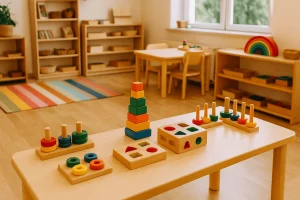
The prepared environment refers to a structured setting where children can explore and learn independently. This can be seen in a traditional classroom adapting its layout to accommodate the Montessori method. For instance, instead of rows of desks, the classroom could be arranged into different learning stations filled with manipulatives and materials that cater to diverse subjects. By creating areas designated for specific types of activities, teachers empower students to choose what and how they want to learn.
Autonomy
Autonomy is at the heart of Montessori pedagogy. Allowing children the freedom to make choices fosters their decision-making skills and builds confidence. Consider a student teacher planning their first Montessori environment; instead of dictating a fixed curriculum, the teacher may provide a range of activities and materials. This approach encourages children to take ownership of their learning processes, engaging them in a way that traditionally structured classrooms often cannot. To gain further insight into this concept, check our introduction to Montessori pedagogy.
Observation
Observation is a vital technique used by Montessori educators to understand each child’s unique learning style. By observing children in their natural setting, educators can tailor lessons and activities to better meet the needs of each student. For example, a teacher might notice that a child is particularly engaged in a specific type of material, prompting the teacher to provide more resources in that area. This practice highlights the necessity of adaptability in the teacher’s role, ensuring that each child receives a personalized educational experience.
Sensory Learning
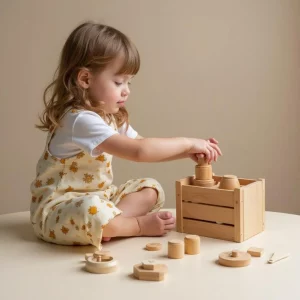
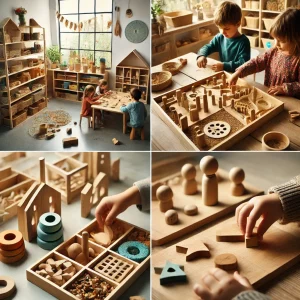
Sensory learning is another fundamental aspect of Montessori pedagogy. It emphasizes the importance of learning through direct sensory experiences. An example can be seen when lessons incorporate materials that appeal to a child’s senses. For instance, when teaching about shapes, a teacher can use tactile geometric shapes, allowing students to feel and manipulate them. This hands-on approach can significantly enhance understanding and retention. Exploring more about these principles can be found in our complete guide to Montessori pedagogy.
Implementing Montessori in Traditional Classrooms
For many teachers transitioning from a traditional classroom to a Montessori approach, it is crucial to understand the subtleties of this methodology. Implementing Montessori in a traditional classroom can begin with simple modifications, focusing on creating a prepared environment that respects and nurtures student independence.
Classroom Set-up
The traditional classroom typically has fixed seating and limited movement. To adapt it to a Montessori environment, furniture can be rearranged to allow for collaboration and individual work. Small tables can replace rows of desks, and various stations with different learning materials can be set up. Libraries and reading corners can be created where children can choose to read in comfort, a fundamental element in fostering autonomy.
Materials and Resources
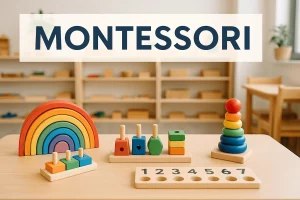
In a Montessori-styled setup, materials play a pivotal role. Traditional classrooms may rely heavily on textbooks and worksheets, while Montessori environments utilize specialized materials that promote sensory learning. For example, instead of using paper-based assessments, teachers can introduce interactive resources like counting beads or puzzle maps that allow children to learn concepts through hands-on experience.
Impact of Montessori Method on Children
The impact of Montessori pedagogy on children cannot be overstated. Research has indicated that students educated using the Montessori approach often exhibit higher social, emotional, and academic skills compared to their peers in traditional settings. They tend to be more adaptable, have better focus, and demonstrate improved problem-solving abilities.
Success Stories
Countless success stories can be found among students who’ve experienced Montessori education. They often share that their time in a Montessori school equipped them with tools that have served them throughout their academic journeys and into adulthood. As a parent or educator considering this teaching method for your child or students, it may be worthwhile to explore these success stories, as they illustrate the potential of a Montessori educational experience.
The Role of Educators in Montessori Pedagogy
Educators play a crucial role in the Montessori classroom. Unlike traditional teacher-centered environments, Montessori educators act as guides who support children’s learning journeys rather than dictating them. This shift requires educators to undergo specific training to fully understand and implement the Montessori principles effectively. The benefits of such training are discussed in our resource on understanding Montessori pedagogy.
Conclusion
Montessori pedagogy is a transformative educational approach that benefits children, educators, and parents alike. With a focus on prepared environments, autonomy, observation, and sensory learning, it creates a nurturing space where children thrive. If your family is on this educational journey, don’t hesitate to explore the resources and tools available, including our global Montessori locator at Montessori near me. For those involved in teacher training or currently teaching, understanding and applying these principles can elevate your educational practice and give students the skills they need for lifelong learning. Dive deeper into the philosophy of Maria Montessori and watch as your educational landscape transforms for the better.