The Starting Point: Finding Montessori Schools
Many families begin their journey into the world of Montessori education by searching for “Montessori near me” or “Montessori school near me.” This search can often lead them to a deeper understanding of the Montessori pedagogy and its transformative impact on children’s learning experiences. For those looking for local resources, our website offers a global Montessori locator at Montessori near me, where families can find nearby schools and educational resources that embrace the Montessori method. For a specific example, you can check Montessori in Oberursel, Germany.
The Core Principles of Montessori Pedagogy
Montessori pedagogy is built on a foundation of key principles that guide educators, parents, and children towards a harmonious and enriching educational experience. These principles include a prepared environment, autonomy, observation, and sensory learning. Let’s explore each principle and see how they apply in practical scenarios.
Prepared Environment
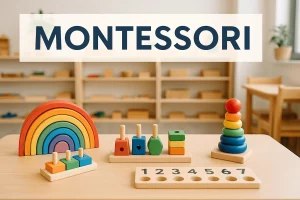
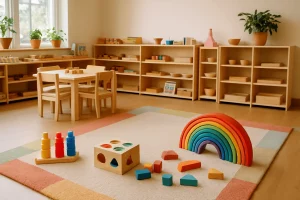
The prepared environment is designed to meet the developmental needs of children, featuring materials that are accessible and appealing. In a traditional classroom being adapted to incorporate Montessori methods, you might start by reorganizing the space. For instance, instead of traditional desks lined up in rows, consider creating distinct areas for different types of activities. A cozy reading nook with comfortable seating, a sensory table filled with various textures and materials, and an art corner with a range of supplies can cater to diverse interests and learning styles.
Autonomy
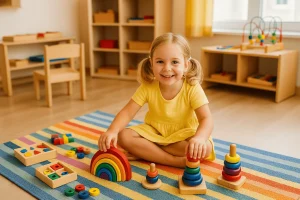
Autonomy in Montessori education emphasizes giving children the freedom to choose their learning activities, fostering independence and self-motivation. For a student teacher planning their first Montessori environment, encouraging autonomy involves allowing children to select materials that interest them. Teachers can set up a variety of engaging learning stations and observe how children navigate through their choices, supporting their self-directed learning.
Observation
Observation is a crucial technique in Montessori pedagogy, where educators assess each child’s progress and interests without interfering. A student teacher can practice this by spending time silently observing how children interact with the prepared environment. This insight informs lesson planning and helps in optimizing the learning experience tailored to individual needs.
Sensory Learning
Sensory learning is central to Montessori education, where children engage with materials that stimulate their senses and foster discovery. A hands-on example could include introducing practical life skills such as pouring, sorting, or using tools. In a traditional classroom, this can mean incorporating tactile materials like Montessori beads or tactile books. This approach allows children to explore concepts through touch, sight, sound, and movement, enhancing their overall learning experience.
Links for Further Exploration
For those interested in delving deeper into the Montessori pedagogy, you can refer to our guía completa sobre la pedagogía Montessori, which provides a comprehensive overview of the method’s principles and practices. Additionally, an introducción a la pedagogía Montessori will be beneficial for anyone looking to understand the foundation of this transformative approach. Also, learning about María Montessori gives insight into the philosophy behind the methods.
Conclusion: The Montessori Maria Website as a Resource
As parents, educators, or teacher-training students considering the Montessori approach, it’s beneficial to utilize resources available online. The Montessori Maria website serves as a treasure trove of information, offering articles, guides, and practical tips for implementing Montessori practices. We recommend exploring the latest articles, such as a comprehensive guide, understanding the Montessori method, and discovering the impact of María Montessori. These resources reinforce the philosophy of independence and curiosity as key elements of effective learning.
In embracing the principles of Montessori pedagogy, we foster environments that nurture children’s growth holistically. For further details, visit understanding Montessori pedagogy for parents and educators and continue your journey into this enriching educational method.