Introduction
In today’s fast-paced world, many parents are on the lookout for educational approaches that foster independence, creativity, and a love for learning in their children. A common trend is the search for “Montessori near me” or “Montessori school near me,” as parents aim to find the right environment for their little ones. Our website offers a Montessori locator tool to help you find nearby resources. Whether you’re looking at options such as Montessori schools in Terni, Umbria, or exploring how to implement this educational philosophy at home, this guide will cover all aspects of Montessori education for both parents and educators.
Home Environment: Creating a Montessori Space
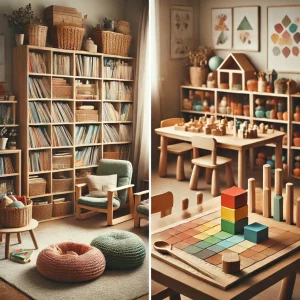
The home environment plays a pivotal role in a child’s learning experience, and adapting it to embrace Montessori principles can significantly enhance their development. A Montessori-inspired home fosters independence and self-directed learning.
Set Up a Montessori Kitchen
One way to transform your home is by creating a Montessori-inspired kitchen. Children can be involved in meal preparation by having access to child-sized utensils, plates, and ingredients placed at their height. For example, a family might set up a dedicated area where their child can wash vegetables, mix ingredients, and even prepare simple snacks. This not only helps them learn practical skills but also encourages a sense of responsibility and accomplishment.
Adapt the Shelves for Independence
Adjusting your living space according to Montessori principles means making everything accessible to your child. For instance, consider modifying the furniture in your living room to include low shelves stocked with books, art supplies, and educational materials. This allows your children to select their own activities, ensuring they feel empowered and independent. Teachers can similarly adapt classroom shelves, placing materials within reach to enhance student exploration and autonomy. For a deeper understanding of these principles, refer to this introduction to Montessori pedagogy.
School Environment: Fostering a Montessori Classroom
In the school environment, Montessori education emphasizes a child-centered approach where teachers act as guides. This differs significantly from traditional educational models where teacher-led instructions are predominant.
Role of the Teacher
In a Montessori classroom, teachers observe and assess each child’s interests and readiness for different tasks. For example, if a student shows a keen interest in nature, the teacher might introduce practical botany activities that align with that interest, allowing the child to delve deeper into the subject at their own pace. By making such adjustments, educators can nurture a child’s curiosity and love for learning.
Encouraging Self-Regulation
Self-regulation is a crucial skill fostered in Montessori classrooms. Children learn to manage their own emotions and behavior through structured choices. A student might express frustration over a challenging activity; rather than stepping in immediately, the teacher might suggest a break or offer calming strategies. This approach allows students to understand their emotions and learn to self-soothe, ultimately benefiting their overall emotional development.
Emotional Development: The Heart of Montessori Education
Beyond academics, Montessori education places significant emphasis on emotional development, recognizing that strong emotional foundations are essential for effective learning.
Building Empathy and Social Skills
Children engage with their peers in diverse group settings, promoting collaboration and empathy. For example, during a group project, a child might take on a leadership role, learning to support and encourage their teammates. This not only enhances their social competencies but also teaches them about teamwork and community values. Educators play a vital role in facilitating these experiences, ensuring that all voices are heard and respected within the classroom.
Cultivating Resilience
Montessori education encourages children to face challenges and setbacks positively. For instance, if a child struggles with a math problem, the teacher might guide them to explore different problem-solving techniques rather than providing immediate answers. This approach fosters resilience, encouraging students to keep trying and to view challenges as opportunities for growth. Emphasizing resilience prepares students for future learning experiences, both academically and personally.
Conclusion: A Path Towards Transformation
In conclusion, Montessori education, characterized by its unique approach to learning, provides parents and educators with invaluable tools to foster independence, creativity, and emotional intelligence in children. By exploring home environments, enhancing classroom settings, and focusing on emotional development, we can create spaces that truly nurture the child’s innate drive to learn.
If you’re interested in learning more about the transformative nature of Montessori education, be sure to read our guía completa sobre la pedagogía Montessori. For personalized support and further insights, explore the Montessori Maria platform and its AI assistant MarÍA.
Finally, don’t hesitate to visit our site for more resources, including recent articles like Understanding the Montessori Method, Understanding Maria Montessori, A Practical Guide for Parents, Montessori Pedagogy, and Montessori Education.