Understanding Montessori Education
In a world increasingly aware of diverse educational methods, the appeal of Montessori education is undeniable. Parents worldwide are searching for resources and schools that implement this unique approach, often typing queries like “Montessori near me” or “Montessori school near me” into their search engines. If you’re one of those parents or educators, rest assured that the Montessori Maria platform and its AI assistant MarÍA can guide you through this enriching educational philosophy. We also offer a Montessori locator tool, allowing you to explore local options that fit your needs, such as Montessori near me or examples like the Montessori school near me.
Home Environment
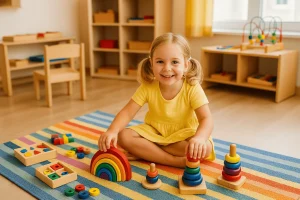
Creating a Montessori-friendly home environment is vital for fostering independence and a love of learning in children. Key elements include organizing spaces and engaging children in daily domestic tasks. For example, you might adapt your kitchen to be more Montessori-inspired by designating a lower shelf for your child’s plates and utensils. This allows them to participate in meal time by setting the table or even helping to prepare simple meals.
Practical Examples
Imagine a child reaching for their own cup from a shelf at their height, learning to pour their own drink. This small act significantly boosts their self-confidence and independence, instilling a sense of responsibility early on. Another example could be creating a dedicated art area with easy access to tools and materials like scissors, paper, and colors. Children can freely explore their creativity, which is a cornerstone of Montessori education.
School Environment
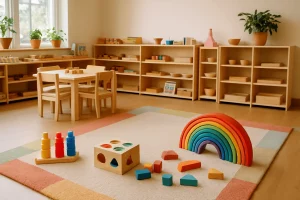
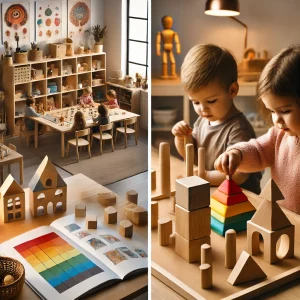
In the school environment, the Montessori approach focuses on mixed-age classrooms and self-directed learning, creating an atmosphere where students can thrive. Educators play a crucial role by observing and adapting the learning environment to meet each child’s needs. One practical example could involve a teacher rearranging classroom materials to encourage independence.
Setting Up the Shelf
A dedicated shelf might be adjusted to present materials that cater to various skill levels and interests. For instance, a teacher could place practical life tools like pouring sets or nature observation kits within reach, allowing children to choose their learning activities. This empowerment leads to increased motivation and engagement.
For more insights about the foundational principles of Montessori education, you can refer to our introducción a la pedagogía Montessori.
Emotional Development
Emotional development is an essential focus area in Montessori education. Children learn to express their feelings, resolve conflicts, and develop empathy towards others. One effective strategy is fostering self-regulation by allowing children to make choices. For example, when conflict arises, a teacher might guide children to talk it out, promoting communication and understanding.
Benefits of Self-Regulation
A student who practices self-regulation by choosing when to work on a task rather than being told will grow up with a profound sense of autonomy and accountability. This transformation enables them to be critical thinkers and responsible adults. Moreover, integrating techniques like mindfulness into the curriculum can greatly enhance emotional regulation and self-awareness.
Conclusion
For parents and educators seeking a well-rounded understanding of Montessori education, it’s crucial to explore every aspect—from home environments to school settings and emotional development. Our detailed online resources can provide further insights, including a guía completa sobre la pedagogía Montessori that outlines various strategies for implementing this educational method. You can also find a wealth of articles, such as Montessori education: A comprehensive guide for parents and educators. Discover your options today with local resources found through our Montessori near me tool!