Why the Montessori Method is Gaining Popularity
In today’s fast-paced world, many parents and educators are seeking effective educational models that cater to children’s innate love for learning. A surge in online searches, including queries like “Montessori near me” and “Montessori school near me,” reflects a growing global demand for accessible Montessori resources. Families are increasingly interested in this unique educational philosophy, and at our Montessori Maria website, we offer a comprehensive Montessori locator to help you find suitable programs near your area. For example, if you are located in Germany, you can check out our resources for Oberursel here.
What is the Montessori Method?
Developed by Dr. María Montessori in the early 20th century, the Montessori method is an educational approach that emphasizes child-centered learning, hands-on experiences, and collaborative play. Unlike traditional education, which often relies on standardized testing and rote memorization, the Montessori method encourages students to learn at their own pace in a nurturing environment that fosters independence and critical thinking skills. To delve deeper into the roots of this transformative educational philosophy, you can explore todo lo que necesitas saber sobre el método Montessori.
Principles of the Montessori Method
At the heart of the Montessori method are several fundamental principles:
Child-Centered Learning
In a Montessori classroom, the child is seen as the active agent of their own learning. Activities and materials are designed to promote autonomy, allowing children to make choices and engage with their environment. This principle extends to home settings as well.
Real-Life Applications
To illustrate how these principles play out in everyday life, let’s consider two scenarios: a morning routine at home and a mixed-age classroom in a school.
Morning Routine at Home
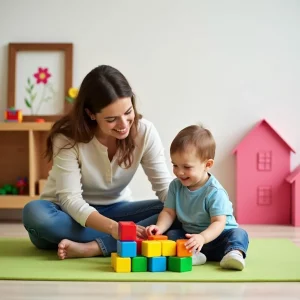
Imagine a family that follows the Montessori method for their morning routine. Instead of directing their children to eat breakfast or brush their teeth, the parents provide the tools necessary for the children to be independent. For instance, a low shelf holds easy-to-reach bowls, utensils, and snacks. The children can choose what to eat and are encouraged to prepare their own meals with minimal adult supervision. This empowers children to take responsibility for their actions and build essential life skills, promoting a sense of autonomy that is fundamental to the method.
Mixed-Age Classroom Scenario
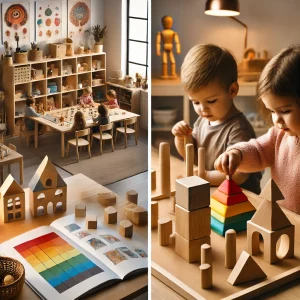
In a Montessori school, classrooms are often comprised of mixed-age groups, typically spanning three years. This setup not only fosters a sense of community but also allows older children to take on leadership roles by helping their younger peers. For example, a six-year-old might assist a four-year-old with a challenging puzzle. This collaborative learning, inherent in pedagogía Montessori, nurtures empathy and social skills.
The Role of the Educator
In the Montessori method, teachers are often referred to as “guides.” Their role is to observe and support rather than direct learning. Guides create an inviting environment filled with engaging materials, carefully selected to spark curiosity and cater to the various developmental stages of the children. This allows each child to pursue their interests while receiving appropriate guidance when necessary.
Key Benefits of the Montessori Approach
The Montessori method boasts numerous benefits. These include, but are not limited to:
- Enhanced independence and self-discipline.
- Improved problem-solving skills.
- Stronger social skills through collaborative learning.
- Increased engagement and enjoyment of learning.
How to Implement Montessori at Home
If you’re inspired to incorporate Montessori principles at home, consider the following tips:
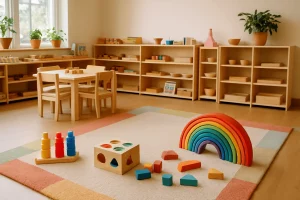
Create a Prepared Environment
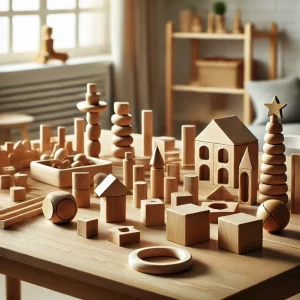
Designate a space in your home that is clutter-free, organized, and filled with engaging activities suitable for your child’s developmental level. Ensure materials are easily accessible and encourage exploration.
Encourage Choice
Allow your child to make decisions regarding their activities. This could be as simple as picking out their clothes, selecting a book to read, or determining what to help prepare for lunch. The goal is to promote autonomy and self-confidence.
Foster Independence
Encourage your child to take on age-appropriate tasks. For example, they can help with simple chores like sweeping or folding laundry. While it might take longer than if an adult did it, allowing children to complete these tasks cultivates a sense of achievement and responsibility.
Global Adoption of Montessori
The Montessori method has expanded globally, with numerous schools adopting its principles. An increasing number of parents are searching for these alternative education options, as seen through inquiries like “Montessori near me.” Furthermore, wealth of resources are available at Montessori Maria and the Understanding Montessori series provides insight into its application.
Final Thoughts
As parents and educators, understanding the essence of the Montessori method is key to creating enriching learning environments. This transformative educational philosophy not only emphasizes academic growth but also nurtures emotional, social, and physical development. To explore more about María Montessori and her legacy, visit todo lo que necesitas saber sobre María Montessori and discover our Montessori AI assistant MarÍA on our Montessori Maria website for personalized guidance.
This guiding educational approach can significantly enhance a child’s experience, transforming both home and school into spaces of joy, curiosity, and respectful learning. As resources and schools become more accessible, the journey towards a Montessori education is just a click away.
If you wish to learn more about understanding Montessori education, you can check the latest articles on our site, such as Understanding Montessori Pedagogy, and Exploring Montessori Education. The Montessori method is not just a trend; it’s a profound approach to nurturing the potential within every child.