Introduction
In recent years, there has been a significant increase in the number of individuals searching for “Montessori near me” and “Montessori school near me.” These common queries demonstrate a global demand for accessible Montessori resources and educational solutions. At our Montessori Maria website, we provide a Montessori locator tool that helps families find nearby schools and resources, along with international examples that illustrate the application of the Montessori method across diverse contexts. For instance, if you’re interested in Montessori options in Germany, this link offers a specific city example.
What is the Montessori Method?
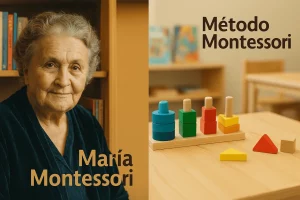
The Montessori method, founded by Dr. Maria Montessori, is an educational philosophy centered on child-led learning. It encourages independence, respect for a child’s natural psychological, physical, and social development, and emphasis on hands-on learning and collaborative play. In the Montessori environment, teachers act as guides rather than traditional instructors, fostering a love of learning by allowing children to explore their interests within a prepared environment.
Key Principles of the Montessori Method
The core principles of the Montessori Method are based on the belief that children are naturally curious and learn best when they can self-direct their learning experiences. Here are some fundamental concepts:
- Child-Centered Learning: Each child’s individual interests guide their education, ensuring that learning is meaningful and relevant.
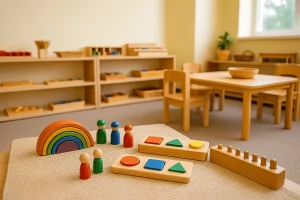
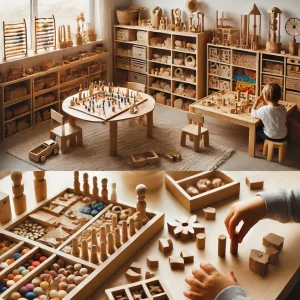
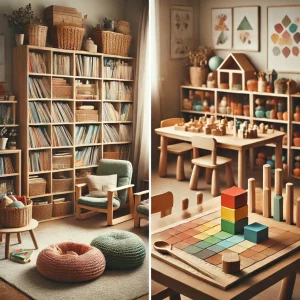
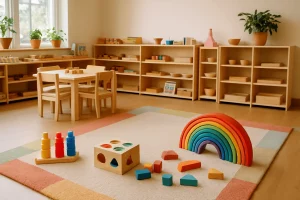
- Prepared Environment: Classrooms are designed to facilitate independent exploration and discovery, with materials that are accessible and engaging.
- Mixed-Age Classrooms: Children of varying ages are grouped together, allowing for peer learning and mentorship.
- Hands-On Learning: Learning through tactile and experiential activities encourages deeper understanding of concepts.
Real-Life Applications of the Montessori Method
To illustrate how the Montessori philosophy can be implemented in everyday life, let’s explore two real-life situations: a morning routine at home and a scenario in a mixed-age classroom.
A Morning Routine at Home
Imagine a family with a seven-year-old child. Instead of the traditional approach where parents dictate the morning routine, the Montessori method encourages that the child take charge. The child might wake up and choose their own clothes for the day, picking from a wardrobe arranged at their eye level. With a step stool, they can reach the bathroom sink to brush their teeth independently, and they would prepare their own breakfast, perhaps pouring cereal and adding fruit, all while taking personal responsibility for their choices. This approach nurtures autonomy and confidence and instills a sense of accomplishment in everyday tasks, which aligns with the principles of todo lo que necesitas saber sobre el método Montessori.
Mixed-Age Classroom Scenario
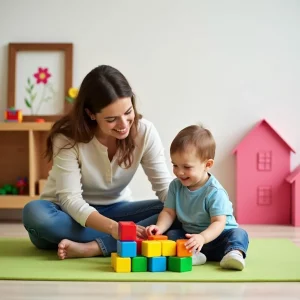
In a Montessori classroom, you might find children aged between three and six years old engaged in various activities. A four-year-old is working with building blocks, focused on constructing a tall tower, while a six-year-old is reading a book nearby. The older child offers assistance, pointing out letters and sounding out words. In this environment, younger children learn from their older peers, while older children reinforce their own knowledge by teaching others. This organic method enhances collaborative learning and develops social skills, demonstrating the effectiveness of pedagogía Montessori.
The Role of the Educator
In the Montessori environment, the teacher’s role is not to instruct but to guide. Educators observe students to understand their interests and development stages, allowing them to tailor learning experiences accordingly. They create and maintain a prepared environment where materials are accessible and organized in a way that promotes independence. This is an integral part of the method, as highlighted by the legacy of María Montessori, who believed in fostering a love for learning.
Benefits of the Montessori Method
Research has shown that the Montessori method provides numerous benefits for children, including:
- Increased academic skills, particularly in reading and math.
- Enhanced social-emotional development.
- Development of critical thinking and problem-solving skills.
- Improved concentration and focus.
Resources for Parents and Educators
As you explore the Montessori method, remember that there are numerous resources available to assist you. Whether you’re looking for local schools or engaging activities to practice at home, tools can help you enhance your understanding and implementation of these principles. At our Montessori Maria website, you can access a variety of articles, and we also have our AI assistant MarÍA available to help answer questions and guide you through the principles of the Montessori method.
Further Reading
For those seeking a deeper understanding, consider checking out some of our other articles, including:
- Understanding Maria Montessori: An In-Depth Guide for Parents and Educators
- Exploring Montessori: A Guide for Parents Seeking Educational Solutions
- Understanding Montessori Pedagogy: A Comprehensive Guide for Parents and Educators
- Understanding Montessori Education: A Comprehensive Guide for Parents and Educators
- Understanding the Montessori Method: A Comprehensive Guide for Parents and Educators
Conclusion
The Montessori method offers a transformative approach to education that respects the unique individuality of each child. With the rise in interest for “Montessori near me,” it’s clear that parents and educators are seeking ways to implement and benefit from this child-centered philosophy. By embracing the principles of the Montessori method in both the home and school environments, we can cultivate a generation of lifelong learners who are confident, independent, and equipped to navigate their world effectively. To find Montessori resources in your area, check out our website, explore our resources, and don’t hesitate to utilize our Montessori Maria website and its AI assistant MarÍA for guidance.