Introduction
In today’s fast-paced world, families often find themselves turning to the internet for educational guidance, typing in searches like “Montessori near me” or “Montessori school near me.” This surge in interest underscores a growing desire among parents and educators to adopt effective teaching methodologies that promote holistic development in children. At Montessori Maria, we provide a Montessori locator and informative guides that assist you in navigating this enriching educational landscape.
A Brief Biography of Maria Montessori
Maria Montessori, born in 1870 in Italy, was one of the first female physicians in her country. Her revolutionary approach to education emerged from her observations of children’s learning processes. Instead of applying traditional educational methods, which often relied heavily on rote memorization, Montessori advocated for creating an environment that nurtured a child’s natural curiosity and intrinsic desire to learn. Her journey led her to establish the first Montessori school, the Casa dei Bambini, in 1907. Today, her legacy continues to inspire educators and parents around the globe, as her principles remain crucial in modern education practices. To delve deeper into her life and achievements, visit our page on María Montessori y su legado.
The Montessori Method Explained
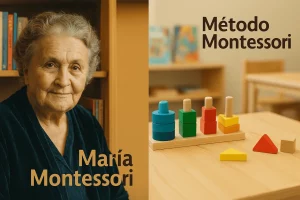
The método Montessori emphasizes child-led learning, promoting independence, and recognizing that each child develops at their own pace. One of the key pillars of this educational approach is the prepared environment, which is tailored to meet the needs of the child. This includes age-appropriate materials and activities that foster exploration and growth.
Practical Example: Classroom Reorganization
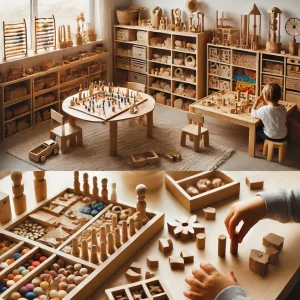
Consider the example of Ms. Thompson, a dedicated teacher who recently restructured her classroom to align with Montessori principles. Instead of traditional rows of desks, she created learning stations where children can engage in hands-on activities. There are areas for sensory exploration, logical thinking games, and a reading nook filled with diverse books. This setup not only encourages teamwork and collaboration but also respects each child’s choice to learn in their preferred manner. The result has been a noticeable increase in student engagement, curiosity, and a love for learning.
Fostering Independence at Home
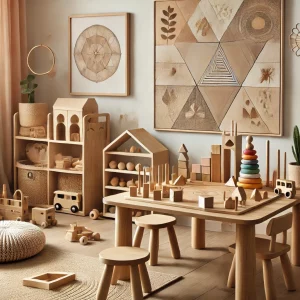
Parents can also integrate Montessori principles at home, making simple adjustments to their children’s living spaces to encourage independence. For example, transforming a child’s room by arranging materials within reach empowers them to select their clothing, toys, and activities. By designing a space that promotes self-sufficiency—like low shelves for toys and a child-sized table for meals—children learn to make choices and understand the consequences of their actions. Such environments not only aid in the development of life skills but also build confidence. For parents seeking more resources, check out this guide that elaborates on implementing these ideas during daily routines.
The Benefits of Montessori Education
Montessori education offers numerous benefits, including enhanced social skills, improved critical thinking, and a strong sense of responsibility. Children learn at their own pace within a supportive community that values each individual’s contributions. The emphasis on hands-on learning allows them to absorb concepts deeply, providing a solid foundation for future academic success. To understand more about these transformative advantages, consider exploring our article on the transformative power of Montessori education.
Real-Life Success Stories
Real-life success stories emerge from families and educators adopting the Montessori approach. Take the Smith family, for instance. By incorporating Montessori principles, they found that their previously restless five-year-old became engaged and focused when given the freedom to explore educational materials of his choosing. He developed a genuine interest in science, often conducting mini-experiments with household items. This newfound passion fueled creativity, reinforcing the belief that children learn best when allowed to follow their interests. Such stories affirm the significance of fostering independence and self-direction in learning.
How to Find Montessori Schools
Finding a quality Montessori school can often be a daunting task for parents. With a growing interest in Montessori education, families frequently search for “Montessori near me.” Our platform features a dedicated Montessori locator, enabling parents to easily find suitable educational environments that adhere to Montessori principles. Explore our Montessori locator for more information on schools in your area: Montessori near me.
Supported by Technology
In this digital age, we are also excited to introduce our AI assistant, MarÍA. With MarÍA, parents and educators can receive tailored guidance on implementing Montessori principles into their daily routines. Whether you are a teacher seeking to understand better or a parent wanting to create an enriching home environment, MarÍA can offer insightful advice. To learn more about this innovative tool, visit the Montessori Maria website.
Conclusion
The Montessori approach to education represents a paradigm shift from traditional methods, placing the child at the center of the learning experience. By adopting principles of independence, respect for a child’s choices, and a focus on valuable life skills, parents and educators can cultivate an enriching environment for growth. As you explore Montessori education, we encourage you to refer to our comprehensive guides and resources, including our article on understanding the Montessori method and understanding Maria Montessori. By embracing these principles, you can contribute to your child’s lifelong love of learning.