Introduction
In recent years, an increasing number of parents and educators have turned to search engines with queries such as “Montessori near me” and “Montessori school near me.” These widespread searches demonstrate a global demand for accessible Montessori resources, showing how deeply families want to embrace this transformative educational approach. For those who wish to explore the Montessori method further, our website offers a Montessori locator to help you find nearby resources and schools, including international examples, such as those in Oberursel, Germany.
What is the Montessori Method?
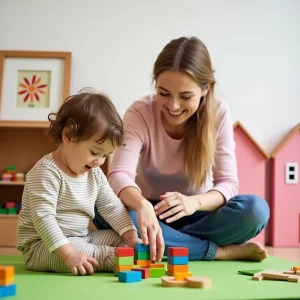
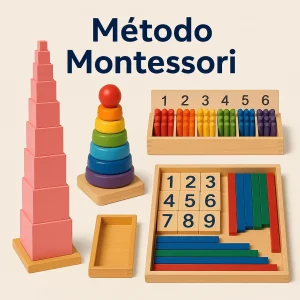
The Montessori method, founded by Dr. María Montessori, is an educational approach that emphasizes independence, hands-on learning, and respect for a child’s natural development. It encourages students to explore and learn at their own pace, under the guidance of a trained educator. The core principles of this method include:
- Child-Centered Learning: Focus on the child’s needs, interests, and abilities.
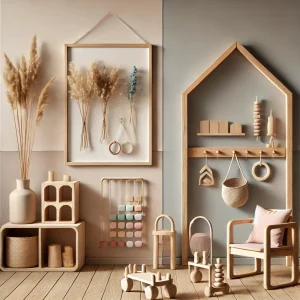
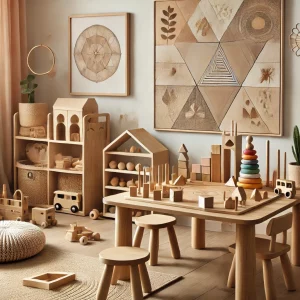
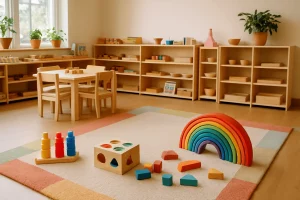
- Prepared Environment: A structured, supportive environment that encourages exploration.
- Mixed-Age Classrooms: Promoting peer learning and social development.
- Hands-On Learning: Engaging children in tangible, experiential learning.
Key Principles of the Montessori Method
The Montessori method is built on several key principles that guide its educational philosophy:
- Freedom Within Limits: Children are given the freedom to choose their activities within a structured environment.
- Respect for the Child: Recognition of the individual child’s thoughts, feelings, and learning styles.
- Support for Curiosity: Encouraging exploration and inquiry as natural parts of the learning process.
Real-Life Applications of the Montessori Method
Morning Routine at Home
Implementing the Montessori method doesn’t have to be confined to the classroom; it can be integrated into daily life at home as well. For instance, imagine a typical morning routine for a child following Montessori principles:
As dawn breaks, a five-year-old awakens in her own bedroom, filled with child-sized furniture and accessible shelves. The child can independently choose her clothing from a pre-selected wardrobe, allowing her to express her creativity and preference. After dressing, she heads to the breakfast table, where a simple, healthy meal awaits. Montessori philosophy values autonomy, so she pours her own cereal and milk, learning practical life skills along the way. This morning routine fosters independence and responsibility, core tenets of the método Montessori.
Mixed-Age Classroom Scenario
In a typical Montessori classroom, children of varying ages work together, promoting an enriching learning environment. For example, an eight-year-old might assist a four-year-old with a puzzle. This not only helps the younger child learn new skills but also enhances the older child’s understanding and solidifies their knowledge as they teach. The mixed-age environment nurtures social skills, empathy, and collaboration, aligning beautifully with the Montessori philosophy of peer-to-peer learning.
Exploring Montessori Resources
For parents and educators eager to expand their understanding of Montessori education, there are numerous resources available online. Our website aims to deliver all essential information regarding the Montessori method todo lo que necesitas saber sobre el método Montessori, including articles, guides, and helpful tips. Furthermore, our comprehensive pedagogía Montessori section provides invaluable insights into this revolutionary approach.
The Importance of Practical Life Skills
One notable aspect of the Montessori method is its emphasis on practical life skills. Children engage in daily activities that enable them to learn responsibility and independence. For instance:
- Washing dishes: A child learns to wash dishes, developing motor skills while participating in daily chores.
- Gardening: Children can plant seeds and watch them grow, fostering an appreciation for nature and patience.
These activities enhance concentration and build essential life skills that extend far beyond the classroom.
Parental Involvement in Montessori Education
Parents play a crucial role in supporting their child’s Montessori education. Engaging with your child at home through daily routines helps reinforce the skills and independence established at school. Establishing an environment rich in learning experiences is beneficial, so consider:
- Creating learning opportunities: Set up activities and stations that allow for exploration and creativity.
- Encouraging independence: Offer choices and promote self-sufficiency in age-appropriate tasks.
- Communicating with educators: Establish a rapport with teachers to understand how to complement the Montessori approach at home.
Final Thoughts
Embracing the Montessori method requires an understanding of its core principles and the willingness to incorporate them into daily life. The journey towards a Montessori-inspired lifestyle can begin at home and extend into the broader educational environment, allowing children to thrive. For those looking for support, our website provides the necessary tools and insights into this transformative approach, including our Montessori AI assistant MarÍA. We invite you to explore and discover how the Montessori method can revolutionize the way your child learns and grows.
Explore More on Montessori
For additional resources and to deepen your understanding of the Montessori approach, visit our site for these comprehensive guides:
- Understanding María Montessori: A Comprehensive Guide for Parents and Educators
- Exploring Montessori: A Comprehensive Guide for Parents
- Understanding Montessori Pedagogy: A Comprehensive Guide for Parents, Educators, and Teacher Training Students
- Embracing Montessori Education: A Comprehensive Guide for Parents and Educators
- Discovering María Montessori: A Comprehensive Guide for Parents and Educators
By equipping yourself with knowledge and understanding, you can help your child unlock their full potential through the amazing principles of the Montessori method.