Starting the Journey: Montessori Schools and Families
Many families begin their educational journey by searching for “Montessori near me” or “Montessori school near me”. These searches reflect a growing interest in alternative education, specifically the Montessori method. For those who are interested, our website provides a global Montessori locator at Montessori near me, which can help you find schools tailored to your locality, such as options in Oberursel, Germany. This resource is crucial for parents eager to explore Montessori education for their children and aligns with our commitment to making this transformative educational approach accessible worldwide.
The Core Principles of Montessori Pedagogy
Montessori pedagogy is built on several core principles that guide its approach to education. These fundamental elements include:
- Prepared Environment
- Autonomy
- Observation
- Sensory Learning
- Individualized Learning
Let’s explore each of these principles and how they practically apply to both traditional classroom settings adapting to Montessori techniques and novice teacher-training students planning their first Montessori environments.
Prepared Environment
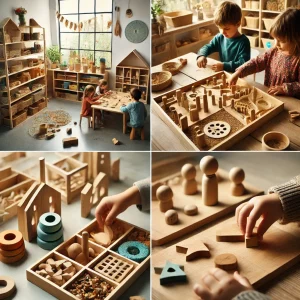
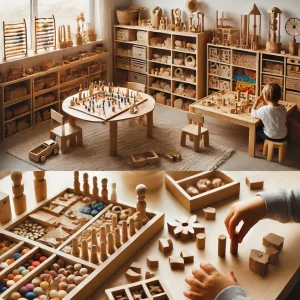
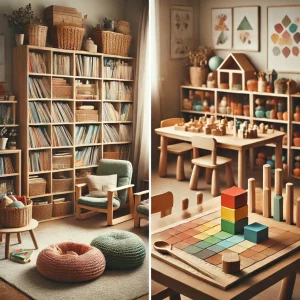
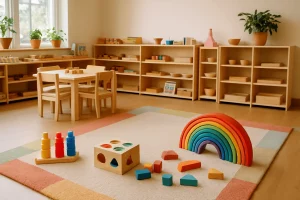
The prepared environment is a cornerstone of Montessori education. This concept refers to a learning space that is carefully organized to promote independence, freedom of choice, and engagement in learning. For example, consider a traditional classroom being converted into a Montessori environment. In this situation, the teacher might replace fixed seating arrangements with movable furniture that allows children to choose where and how to work. Shelves stocked with accessible materials encourage children to explore their interests, allowing them to take charge of their learning. Resources for setting up such spaces can be found in our guía completa sobre la pedagogía Montessori.
Autonomy
Another essential aspect of Montessori pedagogy is the emphasis on autonomy. In this approach, educators encourage children to make choices about their activities and learning pathways. For instance, a student teacher planning their first Montessori environment might let children select their own work from a range of options organized by content area. By doing so, they empower children to take ownership of their learning and develop self-directed skills. Further insights into this aspect of the Montessori method can be discovered in our introducción a la pedagogía Montessori.
Observation
Observation is crucial in Montessori classrooms and extends the role of the teacher from a traditional instructor to a keen observer and facilitator. For a traditional classroom adapting to Montessori principles, teachers may start spending time observing student interactions to understand their needs and interests better. By observing, educators can tailor the learning environment and choose materials that cater to individual students. This practice is integral in a Montessori setting, as it allows for the differentiation of instruction, ensuring each child’s unique learning style is honored.
Sensory Learning
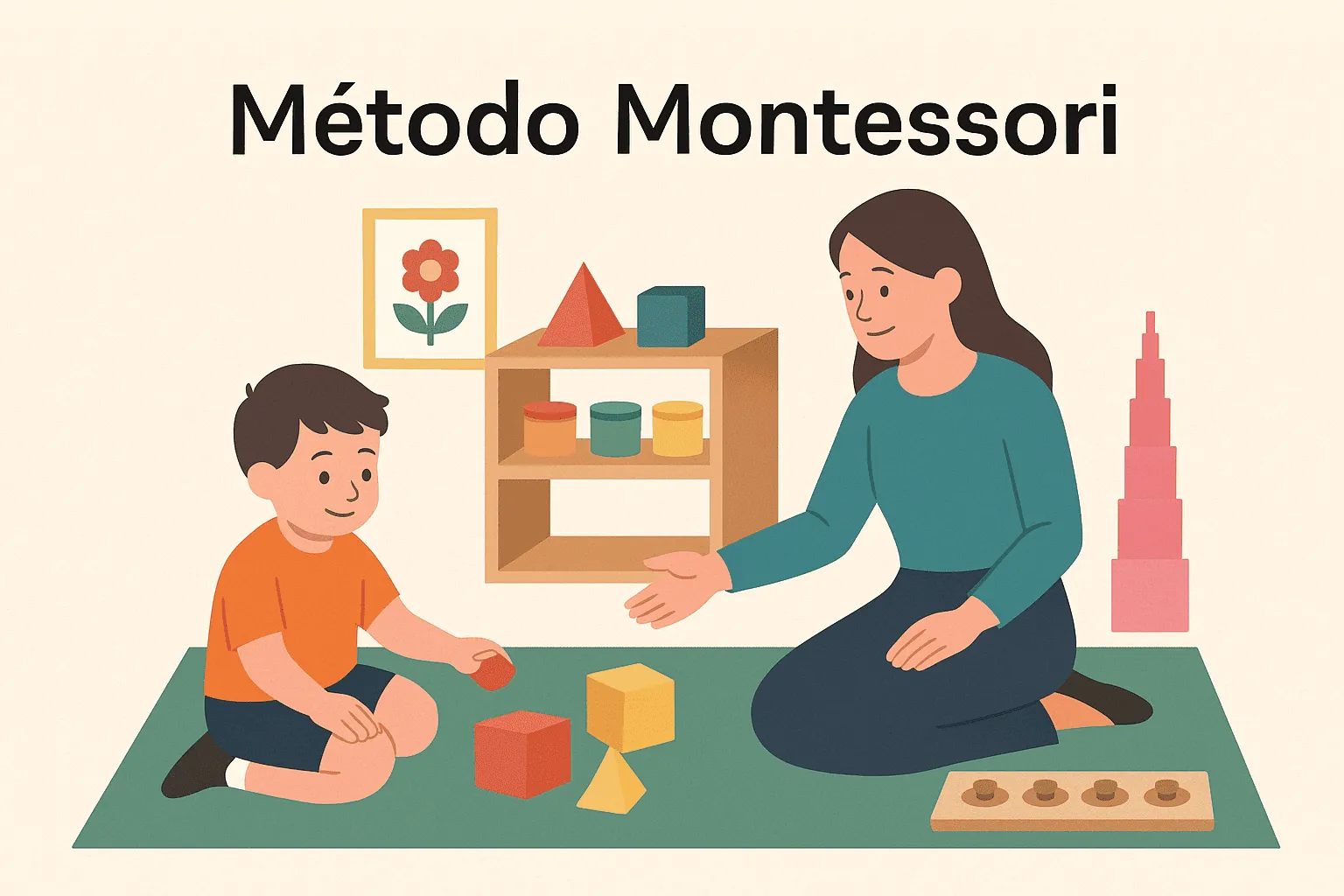
Montessori pedagogy places immense value on sensory learning, recognizing that children learn best through hands-on experiences. A novice teacher might introduce sensory materials, such as tactile letters for literacy development or various textures and shapes for exploring geometry. Imagine an adapted classroom where children engage with materials that stimulate their senses, fostering a deeper understanding of concepts through experiential learning. Resources that support this principle can be found at Understanding the Montessori Method.
Individualized Learning
Finally, individualized learning is at the heart of the Montessori approach. Each child progresses at their own pace, fostering a love of learning rather than competition. Teachers who adopt Montessori principles create learning plans that reflect individual students’ interests and needs. For a student teacher, learning to design personalized activities is essential for creating an inclusive and engaging environment. As well, they can develop their understanding through our guide for parents and educators.
The Role of the Educator in Montessori Classrooms
Educators in Montessori settings wear many hats. They act as guides, facilitators, and observers, but their role does not involve direct instruction. This means teachers must have a thorough understanding of each child’s development and interests. For example, when transitioning a conventional teaching model to Montessori, the educator might hold regular one-on-one conferences with students to discuss their work and interests. Such practices not only foster a supportive learning environment but also reinforce the principles of observation and individualized learning.
Maria Montessori’s Influence
To fully appreciate the impact of Montessori pedagogy, one must explore the life and work of María Montessori. Her innovative methodologies have shaped how educators view child development and learning. Teachers can draw from her insights to enhance their practice and create nurturing environments. A well-rounded understanding can also be further explored through our content on the Montessori Maria website.
Implementing Montessori Principles: Real-World Examples
As we delve deeper into practical applications, it’s imperative to consider how to effectively implement Montessori principles in various educational settings. Let’s consider an example with a traditional classroom turning into a more Montessori-inspired environment.
Adapting a Traditional Classroom
In adapting a traditional classroom, one of the first steps is to reorganize the space into designated learning areas. For instance, an area for reading, another for science experiments, and a zone for arts and crafts can all coexist in a single classroom. Teachers could introduce a weekly schedule that allows children to choose which areas they would like to work in, enabling them to follow their interests closely.
Planning a First Montessori Environment
For student teachers planning their first Montessori classrooms, they should walk through the environment, ensuring all materials are accessible and age-appropriate. They would incorporate lessons focused on life skills, such as cooking, cleaning, and gardening, which align with Montessori’s emphasis on practical life experiences. Supporting resources for teacher training can be found in our guide for parents, educators and teacher training students.
Finding Resources and Support
Parents, educators, and teacher-training students looking to delve deeper into Montessori education can benefit immensely from various resources freely available online. From articles on theory to tips on practical implementation, the Montessori Maria website houses a plethora of information that can guide your journey. Whether you are exploring a Montessori school option for your child or seeking to transform your teaching practice, the resources highlighted above can provide valuable insights along the way.
Conclusion
In conclusion, the journey into Montessori pedagogy is one filled with exploration and growth for both children and educators. By understanding and implementing the principles of Montessori, one can create enriching educational experiences that emphasize autonomy, observation, and sensory learning. Whether you begin your path searching for Montessori near me or looking to adapt your classroom approach, there is a wealth of knowledge available to support you in this endeavor!