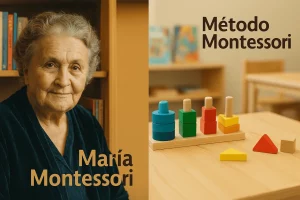
Introduction to Montessori Education
As parents and educators seek alternative educational approaches for their children, many search for terms like “Montessori near me” or “Montessori school near me.” These phrases highlight the growing interest in Montessori education across the globe, where families are looking for a nurturing, child-centered learning environment. To facilitate this, our website offers a comprehensive Montessori locator tool that can help you find local schools or resources — check out examples like Montessori near me and Montessori school near me.
The Home Environment
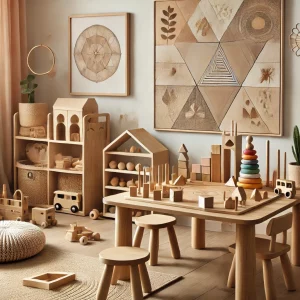
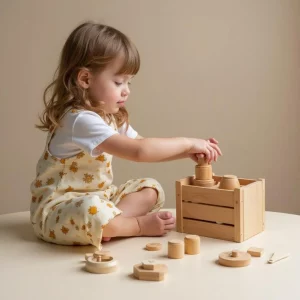
Creating a Montessori-inspired home environment can significantly enhance your child’s learning experience. The key is to promote independence and self-directed activity. For instance, a family might set up a dedicated Montessori kitchen space where children can safely engage in food preparation. This area could include child-sized utensils and simple recipes that allow them to explore cooking at their own level. Children not only learn essential life skills but also develop confidence as they master these tasks.
Practical Independence at Home
Let’s consider a practical example of how this approach can work. A parent can adapt their living room shelves to be more accessible for their children. By placing books, toys, and art supplies within arm’s reach, children are encouraged to choose activities independently, fostering their decision-making skills. This setup not only nurtures their independence but allows parents to guide them in making choices that develop their abilities and interests. For a deeper understanding of this approach, visit our introduction to Montessori pedagogy.
The School Environment
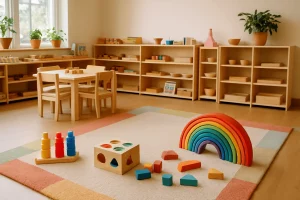
In a Montessori school setting, the environment is meticulously prepared to support children’s individual learning. The layout is designed to allow movement and exploration. For example, one teacher might rearrange materials on low shelves so that students can easily access various learning tools, from counting beads to sensory bins filled with textures. This accessibility empowers children to take charge of their own learning journey.
Supporting Self-Regulation in the Classroom
Consider a student who struggles with emotional outbursts. In a Montessori classroom, educators are trained to recognize these moments as opportunities for growth. A teacher might introduce calming materials, such as a sand timer or a ‘calm corner’ filled with soft cushions and books to help the student learn self-regulation. By teaching them how to find solace within a structured environment, students develop essential life skills that extend beyond the classroom. Learn more about these frameworks in our complete guide on Montessori pedagogy.
Emotional Development
Another core principle of Montessori education is emotional development, which is crucial for a child’s overall growth. This can manifest in various forms, from constructive conflict resolution to nurturing empathy and respect for others. In both home and school environments, we can support this development through consistent communication and modeling behavior.
Nurturing Empathy and Social Skills
For instance, when children engage in group activities, they learn how to navigate social dynamics. Imagine a group project where children work together to create a piece of art. They learn to listen, share ideas, and provide constructive feedback to each other. These experiences are fundamental to emotional intelligence and prepare them for future collaborative settings. Understanding the impact of early emotional learning is vital, and you can explore more on this topic through our articles, particularly the comprehensive guide for parents and educators.
Conclusion
Montessori education offers a transformative approach that empowers children to learn autonomously and thrive in a nurturing environment. From creating a Montessori-inspired home setup to recognizing the importance of educational settings, both parents and educators play a crucial role in this journey. For those interested in exploring local Montessori options, be sure to utilize the Montessori locator tool available on our website, allowing you to discover resources that can support your child’s learning path.
To delve deeper into the Montessori philosophy and its application in modern education, visit our site or consult the comprehensive guide for educators, where you can find insights that will further enrich your understanding of this remarkable educational method.