The Growing Interest in the Montessori Method
In today’s fast-paced world, many parents and educators are increasingly searching for alternative educational methods that prioritize child-led learning. This is evident in common online queries like “Montessori near me” and “Montessori school near me,” which reflect a global need for accessible Montessori resources. At our Montessori Maria website, we provide a helpful Montessori locator, along with international examples to guide families and educators in their search for quality Montessori education.
Fundamental Principles of the Montessori Method
The Montessori method, developed by Dr. Maria Montessori, is built upon several core principles designed to foster autonomous learning and respect for children’s natural development. The main tenets include:
- Child-Centered Learning: In a Montessori environment, the child’s interests and developmental needs guide learning experiences.
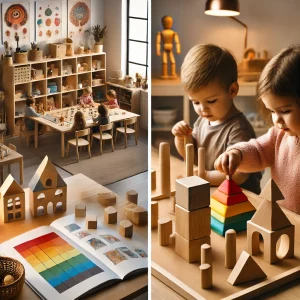
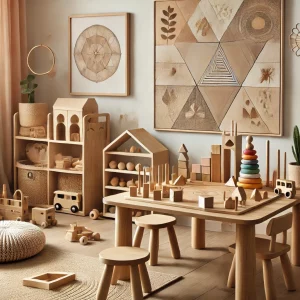
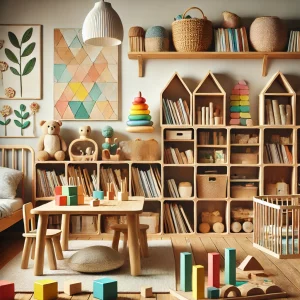
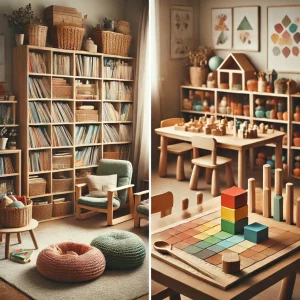
- Prepared Environment: Classrooms are designed to promote exploration and independence, with materials accessible to children.
- Mixed-Age Classrooms: Children of different ages learn from and with each other, fostering collaboration and social development.
- Hands-On Learning: Montessori materials engage children in active learning through sensory experiences.
- Respect for the Child: Educators foster a respectful relationship with children, recognizing their potential and individuality.
Real-Life Application: A Morning Routine at Home
To illustrate the Montessori method in action, let’s consider a typical morning routine at home. Imagine a five-year-old child waking up in the morning. Instead of being told what to do next, the child has the freedom to choose their activities. Their bedroom is prepped with age-appropriate materials—a small step stool for reaching the sink, a drawer with carefully selected clothing, and a quiet space for reading or meditation.
The child begins the day by brushing their teeth, independently choosing healthy food for breakfast, and dressing themselves. The parent only intervenes when necessary, fostering a sense of autonomy and pride in their accomplishments. This autonomy empowers children and reinforces their problem-solving skills, fundamental aspects of the metodo Montessori.
Mixed-Age Classroom Scenario
Now let’s explore a mixed-age classroom scenario at a Montessori school. In this setting, three-year-old, five-year-old, and seven-year-old children learn together. The older children mentor the younger ones in various activities, fostering collaboration while developing leadership skills.
For example, a seven-year-old may demonstrate a math activity to a five-year-old child using Montessori beads, while a three-year-old observes and eventually engages with the materials. The presence of children at different developmental stages helps build a community where each child feels valued, contributing to others’ learning experiences. Such dynamics encapsulate the essence of pedagogía Montessori.
The Importance of Community in Montessori Education
A pivotal aspect of the Montessori method is the community it fosters among educators, parents, and children. Parents play an essential role in extending the Montessori philosophy into homes, ensuring a seamless transition between school and home life.
To empower parents and educators, resources and workshops often occur in local communities. Families searching for relevant Montessori options can use our links for specific locations, such as Xenia Village or Yates City Village. This local engagement promotes a supportive network that enhances children’s educational experience.
Supporting Each Child’s Unique Potential
In a Montessori setting, educators are trained to observe rather than direct. They recognize each child’s unique potential, learning style, and interests. A profound respect for individualized learning fosters self-esteem and motivates children to explore their curiosities.
By offering materials tailored to various skill levels, educators allow children to progress at their own pace. This personal approach is an invaluable component of the metodo Montessori, enabling every child to reach their full potential.
Real-life Benefits of the Montessori Approach
Parents and educators who adopt the Montessori method often notice significant benefits in children’s social, emotional, and cognitive development. Children in Montessori environments tend to be more confident, independent, and better problem-solvers. They exhibit a love for learning that cultivates lifelong inquisitiveness.
Additionally, the principles of peace and grace are woven throughout the Montessori fabric, fostering respect and empathy among peers. For example, children learn conflict resolution through peer interactions, supporting emotional intelligence and social skills.
Finding Montessori Resources Near You
If you’re interested in finding a Montessori school for your child, our convenient Montessori locator will help connect you with nearby options. Whether you’re looking for a school in Oberursel, Germany or across the globe, we provide up-to-date listings of Montessori institutions that adhere to the core principles of Maria Montessori’s approach.
Final Thoughts
Understanding the pedagogía Montessori allows parents and educators to create environments that nurture children’s curiosity and independence. By exploring Montessori methodologies, we can better support our children in their developmental journey.
For further insights, consider exploring todo lo que necesitas saber sobre el método Montessori or utilize our Montessori Maria website and its AI assistant MarÍA to discover more resources tailored to your needs.
Join the Montessori Movement
The Montessori method is more than just a teaching philosophy; it’s a movement rooted in the belief that children learn best through exploration and discovery. As we endeavor to implement the principles of the metodo Montessori in our homes and schools, we contribute to a positive shift in educational paradigms for future generations.