The Growing Demand for Montessori Education
In today’s world, many parents and educators are searching for effective and nurturing educational methods. Common search queries like “Montessori near me” and “Montessori school near me” highlight a global need for accessible Montessori resources and options. This interest reflects a desire for a holistic approach to education that fosters independence, creativity, and a love for learning in children. Our website offers a Montessori locator to help you find nearby programs and schools, along with international examples of successful Montessori implementations.
What is the Montessori Method?
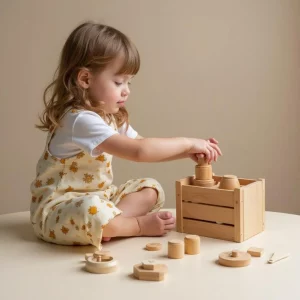
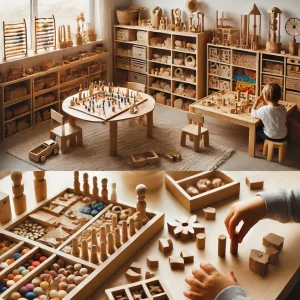
The Montessori method is an educational approach developed by Dr. María Montessori, which emphasizes child-led learning and respects the natural developmental stages of children. The method is built around several core principles, such as mixed-age classrooms, hands-on learning, and the belief that children learn best in supportive environments that encourage exploration.
Principles of the Montessori Method
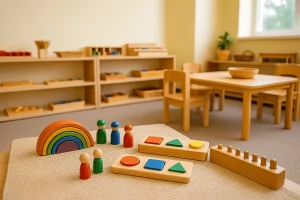
At its core, the Montessori method promotes three main principles: respect for the child, independence, and a prepared environment. Parents and educators may often wonder how these principles manifest in real-life situations, thus it is essential to provide examples to illustrate how the Montessori philosophy works.
Morning Routine at Home
Consider a morning routine in a Montessori-inspired household. Instead of parents managing all aspects of their children’s readiness for school, the morning ritual is designed to encourage autonomy. Children choose their own clothes, make their bed, and prepare their breakfast with minimal guidance. For instance, a five-year-old may select their favorite shirt from a low-hanging rack and pour their cereal into a bowl independently. In this scenario, children learn to make decisions, practice self-care skills, and develop confidence.
Mixed-Age Classrooms in Schools
In a Montessori school setting, mixed-age classrooms are common. For example, a classroom of children aged three to six years old allows for peer learning and mentorship. A younger child may observe an older peer mastering a particular skill, such as pouring or sorting activities. This social interaction fosters a sense of community, where children feel valued whether they are leading or following.
The Legacy of María Montessori
The impact of María Montessori’s work continues to be influential in modern education. Her emphasis on learning through discovery and the importance of tailored educational experiences have set a transformative standard in pedagogy. To delve deeper into her legacy, you can explore “todo lo que necesitas saber sobre el método Montessori” here.
Connecting Montessori with Technology
In an increasingly digital world, the incorporation of technology into Montessori education can be both beneficial and challenging. The key is to maintain the essence of Montessori while adapting to contemporary needs. For this, our Montessori Maria website and its AI assistant MarÍA serve as excellent resources for educators and parents looking to harmonize technology with the Montessori method.
How Educators Can Support Montessori Practices
Educators play an essential role in implementing the Montessori approach in learning environments. This support can include creating a nurturing space that allows for exploration and risk-taking. Moreover, continuous professional development and familiarity with the principles of pedagogía Montessori are crucial for teachers to foster an enriching experience for their students.
Tools and Resources for Parents
As parents, understanding the Montessori method equips you with tools to support your child’s education effectively. Reading informative guides, such as this one on understanding the Montessori method, can provide insights on how to implement strategies at home. Additionally, exploring local Montessori schools and programs can help parents find a suitable environment for their children.
Global Examples of Montessori Education
Looking beyond local resources, international examples of the Montessori method offer ideas for implementation across different cultures. For instance, schools in countries like Germany have effectively adopted the Montessori approach, aiding in the development of autonomous and engaged learners. Explore a local example in Oberursel, Germany, and see what Montessori practices look like there here.
Final Thoughts
The Montessori method offers a transformative approach to education, fostering independence, collaboration, and a lifelong passion for learning. As the demand for Montessori education grows, so does the need for accessible resources and support for parents and educators alike. By visiting our website, you can find helpful tools, information, and connections to your local Montessori options through our Montessori locator.
Further Reading
To enhance your understanding of Montessori principles, consider reading “Exploring Montessori Pedagogy” and “Montessori Education: A Comprehensive Guide.” These resources provide a thorough overview and practical insights into Montessori practices.