Introduction
In today’s world, many parents and educators are searching for effective educational methods that cater to the needs of children. Common searches like “Montessori near me” and “Montessori school near me” reveal a growing interest and need for accessible Montessori resources globally. If you find yourself looking for such resources, our website offers a Montessori locator to help you find local schools and programs, including international examples like this one in Oberursel, Germany.
What is the Montessori Method?
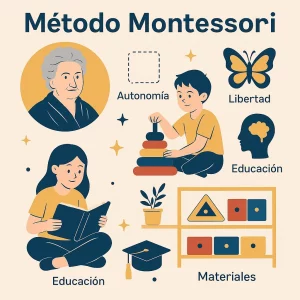
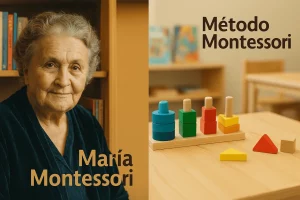
The Montessori method, developed by Dr. María Montessori, is an educational approach based on child-led learning, focusing on the natural development of children. It encourages autonomy, hands-on learning, and mixed-age classrooms, allowing children to learn at their own pace. To dive deeper, you can check todo lo que necesitas saber sobre el método Montessori.
Fundamental Principles of the Montessori Method
At the heart of the Montessori method are several fundamental principles:
- Child-Centered Learning: The child is seen as an active participant in their own learning.
- Autonomy: Children are encouraged to make choices, fostering independence.
- Respect for the Child: The developmental needs of the child are respected, promoting self-esteem and confidence.
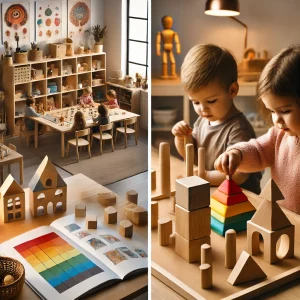
- Prepared Environment: Classroom environments are carefully designed to facilitate exploration and learning.
- Mixed-Age Classrooms: Children of various ages learn collaboratively, promoting peer-to-peer learning.
Real-Life Situations Applying Montessori Principles
A Morning Routine at Home
Let’s consider a typical morning routine at home following the Montessori principles. Imagine a five-year-old child named Sara waking up in the morning. Instead of a parent guiding her every step, Sara knows she has the autonomy to choose her clothes for the day from a low, accessible wardrobe. The choice of selecting her clothes builds her independence, while the pre-organized clothes help her make a quicker decision. After dressing, she heads to the kitchen where child-sized utensils and bowls are available for her to prepare her own breakfast, encouraging responsibility. This morning routine is not just about getting ready for the day; it’s a hands-on experience of autonomy and choice, which are key elements in the pedagogía Montessori.
A Mixed-Age Classroom Scenario
Now, let’s explore a mixed-age classroom scenario in a Montessori school. Picture a classroom with children ranging from three to six years old. In this environment, older children often share their knowledge and skills with younger ones. For instance, a six-year-old named Leo might be helping a four-year-old named Mia learn how to use the beads for counting. This peer teaching fosters not only understanding but also a sense of community and responsibility among the children. As Leo teaches Mia, he reinforces his own knowledge while developing leadership skills. The mixed-age structure of the classroom allows children to learn from each other and supports their emotional and social development.
The Role of the Educator in Montessori Education
In Montessori education, the role of the educator is quite different from traditional methods. Instead of being a primary source of knowledge, educators act as guides or facilitators. They observe the children, understanding their interests and developmental stages, and then introduce materials that fit those needs. For more on how educators engage with students using Montessori principles, feel free to read our detailed guide on the Montessori method.
Exploration and Learning Through Play
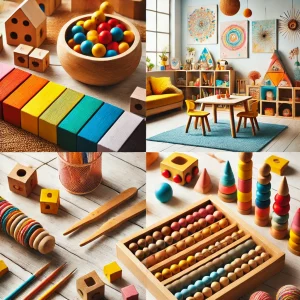
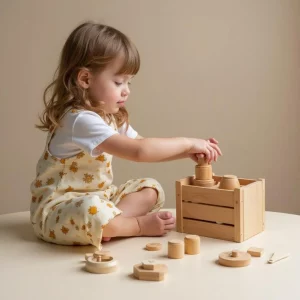
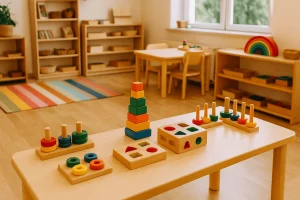
Play is an essential component of learning in the Montessori method. Children are encouraged to explore various materials that promote sensory experiences. The designed materials, like the pink tower or the golden beads, are meant to be engaging yet educational. They cater to different senses, allowing children to discover concepts like size, volume, and quantity through tactile interaction, reinforcing the idea that learning can be both joyous and informative.
Understanding Montessori’s Legacy
María Montessori’s educational philosophy has left a profound mark on the world of education. If you’re interested in exploring her life and contributions further, please visit this link. Her approach has inspired countless educators and parents to rethink how children learn and how education is delivered.
Conclusion
The Montessori method offers a rich and diverse approach to education that emphasizes independence, respect, and collaborative learning. As parents and educators, embracing these principles in both home and school settings can profoundly influence a child’s learning journey. Whether you are seeking a Montessori school for your child or looking to incorporate Montessori practices at home, we recommend utilizing our resources. To learn more about our curriculum and philosophy, visit our Montessori Maria website and its AI assistant MarÍA, which can assist you in understanding these concepts.