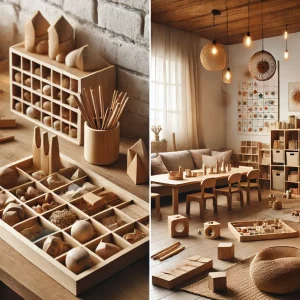
The Global Search for Montessori Resources
In today’s digital world, parents and educators are increasingly searching for information related to education methods, with “Montessori near me” and “Montessori school near me” frequently appearing in search engines. These common inquiries underline a growing global demand for accessible Montessori resources. If you’re looking for a Montessori school or program in your area, our website offers a Montessori locator that can help guide you through the available options in your locality. Be sure to check out international examples and local listings such as those available for Oberursel, Germany as well.
What is the Montessori Method?
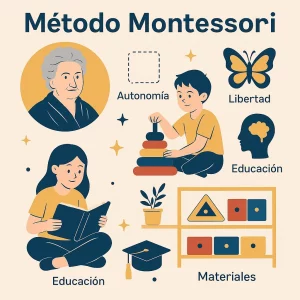
The método Montessori is an educational approach developed by Dr. María Montessori. It emphasizes child-led learning, where children are allowed to explore their interests at their own pace. The fundamental principles of this method are built around the concepts of independence, respect for a child’s natural psychological development, and observation of the child. In the Montessori classroom, you will find mixed-age groups, hands-on learning materials, and a prepared environment designed to foster curiosity and a love for learning.
The Importance of Independence
Independence is a cornerstone of the Montessori approach. Children are encouraged to make choices, solve problems, and take responsibility for their own learning. For example, consider a typical morning routine at home. A child may wake up and choose their clothes, making decisions about what they want to wear while practicing dressing themselves. Parents can support this autonomy by creating an environment where everything, from clothing to breakfast options, is accessible to the child. This not only builds confidence but also instills a sense of responsibility as they learn to manage their personal tasks.
Mixed-Age Classrooms
In a Montessori school, the classroom environment often includes children of varying ages. For instance, a mixed-age classroom might consist of children aged three to six years old. This setup allows younger children to learn from their older peers, while older children reinforce their knowledge by teaching others. For example, when a six-year-old explains how to use scissors to a younger child, both individuals gain valuable skills. The older child practices leadership and communication, while the younger child learns through observation and imitation. Such interactions build community and foster social skills, which are crucial for a child’s development.
Fundamental Principles of Montessori Education
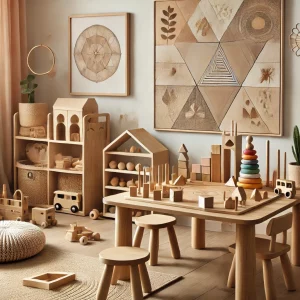
The Montessori system revolves around several key principles: respect for the child, the prepared environment, and the role of the educator. Educators serve as guides or facilitators rather than traditional instructors, supporting each child’s unique learning journey by observing and providing appropriate resources. In this way, children become active participants in their learning, developing critical thinking skills and a sense of ownership over their education. To dive deeper into these concepts, you can explore todo lo que necesitas saber sobre el método Montessori.
Real-Life Applications of the Montessori Method
To better understand how the Montessori method can be applied in both home and educational environments, consider the following two real-life situations: one in the home and the other in a classroom setting.
Morning Routines at Home
Imagine a morning routine in a household that embraces the pedagogía Montessori. A three-year-old wakes up at their own pace, perhaps choosing to rise without the use of an alarm. Their space is prepared with clothing laid out within reach and easy-to-navigate options for breakfast, such as fruits, yogurt, or self-serve cereals. This setup encourages the child to explore and make choices, promoting a sense of independence and initiative. Through these small daily choices, children learn to express their preferences and develop problem-solving skills.
Montessori in the Classroom
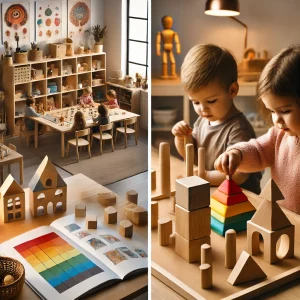
In a Montessori classroom, you may find children working on various activities simultaneously. Let’s say one group of children is engaged in a math exercise using beads, another child is reading quietly in a corner, while a third is collaborating with a peer on a science project. This allows for individual learning styles to flourish. Teachers circulate, observing and providing guidance as needed. If a child struggles with a math concept, the educator might introduce new materials or present an alternative way of understanding. You can see how effective this approach is by visiting our comprehensive guide which breaks down these principles further.
Key Benefits of the Montessori Method
Research indicates several benefits linked to the implementation of the Montessori method. Children often show not only increased academic achievement but also elevated social and emotional skills. These skills stem from the independent and collaborative nature of the learning environment. When navigating the world of education for your child, it is essential to consider the impacts of a child-centered approach. Often, parents are seeking a deeper understanding of these concepts to make informed choices for their families.
Encouraging Lifelong Learning
One of the lasting effects of the Montessori method is the cultivation of a lifelong love for learning. Children exposed to this method often carry their enthusiasm for knowledge into later years, influencing their academic choices and personal interests. They develop intrinsic motivation because they are not limited by traditional educational structures. This prepares them not just for school, but for life beyond the classroom.
Finding Montessori Resources
Given the growing interest in this educational philosophy, resources are increasingly accessible. By navigating the landscape of Montessori while utilizing tools like Montessori near me, parents can empower their children by finding the right environments tailored to their needs. Our Montessori Maria website and its AI assistant MarÍA are here to help guide you through every step of your Montessori journey.
In Summary
Overall, the método Montessori offers a transformative approach to education, centering children in their learning experiences. By fostering independence, supporting social interactions, and embracing self-directed learning, this method provides numerous benefits to children in both home and school settings. For more information about María Montessori and her legacy in education, check out this link: María Montessori. If you are seeking to deepen your understanding, you can refer to posts like our comprehensive guide to Montessori education or our parents guide for insights into empowering your child’s learning journey.