The Growing Interest in the Montessori Method
In today’s world, many parents and educators are turning to the Montessori method as they search for effective education systems. Common searches like “Montessori near me” and “Montessori school near me” highlight the global need for accessible Montessori resources. This approach to education, developed by María Montessori, emphasizes learning through experience and independence. To support this growing interest, our website offers a Montessori locator, helping families and educators find resources and schools that adhere to this approach. If you’re in Oberursel, Germany, for instance, you can explore your options here.
What is the Montessori Method?
The Montessori method is a child-centered educational philosophy that is based on extensive research about how children learn best. This method encourages self-directed activity, hands-on learning, and collaborative play in a thoughtfully prepared environment. Developed in the early 1900s, this approach has stood the test of time and has been adopted in schools around the world. It emphasizes the development of the whole child – cognitively, emotionally, socially, and physically.
Fundamental Principles of the Montessori Method
At the core of the Montessori method are several fundamental principles, each aimed at fostering a love of learning and natural curiosity in children:
- Respect for the Child: The Montessori method is built on the belief that children deserve respect and understanding. Teachers observe rather than instruct, recognizing each child’s unique personality, needs, and pace.
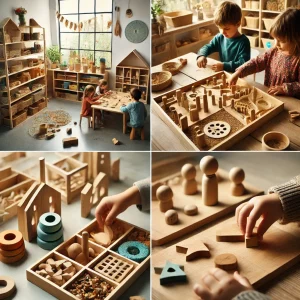
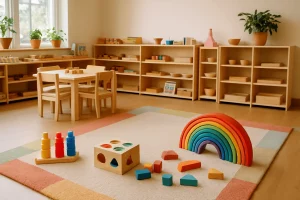
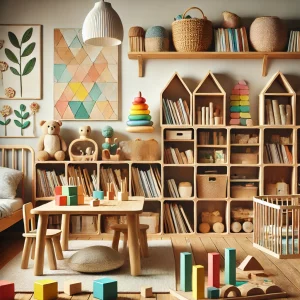
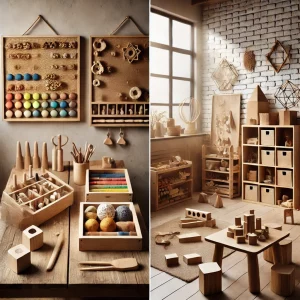
- Prepared Environment: Classrooms are designed with age-appropriate materials, allowing children to explore and learn independently. The environment is an essential factor in their development.
- Freedom Within Limits: Children are given the freedom to choose their activities within a framework of clear boundaries. This helps cultivate responsibility and self-discipline.
- Mixed-Age Classrooms: By mixing different age groups, children learn from one another, fostering collaboration and peer mentoring.
- Focus on the Whole Child: Academics are important, but so are social interactions, emotional development, and physical growth.
Real-Life Situations: Montessori in Action
To better understand the Montessori approach, let’s delve into a couple of real-life scenarios that illustrate its key principles. These examples highlight the autonomy fostered at home and the collaborative learning found in Montessori classrooms.
A Morning Routine at Home: Embracing Montessori Autonomy
Imagine a typical morning in a household that embraces the Montessori method. Instead of rushing their child through breakfast, parents encourage independence. They set out materials and a selection of healthy food options, allowing their child to choose what to eat. Plates, utensils, and water bottles are accessible and child-sized, enabling the child to serve themselves. This simple act not only promotes autonomy but also teaches responsibility.
After breakfast, the family might follow a natural rhythm, allowing the child to participate in preparing for the day. Children are invited to dress themselves, choose their outfit from a selection, and even find their shoes. Parents might offer guidance or suggestions, but the goal is for the child to make choices and learn through experience.
Mixed-Age Classroom Scenario
In a Montessori classroom, the diversity of ages creates a vibrant learning environment. Children aged three to six might work together on a project that incorporates art, science, and language. A five-year-old could be teaching a younger peer how to paint, while another child shares a story related to their creative work.
Teachers facilitate these interactions, observing rather than dominating. Their role is to guide and to make sure the environment is rich with resources while remaining respectful of each child’s learning process. This fosters not only academic skills but critical social skills such as communication and teamwork.
Benefits of the Montessori Method
The Montessori method is not without its criticisms, but countless parents and educators praise it for the numerous benefits it offers:
- Enhanced Independence: Children learn to take initiative and responsibility for their own learning.
- Improved Critical Thinking Skills: By engaging with hands-on materials, children develop problem-solving skills.
- Social Skills Development: In mixed-age settings, children learn to respect and cooperate with one another.
- Personalized Learning: The individualized pace allows children to thrive without the pressure to conform to a specific timeline.
If you’re looking for Montessori near me, our website can help guide you to local resources and articles that delve deeper into these principles, such as pedagogía Montessori.
Finding Montessori Resources
As the demand grows, it’s essential to have reliable resources at hand. By utilizing our Montessori locator, you can find schools, workshops, and educators who specialize in the Montessori method, ensuring you have access to the best materials and learning environments that support this approach.
Conclusion: Embracing the Montessori Way
In conclusion, the Montessori method is a transformative approach to education that emphasizes respect for the child, autonomy, and collaboration. Whether you’re a parent considering this method for your child or an educator looking to understand its principles more profoundly, resources are available. Explore our Montessori Maria website and its AI assistant MarÍA for tools, articles, and guidance.
For more in-depth discussion, check our articles such as Understanding Maria Montessori: A Guide for Parents and Educators, as well as specific instances of schools and methods in regions like Italy, including Montessori method in Petrignano.
The journey into Montessori education is a rewarding one, guided by principles that advocate for childhood development tailored to each individual. Discover what the Montessori experience can offer for learning, growth, and happiness in your child’s educational journey.