Introduction
In today’s world, parents and educators are increasingly searching for alternative educational approaches. Common searches like “Montessori near me” and “Montessori school near me” underline the growing global need for accessible and effective Montessori resources. Our website not only offers a Montessori locator but also showcases international examples of Montessori schools. For instance, if you’re in Oberursel, Germany, you can find local Montessori options at this link.
What is the Montessori Method?
The Montessori method, developed by María Montessori, is an educational philosophy that emphasizes child-led learning and individual development. Instead of traditional, teacher-centered instruction, the Montessori approach encourages children to explore and learn at their own pace, fostering independence and creativity. This method is built on a few fundamental principles:
1. Child-Centered Learning
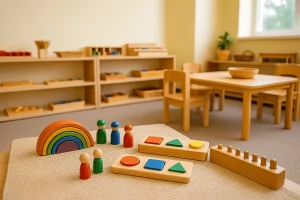
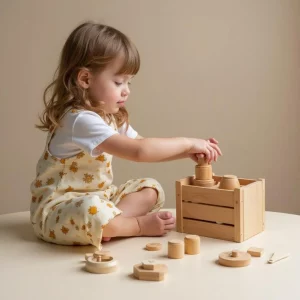
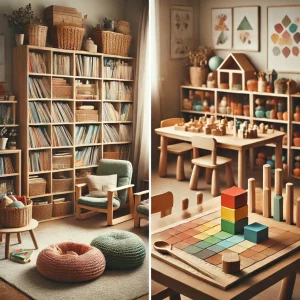
At the heart of the Montessori method is the belief that children learn best when they are active participants in their education. This means providing a carefully prepared environment where children can choose their activities freely. In a Montessori classroom, you’ll often find children working on different tasks, moving about, and engaging with materials that interest them.
2. Mixed-Age Classrooms
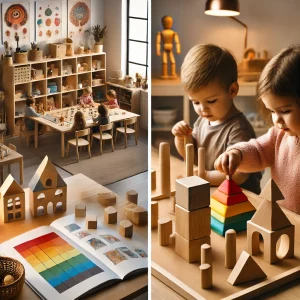
Montessori classrooms typically consist of mixed-age groups, which allows children to learn from one another. Older children take on leadership roles, mentoring younger peers while also reinforcing their own knowledge. This collaborative environment enhances social skills and community building.
3. Respect for Each Child’s Individual Learning Style
Every child is unique, with their own interests and ways of understanding the world. The Montessori method respects these differences, offering a variety of learning materials that cater to diverse learning styles. Teachers are facilitators, observing each child to guide them in their educational journey without imposing rigid structures.
4. Focus on Practical Life Skills
Montessori education places a strong emphasis on practical life skills, helping children develop independence and self-reliance. Tasks such as pouring water, cleaning spills, or preparing snacks are integrated into the daily routine. These activities not only teach children essential life skills but also support their concentration and motor skills.
Real-Life Situations Demonstrating the Montessori Method
Morning Routine at Home
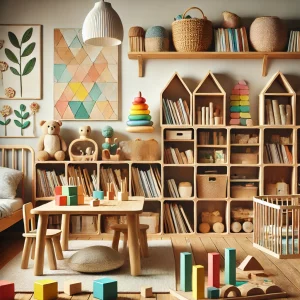
Consider a typical morning routine in a Montessori-inspired home. Instead of insisting a child get ready in a specific way, parents might set up the bathroom with a child-sized stool, allowing the child to reach the sink. They might also lay out clothing options on low hooks to enable the child to select what they want to wear. This promotes autonomy, allowing the child to make choices and develop self-discipline, key elements of the método Montessori.
Mixed-Age Classroom Scenario
In a Montessori classroom, you might find a 5-year-old working on a puzzle alongside a 3-year-old. The older child shows the younger one how to fit the pieces together, while the teacher observes quietly in the background. This not only reinforces the older child’s knowledge but also cultivates cooperation and empathy between peers. Such interactions are quintessential to Montessori’s philosophy, as they aid in moral development and social interaction.
Resources for Understanding the Montessori Method
If you’re keen on diving deeper into the Montessori philosophy, our website serves as a vital resource. Our articles and guides help illuminate this transformative approach to education. For specific inquiries about implementing the Montessori method in your home or classroom, you might find our AI assistant, MarÍA, helpful. Visit our Montessori Maria website for more information and incredible tools.
Why Choose Montessori?
The Montessori method is not just about education; it’s about cultivating a love for learning. Children in Montessori environments often develop stronger social skills, higher academic performance, and greater self-confidence compared to those in traditional school systems. By focusing on holistic development, children are prepared to navigate the complexities of life beyond school.
Conclusion
In summary, the pedagogía Montessori offers an enriching alternative for parents and educators alike. By building on the principles set forth by Maria Montessori, we can foster environments that nurture independence, creativity, and a lifelong love for learning. If you wish to find a Montessori program near you, don’t forget to check out our Montessori locator at Montessori near me.
For more insights and latest articles on the Montessori method, explore our latest posts at Understanding Montessori: A Comprehensive Guide for Parents and Educators, A Gentle Guide for Parents Seeking Educational Alternatives, A Guide for Parents, Educators, and Teacher Training Students, A Comprehensive Guide for Parents and Educators, and Understanding the Montessori Method.