The Global Need for Accessible Montessori Resources
With increasing interest in child-centered education, more parents and educators are searching for resources related to the metodo montessori. Phrases like “Montessori near me” and “Montessori school near me” reflect a global demand for accessible Montessori information and learning environments. Responding to this need, our website offers a comprehensive Montessori locator that can help you find nearby schools and resources tailored to the Montessori philosophy. For example, if you’re in Oberursel, Germany, you can see specific options in our guide: Montessori in Oberursel.
Understanding the Fundamental Principles of the Montessori Method
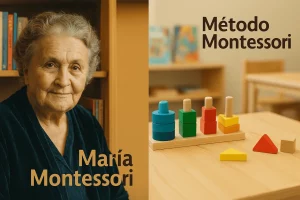
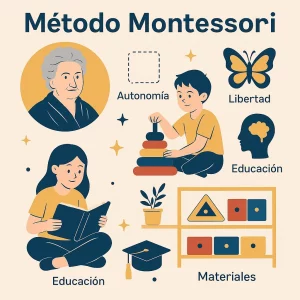
The Montessori method, developed by María Montessori in the early 20th century, is grounded in several key principles that emphasize independence, respect for a child’s natural psychological development, and collaborative learning. One of the foundational concepts is that children learn best in an environment that nurtures their curiosity and provides opportunities for hands-on discovery. This method promotes autonomy and self-directed activity, allowing children to take charge of their learning.
Real-Life Application: Montessori Morning Routine
Imagine a typical morning routine at home following the Montessori approach. Instead of a parent waking the child and rushing them through breakfast and getting dressed, a child is encouraged to awaken at their own pace. The home environment is structured so that everything they need is within reach: a low table for breakfast items, clothes that they can easily access, and a step stool for the bathroom. This setup fosters independence as children select their clothing and prepare their own breakfast, which nurtures their decision-making skills and self-esteem.
Classroom Scenario: Mixed-Age Learning
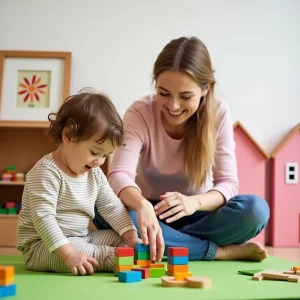
In a Montessori classroom, students of varying ages learn together, which is pivotal in fostering a sense of community and collaboration. For instance, in a mixed-age classroom, a five-year-old may assist a three-year-old with a puzzle. This peer-to-peer interaction reinforces the older child’s knowledge and boosts their confidence while the younger child benefits from guidance. The teacher acts as a facilitator, observing and stepping in only when necessary to ensure a positive learning experience for all. This scenario exemplifies how the metodo montessori promotes social skills, empathy, and learning through teaching.
Core Components of Montessori Education
Some of the core components of the Montessori approach include:
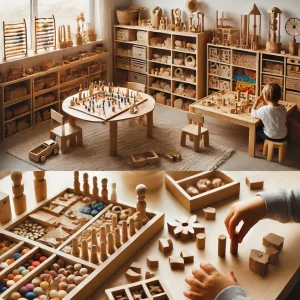
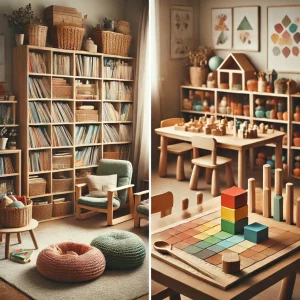
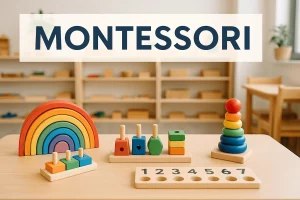
- Prepared Environment: Classrooms are designed to be inviting and accessible, with materials suitable for various age groups and developmental stages.
- Respect for the Child: The Montessori method builds on trust in children’s innate desire to learn, allowing them to explore subjects that intrigue them.
- Activities of Daily Living (ADL): Practical life skills are integrated into the curriculum, empowering children with the skills they need to navigate their daily lives.
The Role of the Educator in Montessori
Educators in the Montessori environment are often referred to as “guides.” Their role is to observe, introduce materials, and facilitate experiences rather than direct learning. This guidance helps children delve deeper into their interests while also encouraging them to develop problem-solving skills and resilience. Understanding the pedagogía Montessori allows educators to provide the right balance between support and freedom, creating a balanced learning atmosphere.
Integrating Montessori Principles at Home
For parents interested in the metodo montessori, integrating Montessori principles at home largely involves creating an environment that encourages independence and exploration. Start small—designate a space for your child where they can engage in practical life skills, such as washing their hands at a child-sized sink, or a corner for art supplies that they can access freely. Introducing choices, allowing them to choose their own outfits, or letting them help in meal preparations are practical ways to implement Montessori values in everyday life.
Benefits of Montessori Education
Research has shown that children educated in a Montessori environment develop higher academic skills, social-emotional skills, and a love for learning compared to traditional education settings. They exhibit competencies in problem-solving, critical thinking, and effective communication. As they engage in self-directed activities, they also cultivate intrinsic motivation and a sense of responsibility.
Embracing the Montessori Method in Diverse Settings
The Montessori method transcends geographical boundaries and cultural contexts, making it adaptable to different educational settings. Schools across the globe implement Montessori principles, from urban centers to rural areas, showcasing its versatility. Every country applies its unique flavor while adhering to core Montessori principles, affirming that education can be both individualized and collective.
For a comprehensive look at the Montessori philosophy and its applications worldwide, explore all that you need to know in todo lo que necesitas saber sobre el método Montessori. It gives valuable insights into how you can adapt Montessori principles across various cultures and contexts.
Technology and Montessori: A New Frontier
With the rise of technology, many have wondered how it fits into the metodo montessori. While traditional Montessori emphasizes hands-on materials over screen-based learning, there are opportunities to merge both worlds. Digital tools can enhance learning experiences when used judiciously, providing resources that support independent exploration while aligning with Montessori’s principles. Our Montessori Maria website and its AI assistant MarÍA is a great resource for parents and educators, offering tailored suggestions that honor Montessori methodologies.
Conclusion: Shaping the Future with Montessori
As more parents and educators seek meaningful and effective educational solutions, the metodo montessori stands out as a potent framework. It champions the principles of autonomy, collaboration, and respect for individual learning trajectories. In our fast-paced world, the return to child-centered education is an essential step toward building not only knowledgeable but well-rounded future citizens.
To delve deeper into the wide-ranging impacts of Montessori education, check out our recent articles that further explore these topics: Understanding Montessori, Discovering Montessori, Understanding Montessori Pedagogy, Understanding Montessori Education, and Understanding the Montessori Method. These resources provide essential insights, guidance, and support for those embarking on the Montessori journey.