Introduction to Montessori Pedagogy
Many families begin their journey into the world of Montessori education by searching for terms like “Montessori near me” or “Montessori school near me.” Understanding where to start can feel overwhelming, but the good news is that resources are available to guide you. Our website provides a global Montessori locator designed to help families find Montessori environments in their area. For localized examples, you can explore options such as Montessori schools in Oberursel, Germany.
The Core Principles of Montessori Pedagogy
Montessori pedagogy is grounded in several key principles that promote a child’s natural learning processes. These include a prepared environment, fostering autonomy, purposefully observing children, and enhancing sensory learning. Let’s delve deeper into each of these principles with practical examples.
Prepared Environment
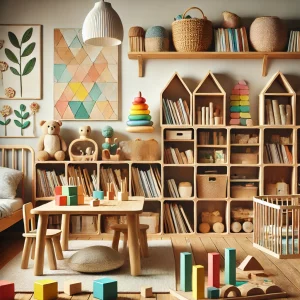
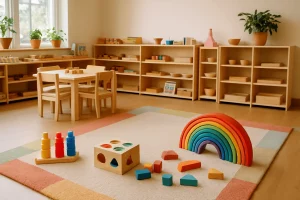
A prepared environment refers to a thoughtfully designed space that is tailored to support child-led exploration and learning. For instance, consider a traditional classroom setting attempting to adapt to a Montessori model. Instead of rows of desks facing a whiteboard, the classroom may be rearranged to feature distinct learning areas—such as a reading nook, a sensory table, and a practical life skills corner—each equipped with age-appropriate materials. This encourages students to move freely between activities and engage at their own pace.
Autonomy
Promoting autonomy allows children to make choices about their learning. For a student teacher planning their first Montessori environment, it’s essential to provide opportunities for choice within a structured framework. For example, the teacher might present various projects students can undertake, enabling them to select the ones that resonate with their interests. This autonomy not only boosts confidence but also nurtures responsibility and decision-making skills.
Observation
Observation is a cornerstone of Montessori pedagogy, allowing educators to gain insights into each child’s learning process. By carefully watching how children interact with materials, a teacher can identify learning styles and interests. This knowledge enables them to tailor lessons more effectively. An example could be a teacher observing a child spending significant time at the block station and later introducing them to a geometry lesson involving patterns and shapes to further inspire their interest.
Sensory Learning
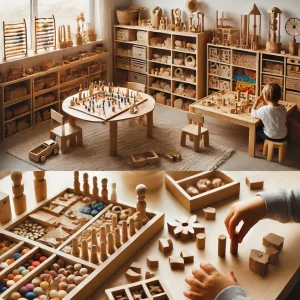
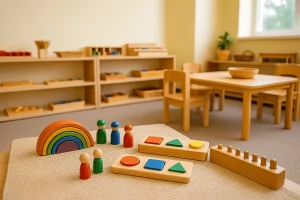
Sensory learning emphasizes the importance of hands-on experiences in education. In a Montessori classroom, materials are often designed to engage multiple senses. For instance, instead of merely teaching children about colors through pictures, a teacher might provide color tablets that children can feel, compare, and arrange. This tactile experience reinforces concepts in a memorable way and allows children to develop a deeper understanding through exploration.
Applying Montessori Principles in Practice
Integrating Montessori principles into both new and existing classroom environments can be a transformative experience for educators and students alike. Rather than merely focusing on conventional teaching methods, consider how you might adapt these principles. For instance, you could create multiple learning stations that cater to different subjects or skills, encouraging students to engage with materials independently.
An excellent resource for further understanding these principles is our complete guide to Montessori pedagogy, which offers insights and strategies for parents and educators alike.
Classroom Adaptation Example: A Traditional Classroom
Imagine a traditional classroom where the teacher delivers lectures from the front, and students are expected to absorb information passively. To adapt this environment to a Montessori approach, the teacher might first evaluate the physical space. They could remove unnecessary furniture, create zones with learning areas, and encourage children to work collaboratively rather than individually. With clearly defined areas for different subjects, children can choose to work on math, science, or art based on their interests and abilities.
Future Educators: Your First Montessori Class
For those training to become Montessori educators, it’s vital to focus on how to create a conducive learning environment from the start. Planning your first classroom with Montessori principles can begin with a simple checklist. Ensure you have essential materials available, create a rich sensory experience, and offer choice within a framework to guide learning experiences. Additionally, understand the importance of being an observer; your role is to facilitate rather than dictate.
Emphasizing Continuous Learning
Becoming a proficient Montessori educator or parent takes time, support, and continual learning. Engaging with the principles through practice and observation is crucial. For further exploration of the Montessori method, consider reading our guide for parents and educators, which outlines critical aspects of this educational philosophy.
Conclusion
Montessori pedagogy presents an innovative approach to education that prioritizes autonomy, respect for the child, and hands-on learning experiences. Parents, educators, and teacher-training students can greatly benefit from understanding and implementing these principles in practical settings. The journey begins with exploration—so when searching for “Montessori near me,” you engage with a global community dedicated to this transformative educational approach.
For those looking for more information, the *Montessori Maria website* offers a wealth of resources, including tools for finding local Montessori schools and practical guidance on applying Montessori principles in everyday life. With dedication and an open mind, anyone can support the values of Montessori education in both classroom and home settings.
As you further your understanding, don’t miss our article titled Understanding Maria Montessori which goes deeper into her vision, and why it matters today.