Introduction to Montessori Pedagogy
In today’s world, many families embark on their educational journey by searching for “Montessori near me” or “Montessori school near me.” The unique approach of Montessori education has captivated parents, educators, and students alike. For those seeking more information, our website offers a comprehensive global Montessori locator at Montessori near me. This tool helps connect families with local Montessori schools, including specific examples like the one found in Oberursel, Germany: Montessori in Oberursel.
Core Principles of Montessori Pedagogy
Montessori education is rooted in several fundamental principles that guide its pedagogical approach. These principles include the prepared environment, autonomy, observation, and sensory learning. To better understand these concepts, let’s explore each one with practical examples, helping educators and trainee teachers apply them effectively.
The Prepared Environment
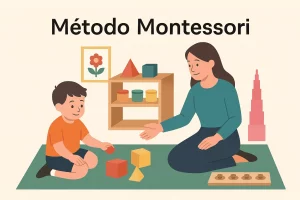
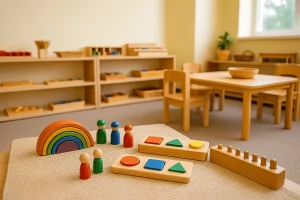
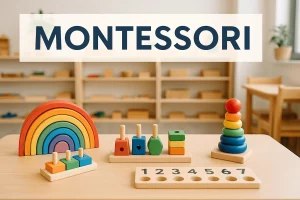
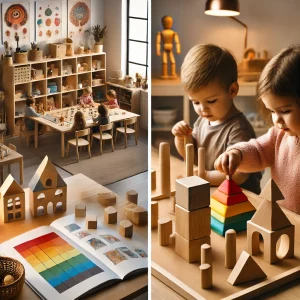
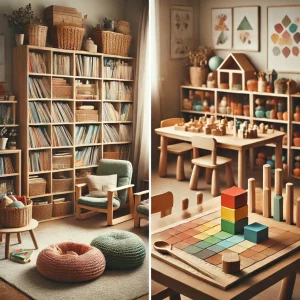
The prepared environment is a cornerstone of Montessori pedagogy. It refers to a thoughtfully organized space that encourages independence and exploration. Suppose a traditional classroom setting is to be adapted to embrace the Montessori philosophy. In this case, educators can create learning stations that reflect various subjects—math, science, language, and arts—using accessible materials.
For instance, while transforming a typical desk-and-chairs layout, an educator could set up a corner for sensory activities with items like sand, water, or natural materials. This setup not only fosters holistic development but also ignites children’s curiosity. For more on adjusting to this paradigm, consider reading our complete guide to Montessori pedagogy.
Encouraging Autonomy
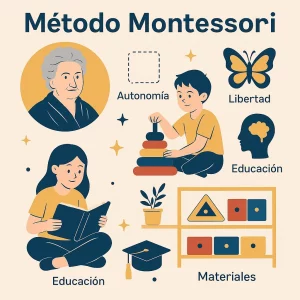
Montessori education emphasizes the importance of autonomy in learning. Students are encouraged to make choices about their activities, allowing them to take responsibility for their learning processes. A student teacher planning their first Montessori environment can promote autonomy by providing various materials and activities, enabling children to select tasks that resonate with their interests and learning styles.
For example, a learning station could be set up with art supplies, books, and manipulatives, encouraging children to design their projects or engage in self-directed exploration. This empowers learners, promoting motivation and engagement. If you want to dive deeper into the foundational ideas behind this approach, our introduction to Montessori pedagogy offers great insights.
Observation as a Tool for Learning
Another essential principle is observation, which allows educators to gain insight into each child’s unique needs and progress. In a Montessori classroom, teachers meticulously observe children at play and during learning activities to determine general and specific trends that arise over time.
For instance, a teacher might notice that a child is particularly drawn to building blocks and exhibits spatial intelligence. This observation can lead to tailored activities that focus on geometry or engineering concepts, further nurturing that child’s natural interest. At the Montessori Maria website, we emphasize the significance of this vital observational practice in enhancing educational outcomes.
Sensory Learning
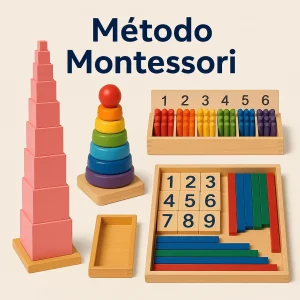
Sensory learning is an integral part of Montessori pedagogy. This approach recognizes that children learn best through direct experiences that engage their senses. A student teacher might incorporate sensory activities in their lesson plans by providing materials with varied textures, weights, colors, and sizes.
Imagine a scenario where children are learning about different fruits. Instead of solely relying on visual aids, the teacher could provide real fruits for students to touch, smell, and taste, allowing them to gain a comprehensive understanding through their senses. To learn more about the diverse aspects of Montessori, visit our guide on the impact of Maria Montessori.
Creating a Successful Montessori Environment
Transitioning to a Montessori approach can be quite rewarding. It requires careful planning and a willingness to adapt to a more child-centered system. Both parents and educators play critical roles in this transformative journey. The student teacher, in particular, must remember to remain flexible and open to feedback while observing how children interact with the environment.
The Role of Collaboration
Collaboration among educators, parents, and students can enhance the effectiveness of a Montessori environment. Sharing ideas and observations can lead to innovative practices and comprehensive approaches that benefit all learners. Workshops and discussions can be organized to guide parents and educators on successful implementation strategies.
This collaborative spirit can make transitions smoother and more enriching, ensuring that children receive consistent messages about autonomy and discovery. Further resources exploring collaborative strategies can be found at the Montessori Maria website.
Utilizing Community Resources
Incorporating local community resources into the classroom experience adds depth to Montessori education. Whether through field trips, guest speakers, or community projects, these experiences can further enrich students’ learning opportunities. For example, a field trip to a local farm can provide hands-on interaction with animals and crops, aligning with sensory-based learning.
Edifying students beyond traditional classroom walls exposes them to real-world applications of their classroom lessons. For practical ideas on implementing community engagement in a Montessori setting, check out our latest articles at Understanding the Montessori Method.
Conclusion
In summary, the journey into Montessori pedagogy opens up a world of possibilities for children and educators alike. By embracing principles such as the prepared environment, autonomy, observation, and sensory learning, we can create spaces that inspire exploration and foster lifelong learning. With resources readily available, including the global Montessori locator and diverse educational articles, parents, educators, and teacher-training students can begin their Montessori journey with confidence and enthusiasm. To find a Montessori education option near you, visit our Montessori near me page and explore the offerings across the globe.