Introduction to Montessori Pedagogy
Many families embarking on their educational journey begin by searching for “Montessori near me” or “Montessori school near me.” This common initial step reflects a growing interest in the unique approach that Montessori pedagogy offers. To assist you in your search, our website provides a global Montessori locator at Montessori near me, where you can find schools that implement this transformative educational method. Additionally, local examples can be incredibly helpful for families; for instance, if you’re in Oberursel, Germany, you can check out this link to find options closer to your living area: Montessori in Oberursel.
The Core Principles of Montessori Pedagogy
Implementing Montessori methods involves adhering to several key pedagogical principles. These principles include the prepared environment, autonomy, observation, sensory learning, and individualized learning. Each of these elements plays a crucial role in fostering an effective learning experience tailored to the unique needs of each child.
Prepared Environment
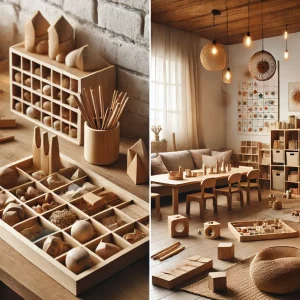
A prepared environment is one that is thoughtfully organized and designed to encourage exploration and learning. For instance, consider a traditional classroom that has been adapted to incorporate Montessori principles. In this setup, educators rearrange the space to promote independence and accessibility. Furniture is scaled down to child-size, learning materials are arranged in an orderly manner, and areas for different activities are clearly defined. This allows children to navigate their learning environment freely, making choices about where and how they wish to engage. For a deeper understanding of this approach, the guía completa sobre la pedagogía Montessori offers extensive insights into how the prepared environment fosters curiosity and self-motivation.
Autonomy
Another cornerstone of Montessori pedagogy is promoting autonomy. When educators plan lessons, they encourage students to take responsibility for their own learning. For example, a student teacher planning their first Montessori environment might observe children engaged actively with their materials. By removing unnecessary guidance and allowing learners to make decisions, the teacher fosters a sense of independence that is essential for self-directed education. This approach not only enhances confidence but also instills a love for learning. For those new to this philosophy, an introducción a la pedagogía Montessori can provide much-needed context and motivation.
Observation
Observation is a fundamental practice within the Montessori framework. Teachers are trained to observe students closely, gaining insights into their interests, strengths, and areas needing support. These observations help tailor lessons to suit individual needs. For example, a teacher may notice that a child shows significant interest in mathematics but struggles with fine motor skills when using traditional writing tools. In response, the teacher can introduce appropriate Montessori materials designed to develop these skills in a hands-on, engaging manner. For a comprehensive guide on this aspect of Montessori education, consider reading the article Understanding the Montessori Method: A Guide for Parents and Educators.
Sensory Learning
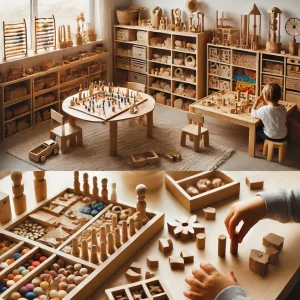
Sensory learning is crucial in Montessori classrooms, as it allows children to learn through their senses. Materials designed for this purpose engage multiple senses, promoting a deeper understanding of concepts. For instance, a teacher might set up a sensorial activity involving different textures, shapes, and weights, enabling children to explore and describe their experiences. This hands-on approach to learning is incredibly effective, offering tangible connections to abstract concepts. You can find more examples and insights on the Montessori approach of sensory learning in our resource Understanding Montessori: A Comprehensive Guide.
Individualized Learning
Montessori pedagogy places great emphasis on individualized learning. Each child progresses at their own pace, ensuring that education is truly tailored to their needs and interests. In a classroom setting, this might look like children working on different tasks suited to their developmental stages. For example, one child may be mastering phonics, while another explores basic addition with manipulatives. This approach not only reinforces self-paced learning but also cultivates a community of learners who respect one another’s journeys. To grasp the full spectrum of individualized learning within Montessori, you might want to explore Montessori Pedagogy: A Comprehensive Guide.
Bringing Montessori Principles Home
Parents can also incorporate Montessori principles at home, creating an environment conducive to learning. Consider setting up a designated area for educational materials and encouraging children to choose their activities. Arrange toys and supplies in a way that promotes independence, making it easier for children to access what they need. Allowing them to make decisions about their play or study time fosters autonomy and aligns with the Montessori philosophy.
Conclusion
In summary, Montessori pedagogy offers a transformative approach to education that emphasizes autonomy, observation, sensory learning, and a prepared environment. As families explore the possibilities of Montessori education, they often begin their journey with searches for local options, like “Montessori near me.” To facilitate this search, resources such as the Montessori Maria website can be invaluable. For further reading, we encourage all parents, educators, and teacher-training students to delve deeper into the wealth of knowledge available, including articles such as A Comprehensive Guide to Montessori Education for Parents and Educators.