Starting Your Montessori Journey
Many families begin their exploration of Montessori education with searches like “Montessori near me” or “Montessori school near me.” This is a natural starting point as parents and educators look for local resources that align with Montessori principles. To assist you in this journey, our website provides a global Montessori locator where you can find educational establishments worldwide. For instance, you can check for options in your vicinity, as demonstrated in Oberursel, Germany. For a broader search, visit Montessori near me.
Key Principles of Montessori Pedagogy
Montessori pedagogy is grounded in several core principles: the prepared environment, autonomy, observation, and sensory learning. Understanding these principles can significantly enhance the educational experiences of children in both Montessori and traditional settings.
Prepared Environment
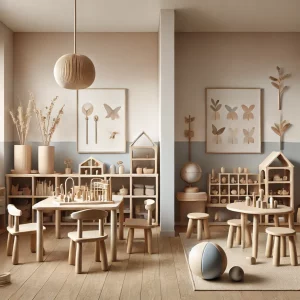
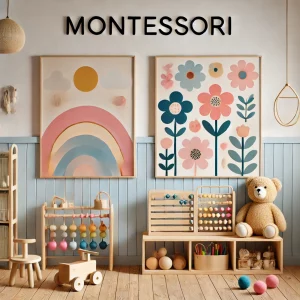
A prepared environment refers to a carefully designed learning space that facilitates independent exploration and learning. For instance, consider a traditional classroom adapting to a Montessori layout. In this transformation, the desks might be arranged in small groups to encourage collaboration, while shelves filled with various learning materials allow children to choose activities that interest them. This setup promotes self-directed learning.
Autonomy
Autonomy in Montessori education empowers children to take charge of their learning. For example, during a student teacher’s first planning session for a Montessori environment, they might create a schedule that allows children to select when they want to engage in specific activities. This flexibility helps students develop decision-making skills and fosters a sense of ownership over their learning process. To delve deeper into the benefits of autonomy, check out our introduction to Montessori pedagogy.
Observation
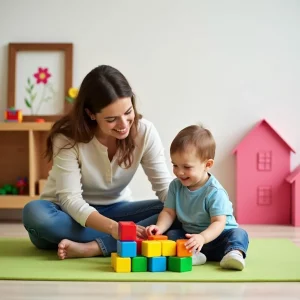
Observation is a fundamental practice in Montessori settings. Educators closely observe children’s interactions, interests, and developmental needs to tailor instruction and support. Imagine a traditional teacher observing a student who consistently builds with blocks. By noting this interest, the teacher can provide more complex building materials or introduce concepts related to physics and architecture, bridging student interests with curriculum goals.
Sensory Learning
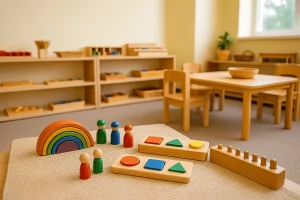
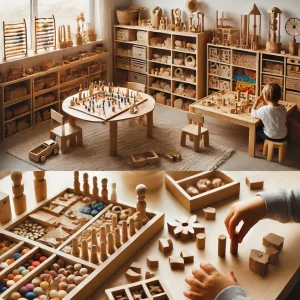
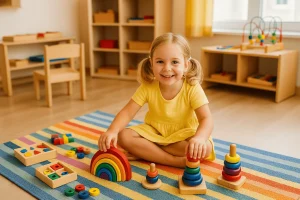
Montessori pedagogy places a significant emphasis on sensory learning. Children learn best through hands-on experiences. For example, in a Montessori classroom, mathematical concepts are taught using concrete materials like beads or blocks. A teacher may present the concept of addition using bead frames, allowing students to manipulate the materials and visually grasp the concept, which reinforces understanding. Explore this approach further in our comprehensive guide.
Adapting Traditional Classrooms to Montessori Principles
Transitioning from a traditional classroom model to one that embraces Montessori principles can be a transformative journey for both teachers and students. It involves a fundamental shift in mindset, where the focus shifts from teacher-led instruction to a more child-centered approach. In doing so, teachers can create a sanctuary of learning that nurtures each child’s natural love for knowledge.
Creating a Prepared Environment
To begin this transition, a teacher could start by reorganizing their classroom into distinct learning areas. For instance, a reading nook filled with a variety of books in inviting displays encourages children to explore literature on their own. By providing a range of learning materials – art supplies, science kits, and manipulatives – the teacher can create an engaging atmosphere that promotes curiosity and creativity.
Encouraging Autonomy and Responsibility
Teachers can promote autonomy by allowing students to set their own goals for the day. Providing a visual schedule mixed with various learning stations enables children to select activities that resonate with them. For example, a student might choose to spend time in a science corner conducting simple experiments or in the art area creating projects. This autonomy fosters a sense of responsibility and helps them develop self-regulation skills.
Observation as an Ongoing Practice
Regular observation allows teachers to assess the progress and interests of each child continuously. By taking notes on students’ interactions and achievements, educators can identify areas where children might benefit from additional support or challenge. This practice also informs future lesson planning, ensuring that each child receives individualized attention.
Support Resources
For parents, educators, and teacher-training students interested in fully embracing the Montessori approach, several resources are available. Our comprehensive guides and articles delve deeper into the various aspects of Montessori education. Here are a few recommended reads:
- The Transformative Power of Montessori Education for Parents and Educators
- Understanding the Montessori Method: A Guide for Parents and Educators
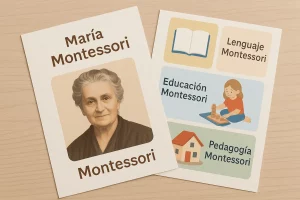
- Understanding Maria Montessori: A Comprehensive Guide for Parents and Educators
- Exploring Montessori Pedagogy: A Guide for Parents, Educators, and Teacher-Training Students
- Visit the Montessori Maria website for more insights and information.
Conclusion
In conclusion, embarking on a journey into Montessori pedagogy can be incredibly fruitful for parents, educators, and teacher-training students. By exploring the principles of a prepared environment, autonomy, observation, and sensory learning, one can create enriching educational experiences for children. There’s more to discover, so whether you are looking for local Montessori options or seeking guidance on implementing Montessori practices, resources are available to support your journey.
For a deep dive into Montessori principles, check out our complete guide on Montessori pedagogy. Embrace this educational philosophy and witness the incredible transformation it can bring to the learning environment.