Introduction
In today’s educational landscape, many families often embark on their journey by searching for “Montessori near me” or “Montessori school near me.” This quest reflects an increasing interest in the Montessori method, known for its child-centered approach and emphasis on independent learning. Our website offers a global Montessori locator at Montessori near me, where you can find Montessori schools and resources in your area. For specific locales, check out examples like Montessori in Oberursel, Germany. This article aims to delve deep into the principles of Montessori pedagogy and provide practical context for both parents and educators.
The Montessori Pedagogical Principles
Montessori education is underpinned by several core principles that inform the teaching approach and the prepared environment. These principles include the prepared environment, autonomy, observation, and sensory learning. Each of these principles can be applied in various educational settings, ensuring that children are engaged, independent, and motivated to learn.
Prepared Environment
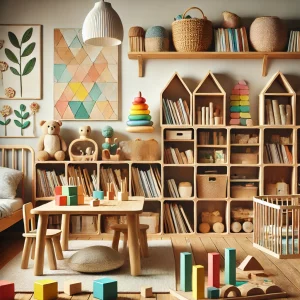
The prepared environment is a crucial aspect of Montessori pedagogy, as it sets up a space that caters to the natural learning tendencies of children. In a traditional classroom, this might involve rearranging furniture to create designated areas for different activities. For example, a reading nook could be created with comfortable seating, a variety of books, and a quiet atmosphere. Such an environment encourages children to choose their learning activities, fostering independence.
Autonomy
Autonomy is at the heart of Montessori education, allowing children to make choices about their learning experience. For instance, student teachers orchestrating their first Montessori environment might observe children during a lesson and take notes on their preferences and interests. Based on these observations, they could provide options for activities that align with children’s curiosities, thus promoting self-directed learning. In their quest for understanding, parents can gain further insight through our introduction to Montessori pedagogy.
Observation
Observation is a critical tool for Montessori educators. Rather than facilitating every lesson actively, teachers watch how students interact with materials and with one another. This approach allows educators to assess developmental stages and interests without directly imposing their teaching. For example, if a teacher notices that a child is particularly drawn to mathematics, they can introduce materials that build on that interest, like bead frames or number rods, enriching the learning experience.
Sensory Learning
Sensory learning is foundational to Montessori education, emphasizing hands-on experiences that engage multiple senses. In a traditional classroom setup, this principle can be incorporated by transforming lessons into interactive, tactile learning sessions. For instance, a science lesson on ecosystems could be implemented using real objects such as plants, soil, and other natural materials, enabling students to feel and explore while discussing their findings.
Practical Application: Transforming Traditional Classrooms
Many educators strive to adapt conventional classrooms into more Montessori-friendly environments. As discussed, the prepared environment is essential. Educators can start by integrating various workstations for literacy, math, and science activities, allowing children the freedom to navigate through their interests. Moreover, they can gradually shift their role from a primary instructor to a facilitator, guiding students as they explore their learning at their own pace.
Example: A Student Teacher’s Journey
Consider a student teacher planning her first Montessori environment. Capitalizing on the principles of observation and autonomy, she begins by closely observing her students’ interactions with existing materials. With this knowledge, she selects specific Montessori materials to incorporate into her classroom, like the pink tower for developing spatial awareness and the pink cube for fine motor skills. By giving students choices and respecting their spontaneous interests, she effectively transitions her classroom towards a more Montessori approach.
María Montessori’s Vision
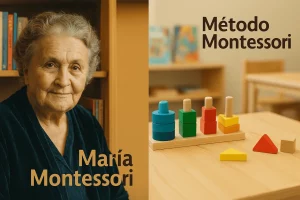
The principles of Montessori education stem from the work and philosophy of María Montessori. She believed that children learn best in an environment that reflects their natural curiosities and innate desire to learn. Montessori’s vision encompassed respect for each child’s individuality and the importance of learning through experience. Understanding her legacy is integral for anyone looking to implement Montessori strategies effectively.
Resources for Further Exploration
For those interested in delving deeper into the Montessori methodology, our complete guide on Montessori pedagogy can be accessed through this complete guide to Montessori pedagogy. Additionally, our other recent articles can provide further insights:
- Montessori Education: A Comprehensive Guide for Parents and Educators
- Understanding the Montessori Method
- Understanding María Montessori
- A Comprehensive Guide to Montessori for Parents
- Understanding Montessori Pedagogy
Conclusion
In conclusion, understanding Montessori pedagogy offers parents, educators, and aspiring teachers a transformative approach to education. By exploring its core principles—prepared environment, autonomy, observation, and sensory learning—they can create enriching learning experiences. Remember, the journey towards embracing Montessori ideas begins with simple steps, such as searching for Montessori schools near you and engaging with both the community and available resources. For further assistance, our AI assistant MarÍA at the Montessori Maria website is here to help you navigate your Montessori journey.