Introduction
For many families, the journey toward discovering a nurturing and effective educational method begins with online searches for terms like “Montessori near me” or “Montessori school near me.” These searches often lead parents and educators to explore the significant benefits of Montessori pedagogy. To assist in this quest, our website offers a global Montessori locator at Montessori near me, which can help you find nearby schools and resources. Additionally, we provide local examples, such as Montessori resources in Oberursel, Germany.
What is Montessori Pedagogy?
Montessori pedagogy, developed by María Montessori, is based on the belief that children learn best in environments that support their natural development. This educational method is grounded in several key principles, including a prepared environment, autonomy, observation, and sensory learning. In this article, we’ll explore these principles and provide practical examples applicable to both traditional and Montessori classroom settings.
The Prepared Environment
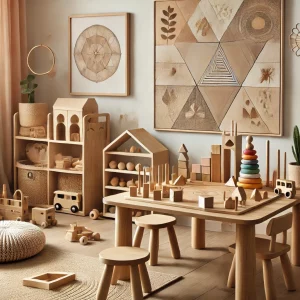
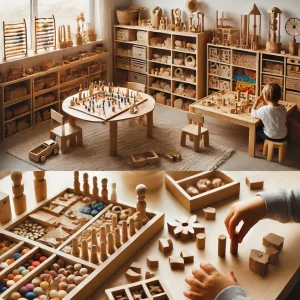
A cornerstone of Montessori education is the concept of a prepared environment. This term refers to a learning space specifically designed to cater to the developmental needs of children. In a traditional classroom transitioning to Montessori, the teacher would first assess the current setup, identifying areas where modifications can be made to foster independence and exploration.
Real Example of a Prepared Environment
Imagine a traditional kindergarten classroom filled with desks all facing the front where the teacher instructs. In adapting this space, the teacher could create zones for various activities, including a reading nook, a math corner, and an art station, allowing children to move freely between them. Materials should be accessible on shelves at a child’s height, promoting easy access and self-directed learning.
Autonomy
Another essential principle of Montessori pedagogy is autonomy. This principle encourages children to make choices and take charge of their learning processes. Autonomy lays the groundwork for confidence-building and promotes a sense of responsibility and ownership of one’s work.
Fostering Autonomy in the Classroom
To implement autonomy in a traditional classroom, a student teacher may plan to allow their students to choose tasks that interest them from a variety of subjects. A simple approach could involve presenting students with three station options—science experiments, language arts storytelling, and creative arts—and allowing them to choose where to focus their efforts. By doing this, the students feel empowered, resulting in increased engagement in their learning.
Observation
Observation is a foundational element of the Montessori method. Teachers are trained to observe without interfering, allowing them to understand each child’s unique interests, strengths, and developmental stages. This insight enables educators to tailor learning experiences to address individual needs.
A Practical Application of Observation
For a student teacher preparing their first Montessori classroom, they can begin by observing their students during free play. They might notice that one child is particularly skilled in building structures with blocks while another is drawn to storytelling with puppets. These insights can inform lesson plans, guiding the teacher to introduce advanced building techniques to the first child or collaborative storytelling activities that include the second child.
Sensory Learning
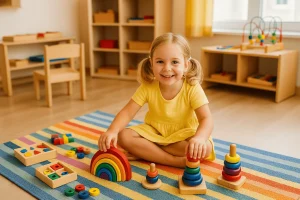
Montessori pedagogy also emphasizes sensory learning. This approach focuses on hands-on experiences that engage a child’s senses, promoting deeper understanding and retention of concepts. Learning through the senses is particularly beneficial in early childhood education, as it aligns with how young children naturally explore the world.
Implementing Sensory Activities
In transforming a traditional classroom to incorporate sensory learning, a teacher might introduce activities such as using textured materials for a sensory bin that reinforces lessons about nature or creating a mobile art station where children can paint with various tools, sponges, and their hands. Such activities enrich the curriculum while cultivating a child’s creativity and expression.
Adapting Traditional Classrooms to Montessori Principles
Teachers transitioning from a traditional model to Montessori should understand that the shift is both philosophical and practical. Implementing these principles requires thoughtful planning and an openness to redefining the role of the teacher from a traditional instructor to a guide and facilitator in the classroom.
Guided Learning through Environment Setup
To fully embrace Montessori principles, a teacher should regularly update the classroom environment based on observations of children’s interests and developmental stages. A well-prepared environment is a dynamic space that evolves, ensuring that it continually meets students’ needs. The guía completa sobre la pedagogía Montessori provides in-depth insights for educators looking to implement these changes successfully.
Becoming Familiar with Montessori
For parents, educators, and teacher-training students eager to delve deeper into the world of Montessori, the process can be enlightening and transformative. An introducción a la pedagogía Montessori can be the first step toward understanding how this approach differs from traditional methods and how it can foster lifelong learning in children.
Conclusion
As families search for educational resources, they are often led to the principles of Montessori pedagogy. It’s important to recognize that this approach is about nurturing children’s natural development by providing a supportive and engaging environment. To further explore Montessori pedagogy and resources available near you, don’t forget to visit Montessori near me. Additionally, for further reading, consider exploring the links to recent articles available at the Montessori Maria website, such as:
- Montessori Education: A Comprehensive Guide for Parents and Educators
- Understanding the Montessori Method: A Comprehensive Guide
- Discovering María Montessori: A Guide for Parents and Educators
- Understanding Montessori: A Comprehensive Guide for Parents
- The Essential Guide to Montessori Pedagogy
By embracing Montessori principles, educators and parents can foster an enriching learning environment where children can thrive. Explore more to see how Montessori pedagogy will inspire your approach to education.