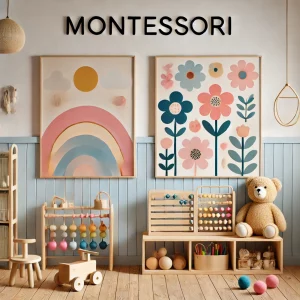
Introduction to Montessori Education
As more families and educators explore the realm of education, many begin their journey by searching “Montessori near me” or “Montessori school near me.” This search often leads to discovering the unique principles of Montessori pedagogy. Our website not only provides a global Montessori locator but also offers local examples to assist in your search, such as the Montessori locator in Oberursel, Germany. Montessori education, conceived by Dr. María Montessori, is an innovative approach that encourages children to explore their interests at their own pace, promoting a love of learning that lasts a lifetime.
Key Principles of Montessori Pedagogy
Montessori pedagogy is built upon several key principles, including prepared environment, autonomy, observation, and sensory learning. Understanding these principles is crucial for parents, educators, and those pursuing teacher training. Each principle lays the groundwork for a child-centered approach that prioritizes individual learning styles.
Prepared Environment
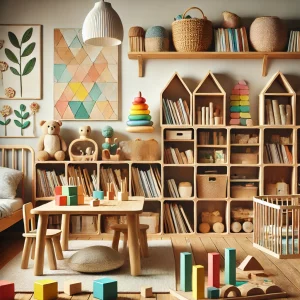
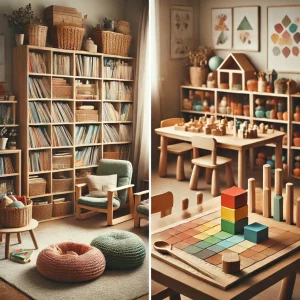
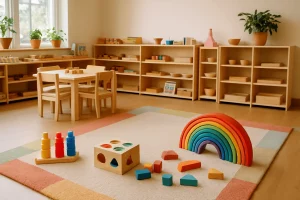
The prepared environment is one of the cornerstones of Montessori education. It refers to a space that is thoughtfully arranged to encourage exploration and independence. For example, consider a traditional classroom that is being adapted for Montessori use. In such a classroom, shelves filled with age-appropriate materials are optimally placed, enabling easy access for children. Instead of rows of desks, children have mats or tables where they can work independently or collaborate with peers on projects. Plants, art supplies, and books within reach create an inviting atmosphere that fosters curiosity and engagement.
Autonomy
Integrating autonomy in learning encourages children to take charge of their education. For student teachers planning their first Montessori environment, fostering autonomy can mean offering choices about which activities or materials they want to engage with. For instance, you might provide a selection of books and art supplies and allow the children to select what interests them the most. This not only builds confidence but also nurtures decision-making skills.
Observation
Montessori educators must become keen observers, a practice that enables them to assess each child’s needs and interests. Imagine a teacher in a Montessori classroom who takes the time to observe a child working on a puzzle. They note the child’s problem-solving approach and choose to introduce more complex puzzles that align with the child’s growing skills. This form of targeted support is essential in a Montessori setting, where learning is personalized.
Sensory Learning
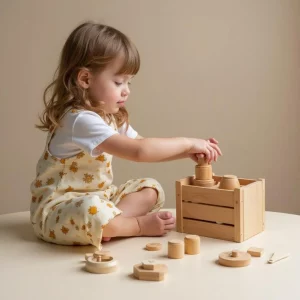
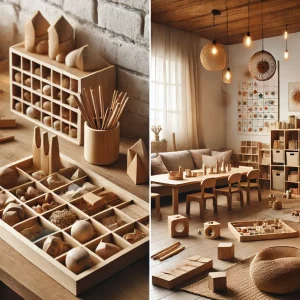
Sensory learning incorporates tactile and experiential activities that enhance understanding. In a Montessori classroom, you might find materials that allow for hands-on exploration. For example, a child may use textured blocks to learn about geometric shapes while also refining their motor skills. This type of engagement is vital for cementing concepts in young minds, enabling deeper connections.
Application of Principles in Practice
With a solid understanding of the foundational Montessori principles, educators, and parents can start to envision how they can create and support a thriving learning environment. The transition from traditional methods to Montessori can be particularly pivotal for student teachers and educational institutions.
Transforming a Traditional Classroom
When transforming a traditional classroom into a Montessori-style environment, consider how the arrangement and availability of materials can foster independence. Desks in rows can be replaced with small, circular tables to enhance collaboration. Class materials should be organized on low shelves, so children can freely choose their activities. Utilizing everyday materials for practical life skills–like pouring, sorting, and categorizing–can greatly enrich the learning experience. Check out our complete guide on Montessori pedagogy to learn more about setting the right environment.
Planning a Montessori Environment
For student teachers, planning a Montessori environment may start with a theme that resonates with the age group they are working with. For instance, a “nature” theme can incorporate plant work, nature-inspired art, and lessons about the environment. In this setup, materials related to the theme should be readily available for the children to explore, making the learning process both enjoyable and educational. To understand more about how to effectively implement this, refer to the introduction to Montessori pedagogy.
Supporting Diverse Learning Needs
Montessori education naturally supports diverse learning needs, making it an inclusive practice. Every child is viewed as an individual, allowing for personalized instruction. In mixed-age classrooms, younger children benefit from observing older peers, while older students reinforce their learning by teaching. This dynamic environment fosters a strong community feeling, encouraging collaboration among students.
Adapting the Curriculum
Adapting lesson plans and materials for different learning styles is crucial. An educator might modify a math lesson for a child struggling with abstract concepts by introducing physical objects (like counters or beads) to simplify understanding. This use of concrete materials allows students to comprehend and enjoy math more fully. Discover more about child-centered learning through our latest articles, such as Understanding the Montessori Method.
The Role of Parental Involvement
Parents play a significant role in a Montessori education. Encouraging the autonomy of children at home complements what they learn in the classroom. As families seek “Montessori near me,” they should also look into local resources and activities they can do together that highlight the Montessori philosophy. Our comprehensive guide for parents, educators, and teacher training students is available for further exploration here.
Conclusion
Montessori pedagogy provides an enriching framework for education that is rooted in respect for children as capable individuals. The principles of prepared environment, autonomy, observation, and sensory learning can be woven into both traditional and new educational settings. For those interested in the profound impact of Dr. María Montessori’s work, check out our detailed articles about her life here. Ultimately, if you are a parent, educator, or a student teacher, embracing these principles can transform not only the educational environment but also the lives of the children who inhabit it.
For ongoing support and resources about Montessori pedagogy, visit the Montessori Maria website and explore a wealth of knowledge. Whether you’re looking for schools or want to implement these principles at home, there is a community waiting to welcome you.