Introduction: The Search for Montessori
In recent years, many families have begun their educational journey by searching for “Montessori near me” or “Montessori school near me.” This approach is widely recognized for its emphasis on the child’s natural development and individualized learning. For those embarking on this explorative path, our website offers a global Montessori locator at Montessori near me, which serves as a helpful resource to find Montessori programs nearby. For example, parents looking for options in Oberursel, Germany, can visit this link for localized listings. This article delves into the fundamental principles of Montessori pedagogy, equipping parents, educators, and students with knowledge that can transform their approach to learning.
The Principles of Montessori Pedagogy
Montessori pedagogy is grounded in several core principles that guide its methodology: the prepared environment, autonomy, observation, and sensory learning. Understanding these principles is crucial for anyone interested in implementing or learning about the Montessori method. Here, we’ll explore each principle and provide real-world examples.
1. Prepared Environment
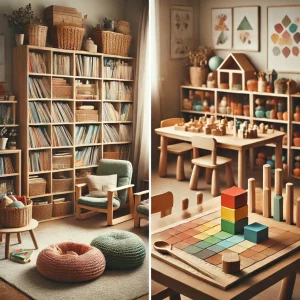
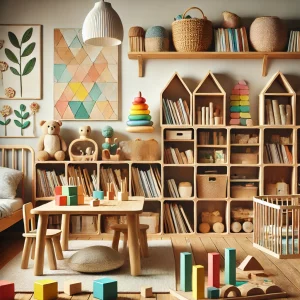
A prepared environment is one of the cornerstones of Montessori education. This is a carefully organized space designed to facilitate independent learning and exploration. A traditional classroom can be adapted into a Montessori environment by rearranging furniture, optimizing accessibility to materials, and creating designated areas for various activities. For example, transforming a standard classroom into a Montessori-inspired setting may involve adding low shelves stocked with hands-on materials that students can choose freely. This setup fosters an engaging learning atmosphere where children feel empowered to explore their interests.
2. Autonomy
Autonomy in Montessori education places emphasis on giving students the freedom to make choices, encouraging them to take charge of their learning. An effective way to promote autonomy is by allowing students to select their activities based on personal interests. For instance, a student teacher planning their first Montessori environment might create a flexible schedule where children can choose when to engage with different subjects, such as art or mathematics. This choice supports intrinsic motivation and a love for learning, as children feel a sense of responsibility for their educational journey.
3. Observation
Observation is another essential aspect of Montessori pedagogy. Teachers are trained to observe students in their natural learning environments to understand their needs better, interests, and developmental stages. For example, while observing children during free play, a teacher might notice a particular child’s fascination with puzzles. This insight allows the teacher to introduce more complex puzzle materials that align with the student’s current interests, facilitating an enhanced learning experience.
4. Sensory Learning
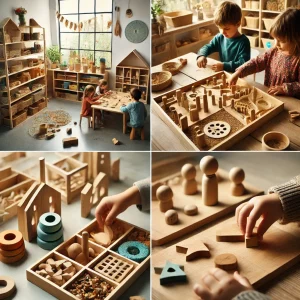
Sensory learning is fundamental in Montessori classrooms, where hands-on experience is prioritized over rote memorization. Children learn best through their senses by manipulating materials that illustrate abstract concepts. For instance, in a Montessori math lesson, children might use tactile materials like beads to represent quantities, promoting a deeper understanding of mathematical principles. This approach helps children to connect concrete experiences with abstract ideas, enhancing retention and comprehension.
Implementing Montessori in Traditional Settings
For educators in traditional settings, incorporating Montessori principles can seem daunting, but it can be done gradually. A teacher might begin by modifying a corner of the classroom into a “Montessori nook,” where students can explore hands-on learning tools. This small change can introduce students to a new way of learning without overhauling the entire curriculum. Over time, educators may find inspiration to adapt further elements of their teaching methodology, allowing for a more integrative approach.
Real Examples in Practice
As we consider the applicability of Montessori principles, it’s essential to acknowledge examples from real-life classrooms. Many educators have successfully implemented Montessori methods within traditional frameworks by starting with simple changes, such as incorporating mixed-age groups. In these settings, younger students can learn from older peers, while older students reinforce their knowledge by teaching concepts to younger classmates. This collaborative learning environment mirrors the Montessori classroom experience and fosters social skills alongside academic growth.
Resources and Further Reading
To deepen your understanding of Montessori pedagogy, I encourage parents and educators to explore additional resources. The guía completa sobre la pedagogía Montessori offers extensive insights into this transformative approach to education. Furthermore, for those new to the concept, a brief introducción a la pedagogía Montessori will provide essential background information about its philosophy and methods.
Maria Montessori: A Revolutionary Educator
Understanding the roots of Montessori pedagogy requires exploring the life and work of María Montessori. Her revolutionary approach arose from a deep understanding of children’s developmental needs and the belief that education should be a nurturing, child-centered experience. This perspective is essential in shaping the present and future of educational practices.
Conclusion: The Future of Education Through Montessori
In conclusion, Montessori pedagogy offers a robust framework for fostering independence, critical thinking, and a lifelong love of learning in children. Whether you are a parent, educator, or teacher-training student, understanding these principles will undoubtedly enrich your approach to education. For those seeking Montessori programs, don’t forget to check out our global Montessori locator at Montessori near me to find local opportunities and resources.
For further exploration on the subject, check out the following latest articles: Understanding Montessori Education, Understanding Maria Montessori, A Parent’s Guide to Transforming Learning, Exploring Montessori Pedagogy, and A Comprehensive Guide to Montessori Education. Each of these articles can provide additional insights into implementing Montessori practices effectively.