Introduction
Many families embark on their educational journey by searching for “Montessori near me” or “Montessori school near me.” The appeal of Montessori pedagogy is growing rapidly as it fosters independence, creativity, and a love for learning in children. To assist parents and educators in finding local Montessori centers, our website offers a global Montessori locator that connects families to nearby schools. For example, those in Oberursel, Germany, can explore their options through our dedicated page here.
Core Principles of Montessori Pedagogy
Montessori pedagogy revolves around various transformative principles designed to cultivate a rich learning environment. Let’s delve into some of the key principles: prepared environment, autonomy, observation, and sensory learning, showcasing how they can be practically implemented in both traditional and Montessori settings.
The Prepared Environment
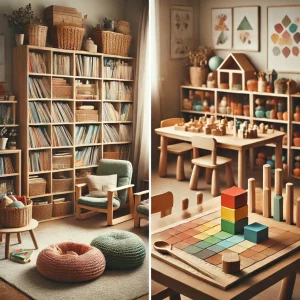
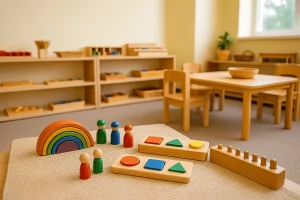
The prepared environment is fundamental to Montessori education; it is thoughtfully arranged to support independence in children. For instance, in a traditional classroom adaption, the teacher can create distinct learning areas (reading corner, art space, science exploration table) that allow children to choose where to engage. By organizing materials at a child’s level, the teacher nurtures curiosity and self-directed learning opportunities.
Autonomy
Autonomy is another pillar of Montessori pedagogy. In a Montessori environment, students are encouraged to make choices regarding their activities, fostering decision-making skills and self-regulation. Imagine a student-teacher planning their first Montessori environment; they might establish a “work cycle,” enabling children to choose tasks from a variety of activities at their own pace. This sense of ownership empowers children, nurturing their natural motivation to learn.
Observation
Observation plays a critical role in Montessori education. Teachers observe children to assess their interests, skills, and developmental stages. This can involve noting how a child interacts with various materials or engages with peers during group activities. By gathering this data, educators can tailor their lessons to meet the individual needs of each student. In a traditional classroom, this might mean conducting observational sessions to identify which subjects children are most interested in and adjusting the curriculum accordingly.
Sensory Learning
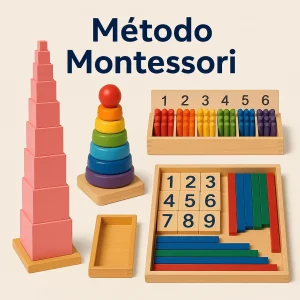
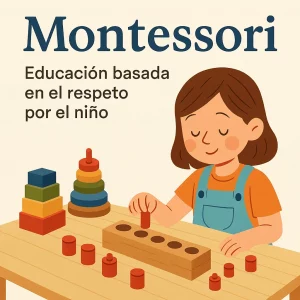
Sensory learning is integral to Montessori pedagogy, ensuring that children engage with tangible materials that stimulate different senses. For example, a prepared Montessori environment might include sensorial materials like geometric shapes or texture boards. If a traditional classroom adopts this principle, the teacher could introduce tactile math manipulatives that allow students to physically interact with numbers and equations. This multisensory approach reinforces learning and retention.
Further Resources on Montessori Pedagogy
To deepen your understanding of Montessori teaching methods, consider exploring our guía completa sobre la pedagogía Montessori. This extensive resource provides insights that will assist parents, educators, and teacher-training students in implementing Montessori principles effectively.
Getting Started: Practical Steps for Families and Educators
Families looking to embrace the Montessori philosophy can begin by finding a local Montessori school. Searching “Montessori near me” can yield countless options tailored to your location. Additionally, exploring models for home-based Montessori learning can also be beneficial. Parents can create spaces at home that reflect the principles of Montessori, such as setting up inviting reading areas or providing tools for hands-on learning.
For educators, starting their first Montessori environment means undergoing a thoughtful process of preparation and observation. By actively engaging with the principles of Montessori, teachers can create spaces that encourage discovery and respect for each child’s autonomy. The Understanding the Montessori Method resource can provide detailed guidance.
Embracing the Montessori Mindset
Adopting a Montessori mindset requires patience and flexibility. As a teacher or educator, it’s essential to allow the learning process to unfold naturally. This philosophy emphasizes understanding each child’s unique learning trajectory, which can lead to fulfilling educational experiences. Teachers can encourage students to question, explore, and engage with their environment in ways that reflect Maria Montessori’s vision for education. For more information, you can check out our introducción a la pedagogía Montessori.
The Legacy of Maria Montessori
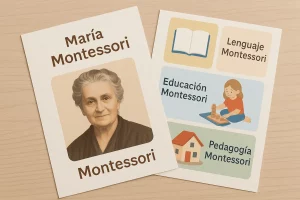
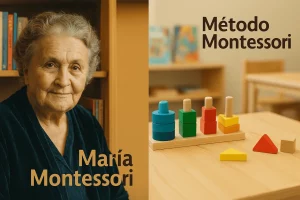
Understanding the teachings of María Montessori provides invaluable insights into the philosophy behind the method. Montessori’s legacy continues to inspire educators to create environments where children flourish academically and socially. By fostering a love for learning, educators can impact young minds, encouraging them to think critically and independently.
Conclusion
In conclusion, Montessori pedagogy offers an innovative approach to education that emphasizes respect for children’s individuality and promotes active learning. By exploring resources and understanding how to apply Montessori principles, families and educators can create enriching experiences for children. To discover more about finding local Montessori options, please visit Montessori near me. We hope this guide has provided a comprehensive overview that inspires parents, educators, and teacher-training students to embrace this transformative educational philosophy.
For further reading, check out these recent articles on our website: A Comprehensive Guide to Montessori Education, Understanding Montessori, Exploring Montessori Pedagogy, Understanding Maria Montessori, and Understanding the Montessori Method.