The Search Begins: Finding Montessori Near Me
Many families embarking on their educational journey often start by searching for “Montessori near me” or “Montessori school near me.” This initial step reflects the growing interest in Montessori education, a method that respects each child’s unique learning pace and potential. For those eager to find Montessori-based schools or programs, our website provides a global Montessori locator at Montessori near me. Here, parents can access a list of Montessori options available in their area, including local examples such as those found in Oberursel, Germany.
Exploring Montessori Pedagogy
Montessori pedagogy is built on several foundational principles that foster independence and a love for learning in children. Key principles include the prepared environment, autonomy, observation, and sensory learning. Understanding and effectively implementing these principles can transform how families, educators, and future teachers approach education.
The Prepared Environment
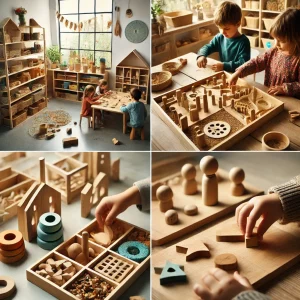
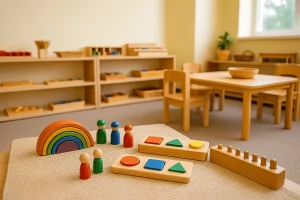
In a Montessori setting, the prepared environment is designed to facilitate independent learning. The classroom is structured to be inviting, engaging, and accessible to children of varying ages. For instance, consider a traditional classroom that wants to transition to Montessori principles. The teacher can rearrange the space to create distinct areas for different subjects. Classrooms can utilize furniture that is the right size for children, and materials can be placed within easy reach, allowing students to select learning activities independently.
Autonomy and Student Choice
Autonomy is at the heart of Montessori education. It empowers children to make choices about their learning, fostering confidence and decision-making skills. Imagine a student teacher planning their first Montessori environment. They can create a schedule that allows students to choose their work cycles, encouraging them to take responsibility for their education. This method not only inspires motivation but also promotes deeper engagement with learning materials.
Observation as a Tool for Understanding
Observation is a crucial component of the Montessori method, guiding educators in recognizing each child’s needs and interests. By keenly observing students, teachers can tailor lessons and activities that resonate with individual interests, optimizing learning experiences. A practical application could involve a teacher noting a child’s enthusiasm for nature. Inspired by this observation, the teacher could introduce a project focused on plant biology, further engaging the child in their learning journey.
Sensory Learning Experiences
Montessori emphasizes sensory learning, acknowledging that children learn best through their senses. A tangible example would be the use of Montessori materials such as tactile letters and sandpaper numbers to help children understand phonetics and mathematics. These hands-on materials allow youngsters to explore concepts through touch, sight, and sound, solidifying their understanding. Incorporating sensory learning can greatly enhance a child’s cognitive development.
Implementing Montessori Principles in Various Settings
Implementing these principles doesn’t just apply to structured Montessori classrooms. Educators and parents can adopt a Montessori mindset in various environments. Adapting a traditional classroom or implementing strategies at home can foster a love for learning and independence in children.
Adapting a Traditional Classroom
To adapt a traditional classroom into a Montessori one, educators should focus on creating a space that promotes choice and independence. This can involve modifying lesson plans to include options for students on how they wish to learn. For instance, instead of reading from a textbook, students could choose books of their interest from a well-organized reading corner. The goal is to create an atmosphere where children feel empowered to follow their curiosity.
Supporting Montessori Learning at Home
Parents can also support Montessori learning at home by creating a prepared environment. Setting up learning stations or areas dedicated to specific skills can foster autonomy and exploration. For example, designating a space for craft activities or science experiments that are easily accessible encourages children to pursue their interests independently. Moreover, involving children in daily household responsibilities can further promote their sense of autonomy and critical thinking skills.
Further Exploration of Montessori Pedagogy
For those seeking to dive deeper into Montessori principles, our comprehensive guide on Montessori pedagogy offers transformative insights into the method and its applications. Additionally, an introduction to Montessori pedagogy serves as an excellent resource for understanding the fundamentals of this educational approach.
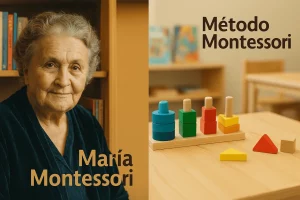
Who was María Montessori?
To truly appreciate the principles behind Montessori education, it is essential to understand its founder, María Montessori. Her revolutionary insights into child development and education have inspired countless educators and parents worldwide. Understanding her vision and methodology can provide valuable context for anyone involved with Montessori education.
Resources for Educators and Parents
Educators and parents interested in the Montessori method can explore various articles for more guidance and knowledge. The A Comprehensive Guide to Montessori Education for Parents and Educators highlights effective strategies for both settings. Additionally, the article Understanding the Montessori Method provides insights into the educational practices and principles that shape the Montessori experience.
For a nuanced look into the legacy of Montessori education, observe the article Understanding María Montessori, which beautifully articulates her influence on modern education. Moreover, Understanding Montessori Pedagogy serves as an excellent resource for educators and teacher-training students, linking theory to practice.
Conclusion
Montessori pedagogy offers a transformative approach to education, emphasizing respect for a child’s natural development while fostering independence and love for learning. By understanding and implementing its principles, parents, educators, and future teachers can create enriching environments that empower children to thrive. For more information, including resources and locations, visit the Montessori Maria website, where you can continue to explore this exceptional educational method.