Introduction to Montessori Pedagogy
In today’s world, many families exploring educational options often start their journey by googling phrases like “Montessori near me” or “Montessori school near me.” This search can be emotionally charged as parents hope to find the right fit for their child’s education. For those looking to dive deeper into Montessori principles and find resources, the Montessori Maria website offers a global Montessori locator, assisting families in discovering local educational practices. For example, families in Germany can access local Montessori schools at this link.
The Core Principles of Montessori Education
Montessori pedagogy is built upon several core principles that shape the educational environment. These include the prepared environment, autonomy, observation, and sensory learning. Let’s break down each principle and explore how they can be applied in a traditional classroom setting or for student teachers planning their first Montessori environment.
Prepared Environment
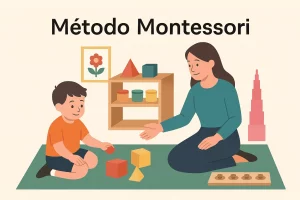
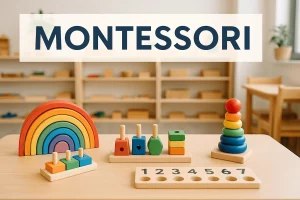
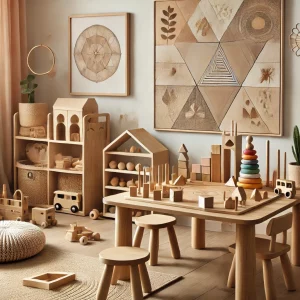
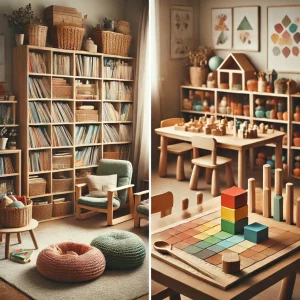
The principle of a prepared environment emphasizes creating a space that is inviting, organized, and accessible for children. Imagine a traditional classroom filled with rows of desks. To adapt this to a Montessori approach, the teacher could rearrange the space into different learning stations. Each station would focus on specific subjects, like math, science, or art. The materials would be displayed on low shelves, allowing children to explore at their own pace.
Autonomy
Encouraging autonomy is fundamental in Montessori education. Children learn to make choices about their own learning, fostering independence and self-discipline. A student teacher might design their first Montessori environment by allowing students to choose their activities from a selection of options. For instance, if a student is intrigued by nature, they could choose to work on a project related to plants or animals, which leads to holistic learning experiences.
Observation
Observation is a crucial technique in Montessori classrooms. Teachers are encouraged to watch how children interact with materials, each other, and their environment. By observing, a teacher can determine when to intervene to guide learning or when children are capable of self-directed discovery. For example, a teacher might notice a child struggling with a math activity. Instead of directly intervening, they might wait to see if the child attempts to resolve it on their own. This approach consists of subtle guidance that respects children’s capability.
Sensory Learning
In Montessori education, sensory learning plays a key role. Children learn best through hands-on experiences and using their senses. A practical example of this could be introducing sensory bins in a traditional classroom. The teacher could fill bins with different materials (e.g., rice, beans, sand) and offer children various tools to explore these textures. This sensory engagement can reinforce concepts like counting, measurement, and categorization.
Implementing Montessori Practices in Traditional Settings
Adopting Montessori practices in a traditional educational setting can transform the learning experience. As classroom dynamics change, teachers can introduce more flexibility and choice within the structure of their classrooms. This transition can be gradual but impactful, providing children with enriched and self-directed learning opportunities. To read more about adapting a traditional classroom to incorporate Montessori methods, see our comprehensive guide on Montessori pedagogy.
Support for Educators and Teacher-Training Students
For educators and teacher-training students, grasping the core principles of Montessori can be immensely beneficial. Understanding how to implement these pedagogical strategies creates an engaging learning environment that meets children’s developmental needs. An informative introduction can be found in this introduction to Montessori pedagogy.
Maria Montessori: A Legacy of Empowering Education
To fully appreciate Montessori methods, it’s vital to understand who Maria Montessori was and the philosophy behind her educational approach. Montessori believed in empowering children through education tailored to their innate skills and interests. Her legacy continues to inspire educators and parents alike, urging us to foster a learning environment centered on respect for the child’s needs.
Conclusion
In conclusion, Montessori pedagogy offers a transformative approach that can be integrated into various educational contexts, benefiting both educators and students. By leveraging the principles of a prepared environment, autonomy, observation, and sensory learning, we can create rich educational experiences that ignite children’s natural curiosity and love for learning. For more detailed insights, consider exploring our understanding of the Montessori method or our comprehensive guide for parents. We can unlock a world of autonomous learning for future generations, paving the way for students who are knowledgeable and independent. For those still searching for a local Montessori resource, our website offers a helpful tool at Montessori near me.