Starting the Journey: Searching for “Montessori Near Me”
Many families begin their educational journey by typing “Montessori near me” or “Montessori school near me” into their search engines. These queries highlight a growing interest in alternative educational methodologies that emphasize child-led learning and environmental engagement. If you are among these families, we invite you to explore the global Montessori locator available on the Montessori Maria website, where you can find authentic Montessori programs around the world. For those in specific locations, such as Oberursel, Germany, click here.
The Foundations of Montessori Pedagogy
Montessori pedagogy revolves around several key principles that aim to foster an enriching learning environment. Understanding these principles can significantly aid parents, educators, and teacher-training students in applying Montessori methods effectively. Below, we will discuss these foundational principles—prepared environment, autonomy, observation, and sensory learning—while providing practical examples for better comprehension.
Prepared Environment
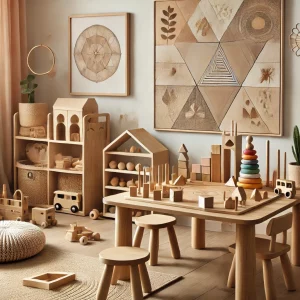
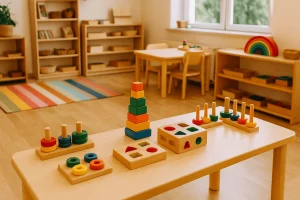
The principle of a prepared environment focuses on creating a space that encourages exploration and learning. This involves setting up classrooms that are organized, accessible, and appealing to children. For example, consider a traditional classroom typically filled with rows of desks. To adapt this space, a teacher might rearrange furniture into small groups, create dedicated areas for different subjects, and include open shelves with various learning materials within child’s reach.
Autonomy
Autonomy is a cornerstone of Montessori education. It empowers children to make choices about their learning activities. For instance, let’s imagine a student teacher planning their first Montessori environment. Instead of dictating a single activity for the day, they might offer a selection of tasks that cater to different interests—art, science, or reading—and allow children to choose what excites them most. This approach fosters independence and a love for learning.
Observation
Observation is key in understanding each child’s unique learning style and needs. A teacher should spend time observing children as they engage with materials, noting their interests and interaction patterns. For example, during a class activity, a teacher might watch how a child approaches a puzzle, carefully analyzing their problem-solving skills or social interactions with peers. These insights will help tailor future lessons and activities to better suit the student’s learning journey.
Sensory Learning
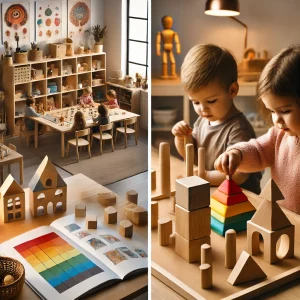
Montessori pedagogy heavily emphasizes sensory experiences as pivotal for cognitive development. A practical application would be incorporating tactile learning materials that appeal to various senses. For instance, in a language lesson, a traditional classroom might only utilize written worksheets. In contrast, a Montessori setting could include sandpaper letters for children to trace, thus enhancing their understanding of letter shapes through touch.
Conclusion: Embracing Montessori Pedagogy
For parents, educators, and teacher-training students eager to delve deeper into Montessori principles, we recommend checking our comprehensive guide on Montessori pedagogy available here. Understanding how these principles can transform the learning experience is invaluable as you guide children through their educational journeys.
In summary, Montessori pedagogy offers transformative approaches for fostering independent, curious learners. Whether you are searching for a school or simply looking to incorporate these methods at home, resources such as an introduction to Montessori pedagogy or details about Maria Montessori herself, can be incredibly beneficial.
Additional Resources
For those eager to expand their knowledge further, consider exploring our latest articles that delve into various aspects of Montessori education:
- Understanding Montessori Education: A Comprehensive Guide for Parents and Educators
- Understanding the Montessori Method: A Guide for Parents and Educators
- Exploring the Montessori Method: A Comprehensive Guide for Parents and Educators
- A Comprehensive Guide to Montessori for Parents: Finding the Perfect Fit for Your Child
- Understanding Montessori Pedagogy: A Guide for Parents, Educators, and Teacher Training Students
Explore these resources on the Montessori Maria website to deepen your understanding and find your path within Montessori pedagogy. Whether you are seeking a new educational environment or want to apply these methodologies at home, the journey toward implementing Montessori principles is rewarding and transformative.