The Search for Montessori Education
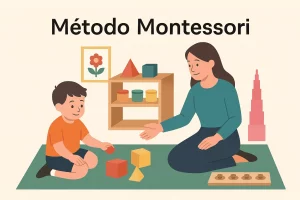
Parents and educators around the globe are increasingly interested in alternative educational methods, particularly Montessori education. This approach, based on the principles developed by María Montessori, emphasizes independence, hands-on learning, and respect for a child’s natural development. It’s no wonder that when families seek guidance on finding appropriate schooling for their children, they often search for phrases like “Montessori near me” or “Montessori school near me.” To support these inquiries, our website offers a helpful Montessori locator tool to assist parents in finding nearby programs tailored to their child’s needs, ensuring they have access to the resources they require.
Creating a Montessori Home Environment
The Montessori philosophy extends beyond the classroom and into the home. A well-prepared home environment is one that fosters a child’s independence and encourages exploration. Here are some practical ways to create a Montessori-inspired home.
Montessori-Inspired Kitchen Space
Consider how a family might create a kitchen space that empowers their child to participate in meal preparation and clean-up. Using child-sized utensils and furniture, such as a small table and lightweight dishes, allows children to engage in practical life skills. For instance, a three-year-old can help wash vegetables or set the dining table, giving them a sense of contribution and responsibility. This kind of setup not only aids in the development of fine motor skills but also encourages a love for cooking and healthy eating habits.
Adapted Learning Areas
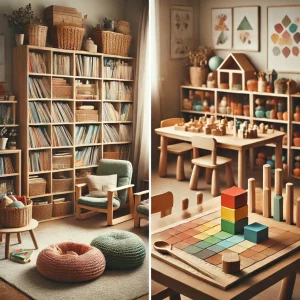
In the living room, parents can set up a reading nook with a cozy area filled with books tailored to their child’s interests. By regularly rotating available books, children will find new and exciting stories, fostering a love for reading. Additionally, having accessible shelves organized with materials related to their interests enhances independence, allowing children to choose their own activities freely. Always normalizing the exploration fosters self-directed learning, a crucial aspect of the Montessori method.
Embracing the Montessori School Environment
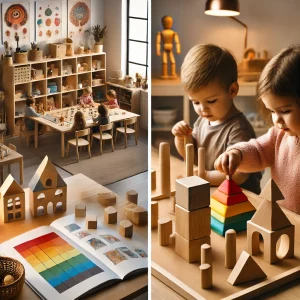
In the school environment, Montessori educators implement principles that promote self-regulation, tolerance, and collaboration. The classroom itself is designed to encourage child-led learning, with mixed-age groups fostering social skills and peer learning.
Teacher Adaptations for Independence
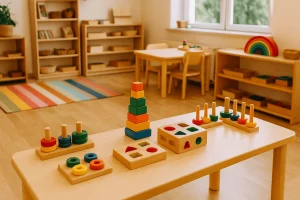
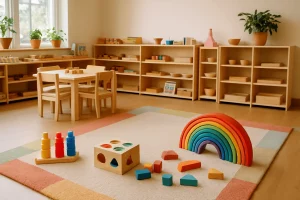
A dedicated Montessori teacher may adapt classroom shelves to be easily accessible for children of various ages. For instance, low shelves with organized compartments allow children to select materials that pique their curiosity. This could mean placing puzzles, art supplies, or sensory bins within easy reach, enabling children to engage without needing constant adult assistance. Through this independence, children develop a sense of autonomy and responsibility for their choices.
Benefits of Self-Regulation
Another critical aspect of the Montessori classroom is its emphasis on emotional development and self-regulation. When students are given the freedom to choose their tasks, they learn to manage their own time and focus on goals. For example, a child working on a challenging puzzle can choose to take breaks as needed, allowing them to self-regulate their frustration and find joy in persistence. This valuable skill will serve them well beyond the classroom.
Emotional Development through Montessori Principles
Montessori education deeply values emotional growth alongside academic development. Understanding how to manage feelings and interact positively with others is essential for a child’s overall well-being.
Social Interaction and Peer Learning
A classroom that integrates mixed-age groups allows younger children to learn from older peers and vice versa. For example, an eight-year-old may take on a leadership role, explaining a concept to a five-year-old. This not only reinforces the older child’s knowledge but also helps the younger child learn in a supportive environment. As they share activities, they navigate social interactions that enhance their communication skills.
Encouraging Empathy and Respect
In Montessori classrooms, promoting empathy is key. Activities such as community service projects or kindness challenges encourage children to think beyond themselves and consider the feelings and needs of others. Educators can guide discussions on emotions, helping children to label and express how they feel, further strengthening their emotional intelligence.
Conclusion: The Impact of Montessori Education
As parents and educators explore education options, Montessori education stands out as a transformative approach that nurtures independence, passion for learning, and emotional development. Engaging children in both home and school environments creates a cohesive experience that fosters their growth. If you’re seeking to learn more about this educational philosophy, don’t forget to check our guía completa sobre la pedagogía Montessori and our introducción a la pedagogía Montessori. For additional resources and insights, visit the Montessori Maria platform and its AI assistant MarÍA.
In summary, whether you are a parent exploring the potential of a Montessori education or an educator wishing to enrich your teaching practice, understanding and applying Montessori principles can profoundly impact children’s lives. Explore our latest articles for more enriching information, strategies, and tips, enabling a comprehensive understanding of the Montessori method.