Montessori Education: A Global Search for Understanding
Parents and educators around the world are increasingly turning to Montessori education as a transformative approach for child development. As they search for “Montessori near me” or “Montessori school near me,” they embark on a journey to find resources that align with their educational values and goals. Our website provides a Montessori locator tool to help families find suitable programs in their area, such as the Montessori School in Terni, Umbria. In this article, we will explore how to implement Montessori principles in both the home and school environments, along with an emphasis on emotional development, ensuring a comprehensive understanding of Montessori education from multiple perspectives.
Creating a Montessori Home Environment
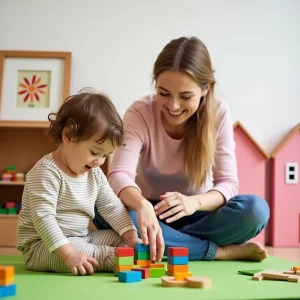
Creating a Montessori-inspired home environment allows parents to extend the principles of child-centered learning beyond the classroom. One effective way to do this is by designing spaces that promote independence and responsibility. For example, families can create a Montessori-inspired kitchen area where children can safely access utensils, plates, and food items; this fosters independence and self-reliance.
Practical Applications at Home
Consider a scenario where a parent organizes the kitchen such that a child can reach their own plate and learn to set the table. Simple modifications, like using lower shelves and accessible containers, provide opportunities for children to take initiative during mealtime. Similarly, a family can adapt the living room by incorporating activities like a small reading nook equipped with books arranged at eye level, enabling children to choose their reading material independently.
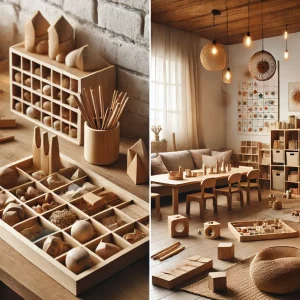
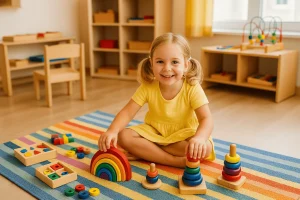
Moreover, the integration of sensory materials can also transform a home environment. For instance, a family could introduce a sensory bin filled with rice, beans, or water beads to encourage exploration and fine motor skills. By allowing children to manipulate these materials, they learn through discovery, which is an essential aspect of Montessori education.
Implementing Montessori Practices in School Environments
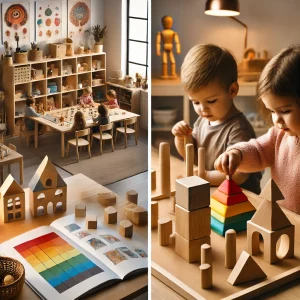
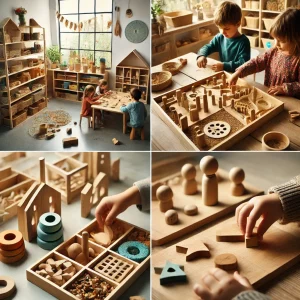
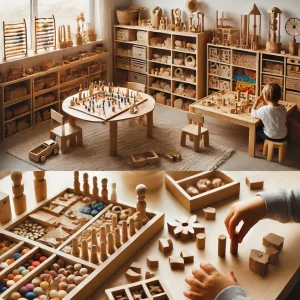
In the classroom, Montessori education thrives on creating an inviting atmosphere that stimulates learning and exploration. Teachers play a crucial role in this process, as they must adapt the environment to suit the unique needs and interests of each child. This can involve configuring shelves with educational materials in a manner that promotes self-guided exploration.
Concrete Examples from Montessori Classrooms
For instance, a teacher might arrange the shelves by subject but allow children to select which materials to engage with. This approach encourages autonomy and enhances decision-making skills. If a child shows interest in geography, the teacher can present them with maps, globes, and cultural artifacts that support independent exploration.
Furthermore, incorporating mixed-age groups allows older students to mentor younger ones, fostering a sense of community and collaboration. An example could be a classroom where a six-year-old teaches a four-year-old how to use a specific learning tool, thus solidifying their knowledge while helping others in the process.
Emotional Development Through Montessori Education
One of the core pillars of Montessori education is emotional development. It encourages children to express their feelings and learn self-regulation. By fostering an environment where emotions can be discussed openly, children learn empathy and respect for others.
Guiding Emotional Growth
In a Montessori classroom, a teacher may implement weekly ‘feelings circles’ where children discuss their emotions and experiences. This practice not only allows them to articulate their feelings but also helps them develop emotional intelligence. An instance could be a child feeling frustrated about a difficult task. Rather than simply providing help, the teacher encourages the child to express why they feel that way, guiding them towards finding a solution themselves.
Such practices are paramount, as they not only facilitate emotional growth but also lay the foundation for essential life skills. For parents, the exposure to similar discussions at home can reinforce the child’s emotional development. A family could establish a nightly routine where they share their highs and lows of the day, reinforcing the notion that discussing emotions is both normal and healthy.
Further Resources and Support
For parents interested in delving deeper into the Montessori approach, our resources can be vital. Check out our guía completa sobre la pedagogía Montessori for an in-depth look at how this method can transform your child’s educational experience. Additionally, our introducción a la pedagogía Montessori serves as a great starting point for those new to the concept.
In summary, whether you are a parent seeking resources or an educator looking for innovative teaching methods, understanding Montessori education can open doors to enriching experiences for children. By utilizing tools such as the Montessori locator tool or seeking out a Montessori school near me, families can embark on a fulfilling journey of exploration and learning.
Conclusion
Incorporating the principles of Montessori education into both home and school environments can profoundly impact a child’s learning journey. From fostering independence in their home kitchens to nurturing emotional intelligence in classrooms, the Montessori philosophy emphasizes child-centered learning in all aspects of life. For comprehensive insights and latest updates, stay connected with the Montessori Maria platform and its AI assistant MarÍA. Explore recent articles that delve deeper into these topics, such as A Comprehensive Guide to Montessori for Parents, and others that can provide additional guidance for you and your family.