Introduction
As a parent, it is natural to search for the best educational opportunities for your child. You may have found yourself typing phrases like “Montessori near me” or “Montessori school near me” into your favorite search engine while exploring different educational philosophies. It’s also possible that you’ve stumbled upon a supportive community, eager to help you navigate your journey.
On our website, we offer a helpful search and guide section that assists families in locating Montessori-inspired learning environments worldwide. For those in Terni, UMbria, for example, you can visit our dedicated page here to learn more about local Montessori schools.
What is the Montessori Method?
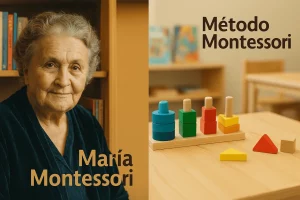
The Montessori method, developed by María Montessori, is an educational approach based on scientific observations of children from birth to adulthood. It emphasizes independence, freedom within limits, and respect for a child’s natural psychological development.
This method encourages children to explore and learn at their own pace. Unlike traditional educational settings that often rely heavily on standardized testing and direct instruction, Montessori classrooms are designed to be learner-centered, allowing children to choose their activities and materials.
The Core Principles of Montessori Education
Montessori education is grounded in several core principles that guide its application in the classroom and at home. These include:
Independence
Independence is a fundamental tenet of Montessori philosophy. Children are encouraged to make choices and decisions related to their learning and daily activities. This fosters a sense of confidence and self-esteem that carries into other areas of life.
Prepared Environment
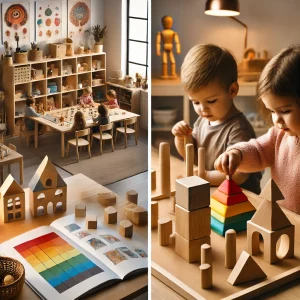
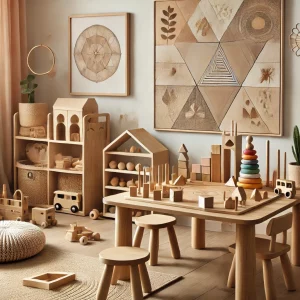
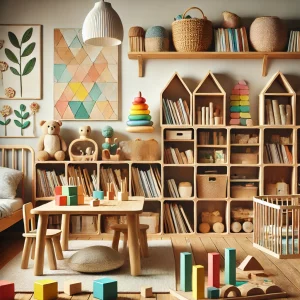
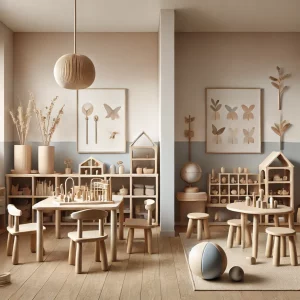
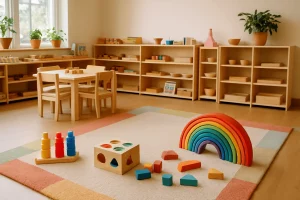
Creating a prepared environment is essential in Montessori settings. This means offering children access to educational materials that are suited to their developmental stage. Each item must be within reach and designed for children to engage with independently.
Respect for the Child
Respecting a child’s autonomy and individuality is central to the Montessori philosophy. Teachers observe and guide rather than impose knowledge, allowing children to learn from their experiences.
A Real-Life Example: Discovering Montessori at Home
Consider a family who recently discovered Montessori principles at home. The Johnsons were feeling overwhelmed as their 4-year-old, Timmy, constantly resisted their attempts to control bedtime routines. Frustrated and unsure of how to foster independence in Timmy, they began researching the Montessori approach.
Through their research, they learned that teaching kids how to become independent often requires preparation and the right environment. Rather than forcing Timmy to follow a rigid bedtime, they transformed his room into a prepared environment by allowing him to choose his evening activities. They set up a visual clock for him to understand when bedtime was approaching, enabling him to have a say in the matter. By implementing these principles, they discovered a happy bedtime routine that empowered Timmy, thus lessening their struggles significantly.
Montessori in the Classroom vs. Montessori at Home
While many families consider enrolling their children in Montessori schools, the essence of Montessori can also be integrated into everyday life at home. That said, there are differences between the two settings.
Montessori Schools
In a Montessori school, children learn in multi-age classrooms filled with materials that promote inquiry and exploration. These environments are set up by trained Montessori educators who encourage children to choose their activities while providing guidance as needed. The goal is for children to learn through hands-on experiences in an atmosphere that encourages their natural curiosity.
Montessori at Home
Adopting Montessori principles at home might look like setting up learning stations, where your child can easily access books, learning materials, art supplies, and other tools. Simple changes, like allowing your child to assist in cooking or chores, can reinforce the essence of independence fostered by the Montessori method.
Finding Montessori Schools Near You
If you’re eager to find a Montessori program for your child, our website is here to help. The Montessori Maria website offers a comprehensive search feature to identify Montessori schools near you. Whether you are living in a small town or a big city, our platform aims to guide you to the right educational opportunities that reflect the Montessori ethos.
Challenges Parents Face with Independence
Another family, the Smiths, found themselves grappling with their daughter Lily’s struggle for independence. At first, they felt it necessary to control every aspect of her learning. As Lily grew older, their authoritative approach resulted in meltdowns during homework time. The Smiths felt overwhelmed, unsure of how to lead Lily toward independence without it feeling confrontational.
In their pursuit of solutions, they decided to explore the Montessori philosophy and, upon learning more about the concept of educación Montessori, they learned that the key was to release the reins a bit. They set up a ‘homework area’ where all supplies were easily accessible, allowing Lily to choose her study materials and time. This tiny change transformed their homework routine, allowing Lily to feel empowered and confident.
The Role of the Educator in Montessori
Teachers in Montessori settings serve as guides rather than traditional instructors. This significant role involves observing each child closely to understand their interests and development. Montessori educators employ these observations to adapt lessons and materials to meet the specific needs of each child. Flashy presentations or uniform teaching methods are anathema to the Montessori principle; rather, they promote child-centered learning experiences.
Supporting Your Child’s Journey
As you ponder applying Montessori principles at home, remember that you’re not alone in this journey. The Montessori community is dedicated to supporting parents, providing resources, and sharing experiences.
Among the many resources available is our AI assistant, MarÍA, designed specifically to help families understand Montessori methodologies. You can find MarÍA on the Montessori Maria website, ready to assist you with any inquiries you may have about the approach.
Conclusion
In a world filled with educational options, Montessori stands out for its commitment to nurturing independence, curiosity, and respect for children’s individual learning journeys. The principles of María Montessori offer valuable insights into how families can foster an environment that supports lifelong learning.
By exploring the resources available on our website, including articles like Understanding Montessori: A Parent’s Guide to Empowering Independent Learners, and more comprehensive guides about the Montessori approach, parents can equip themselves with the knowledge needed to embrace this transformative educational journey.