Introduction
In today’s educational landscape, many families are turning to alternative pedagogies in their search for the best educational environment for their children. A frequent query they may type into a search engine is “Montessori near me” or “Montessori school near me.” With a growing awareness of the benefits of the Montessori method, parents are seeking schools that embrace this student-centered approach. Our website offers a Montessori locator along with helpful guides to assist families in their search for quality Montessori education options.
A Brief Biography of Maria Montessori
Maria Montessori was born on August 31, 1870, in Chiaravalle, Italy. She was a trailblazer in educational reform, becoming one of the first female physicians in Italy. Her experiences in the medical field, particularly with children in psychiatric care, led her to develop a profound understanding of child development. In 1907, she opened the first Casa dei Bambini (Children’s House) in San Lorenzo, Rome, where she began applying her innovative teaching methods focused on independence, respect, and freedom within limits. Montessori’s work laid the foundation for the Montessori legacy, which emphasizes a hands-on, experiential learning approach that respects a child’s individuality.
Understanding the Montessori Method
The Montessori method is characterized by its focus on the whole child—emotionally, socially, physically, and cognitively. By focusing on each child’s unique development, Montessori education fosters a love of learning that supports independent thinkers. Children are encouraged to explore their interests at their own pace in an environment designed to promote exploration and discovery. This method not only cultivates academic skills but also nurtures critical life skills such as concentration, perseverance, and social cooperation.
Practical Examples of Montessori Principles in Action
Reorganizing a Classroom
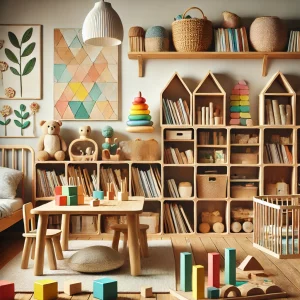
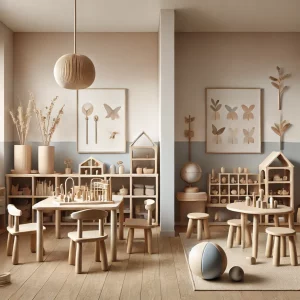
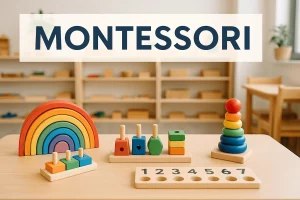
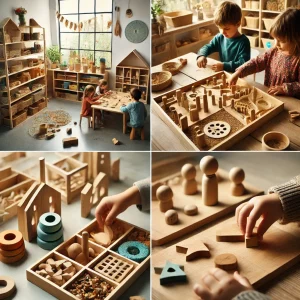
Consider a teacher named Lisa who is transitioning her traditional classroom into a Montessori-inspired environment. She begins by removing unnecessary furniture and clutter, creating an open space that allows for movement and exploration. Instead of rows of desks, she sets up areas for different activities—reading corners, art stations, and science exploration tables. Each area is equipped with Montessori materials that promote hands-on learning. For example, she introduces manipulatives that help children engage with mathematical concepts, allowing for self-guided discovery. By reorganizing her classroom, Lisa provides her students with the freedom to choose their activities, fostering independence and curiosity.
Preparing a Child’s Room for Independence
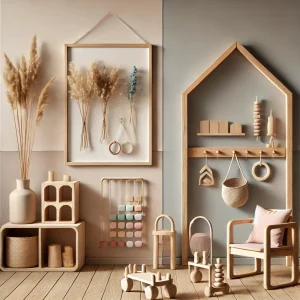
Family life can also embrace Montessori principles. Take Sarah, a mother who is preparing her child’s room to promote independence and responsibility. Instead of a traditional crib, she opts for a floor bed that allows her toddler to get in and out as they please. Sarah also arranges the room so that everything is within her child’s reach—books on low shelves, clothes in open bins, and a small table and chair for activities. This setup encourages her child to make choices, learn self-discipline, and embrace their autonomy. It exemplifies how parents can incorporate Montessori ideas at home, nurturing their child’s natural development.
The Importance of Environment
The Montessori philosophy places great emphasis on the prepared environment as an essential element of education. A well-organized space fosters a child’s natural desire to learn. Pedagogía Montessori, or Montessori pedagogy, addresses how such environments can be designed to encourage exploration and facilitate self-directed learning. Whether in a classroom setting or at home, the environment should invite children to interact, inquire, and engage actively in their learning journey.
Exploring Montessori Resources
For parents and educators keen on implementing Montessori principles, numerous resources are available. The Montessori Maria website offers a comprehensive collection of articles and guides that delve into different aspects of Montessori education. Here, you can learn about effective strategies for implementing the Montessori method in various settings, whether at home or school.
Utilizing Technology for Montessori Education
In today’s digital age, technology is an integral part of education. However, it is essential to integrate it thoughtfully within a Montessori framework. Teachers can use educational technology to enhance learning while ensuring it does not dominate traditional physical learning experiences. Incorporating technology thoughtfully means using resources that align with Montessori principles and offer further opportunities for exploration and understanding. Resources like our AI assistant, MarÍA, available on the Montessori Maria website, can support educators and parents in their journey, providing tailored guidance that aligns with Montessori teachings.
Conclusion
As families increasingly seek options for education that resonate with their values, the Montessori method emerges as a leading choice. With its emphasis on independence, respect, and a love for learning, Montessori education cultivates generations of curious, capable individuals ready to navigate the complexities of the world. By leveraging resources like the Montessori locator and familiarizing themselves with the principles of the method, parents and educators can give children the gift of a truly enriching educational experience. For those interested in deeper insights, you can explore our latest articles on the Montessori method that span topics from understanding Montessori methodologies for parents to guidelines for educators and training students.
Further Reading
Curious to learn more? Our additional reading materials include essential topics such as Understanding Montessori: A Comprehensive Guide for Parents and Understanding Montessori Pedagogy: A Comprehensive Guide for Parents, Educators, and Teacher Training Students. Each provides valuable insights that can help to enhance your understanding and application of Montessori principles.