Introduction: The Search for Montessori Education
In today’s fast-paced world, many families are on the lookout for effective educational methods for their children. A common search query among these families is “Montessori near me” or “Montessori school near me.” This reflects a growing interest in the unique educational philosophy developed by María Montessori, which emphasizes child-led learning and independence. If you’re seeking guidance on how to implement these principles in your child’s education, our website offers a Montessori locator along with helpful guides that can lead you to nearby Montessori schools and resources.
A Brief Biography of María Montessori
María Montessori was born on August 31, 1870, in Chiaravalle, Italy. She pursued a career in medicine, becoming one of the first female physicians in Italy. Her observations during her medical career led her to develop a keen interest in child development, particularly in the education of children with special needs. In 1907, she opened her first school, Casa dei Bambini (“Children’s House”), in Rome. Her innovative approach to education, focusing on hands-on learning, independence, and respect for a child’s natural psychological, physical, and social development, revolutionized traditional teaching methods. Today, the legacy of María Montessori lives on in schools around the world.
Understanding the Montessori Method
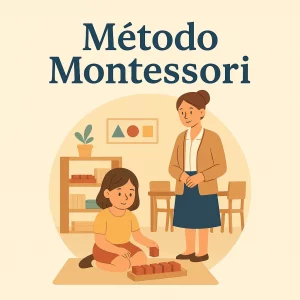
The core of Montessori education lies in the belief that children learn best when they are free to explore their interests at their own pace. This is often referred to as the método Montessori. Unlike traditional education models, where teachers direct the learning process, Montessori teachers act as guides, providing children with the tools they need to explore and discover on their own.
The Prepared Environment
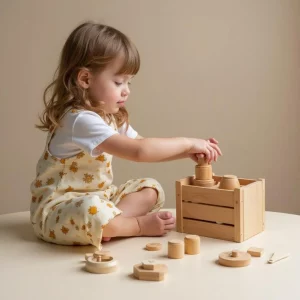
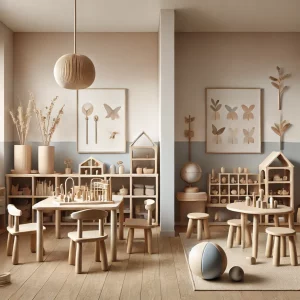
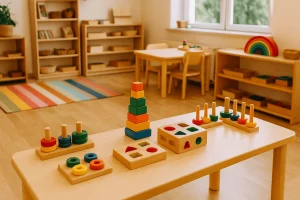
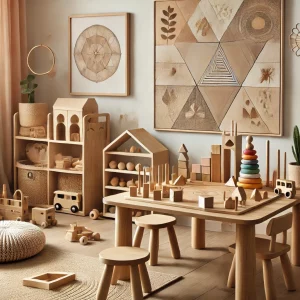
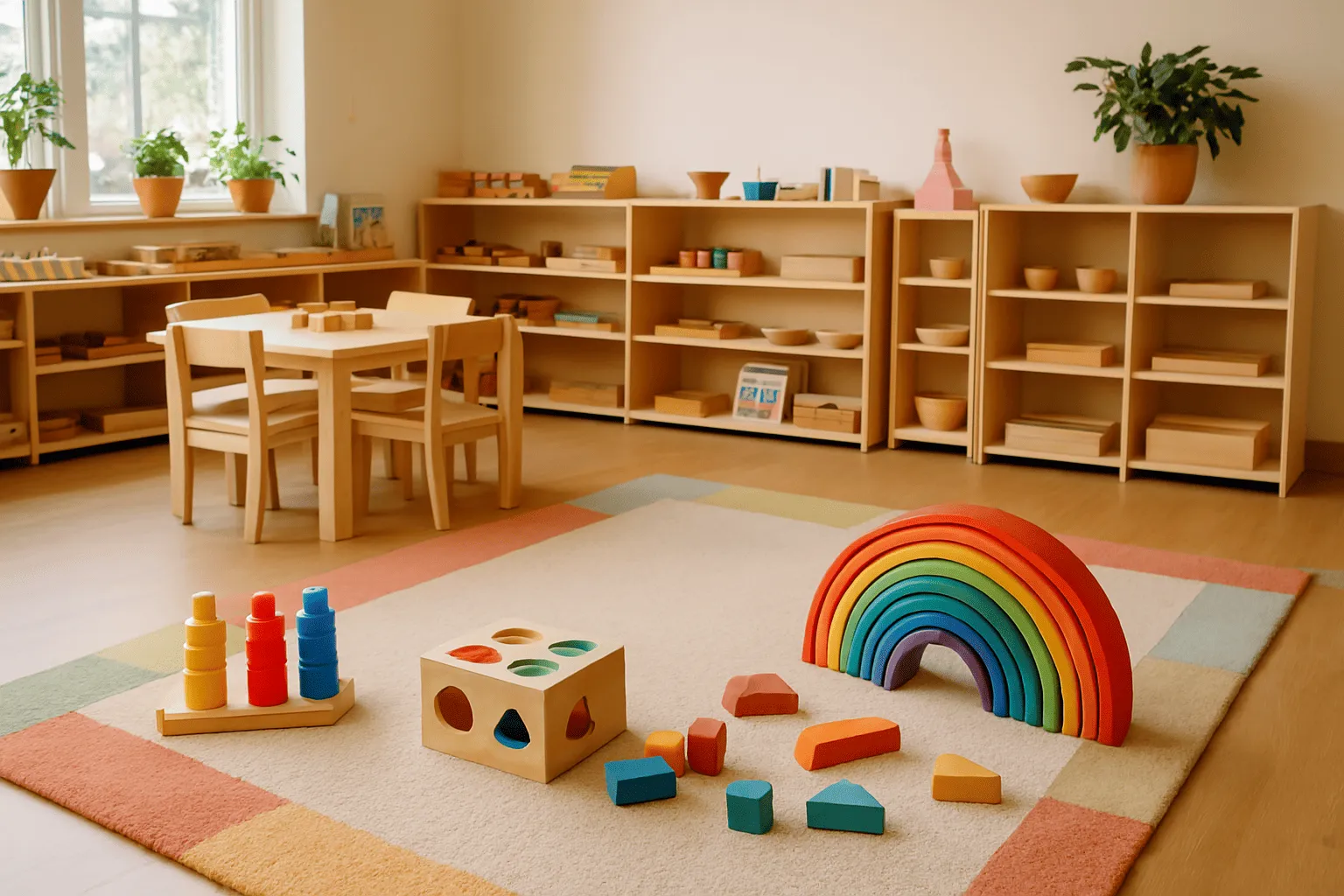
One of the key concepts in the Montessori method is the ‘prepared environment.’ This refers to a classroom setup that encourages freedom of movement, choice, and exploration. For example, a teacher might reorganize the classroom to include various learning stations that cater to different subjects and activities. Each station is designed with materials that stimulate learning and creativity, while also promoting independence. This prepared environment allows children to engage with learning materials without direct supervision, fostering their natural curiosity.
Real-Life Examples of Montessori Principles
To illustrate how Montessori principles can be applied in real-life settings, consider the following examples. A teacher at a Montessori school may decide to rearrange her classroom by creating separate areas for reading, science, and creative arts. Each area is equipped with age-appropriate resources that children can access freely throughout the day. This setup encourages students to choose what they want to work on, thereby exercising their decision-making skills and promoting self-directed learning.
Similarly, parents at home might prepare a child’s room to nurture independence. By organizing toys in accessible bins and friends’ clothes in designated areas, children learn to choose their activities and clean up afterward. This simple act promotes responsibility and fosters a sense of ownership in their space.
The Role of the Educator
In a Montessori setting, the role of the educator is quite different from that in traditional schools. The educator is a facilitator and observer rather than a mere instructor. This approach allows teachers to understand each child’s unique learning style and customize lessons to suit individual needs. By closely observing children, Montessori educators can guide them in discovering their interests and mastering skills through hands-on activities.
Key Characteristics of Montessori Educators
A Montessori educator typically embodies several key characteristics: patience, observation skills, and a profound respect for children and their learning processes. For instance, a teacher might observe a child who spends a significant amount of time on a particular activity—perhaps building with blocks—and instead of interrupting, she may allow the child to explore that interest further, providing related resources later to deepen understanding.
Benefits of Montessori Education
The benefits of the Montessori method are numerous. Studies have shown that children in Montessori programs often develop strong critical thinking skills and have higher academic performance compared to those in traditional school settings. Moreover, the social environment fostered in Montessori classrooms promotes collaboration and mutual respect among peers.
Independence as a Core Value
Independence is a core value in Montessori education. Children are encouraged to think for themselves and make choices, which builds confidence and problem-solving skills. For example, when a young child is given the freedom to choose his own learning path, he is developing essential life skills that will benefit him in the long run. As parents and educators implement Montessori practices, they witness firsthand the transformation in a child’s confidence and eagerness to learn.
Finding Montessori Resources Near You
For parents looking to incorporate the Montessori method at home or find a nearby school, our website offers an invaluable resource. With our Montessori locator, families can easily find Montessori schools and programs tailored to their locations and needs. We recommend checking out our guides on Montessori education, including the Comprehensive Guide for Parents and Educators, to deepen your understanding of how the Montessori method can enhance your child’s educational experience.
Discovering More About Montessori
If you are eager to learn more about the underlying principles of Montessori education and how they can be applied to your child’s life, consider exploring our AI assistant MarÍA on the Montessori Maria website. MarÍA provides personalized answers and resources to queries about Montessori education, thereby enabling you to make informed decisions about your child’s learning path.
Conclusion: Embracing Montessori in Education
In conclusion, embracing the Montessori method can redefine how children learn and evolve through their formative years. By creating an environment that encourages independence, respect, and creativity, both parents and educators play a crucial role in fostering a generation of thinkers and innovators. Whether you are searching for a Montessori school or looking to adapt teaching principles at home, the resources available on our website serve as valuable tools for your educational journey. Explore our articles, such as Understanding María Montessori: A Guide for Parents and Educators and Understanding Montessori Pedagogy, for further insights into this transformative educational approach.