Introduction
In today’s educational landscape, countless families search for “Montessori near me” or “Montessori school near me” when seeking effective guidance for their children’s holistic development. The Montessori approach to education has gained traction worldwide as parents and educators recognize its profound benefits. For those interested in discovering Montessori options, our website provides a Montessori locator and helpful guides to assist in your journey toward finding the right learning environment for your child. You can explore more about this on our Montessori near me page. Additionally, if you are located in Terni, Umbria, we offer resources tailored specifically to that region, which you can find here.
Who Was María Montessori?
María Montessori was an Italian physician and educator best known for developing the Montessori method of education. Born on August 31, 1870, in Chiaravalle, Italy, she became the first female physician in Italy. Her early involvement in education came through her work with children with disabilities, where she noticed that children learn best in environments tailored to their individual needs. By 1907, she opened the first Casa dei Bambini (Children’s House) in San Lorenzo, Rome, which served as a model for Montessori schools across the globe. Her educational philosophy emphasizes respect for a child’s natural development, promoting independence, and encouraging a love for learning through self-directed activities. To delve deeper into her life and the profound impact she made on education, read about María Montessori y su legado.
The Core Principles of the Montessori Method
The Montessori method is grounded in several core principles that have been proven effective. Key elements include mixed-age classrooms, self-directed activity, and hands-on learning. This educational model encourages children to learn at their pace and discover their interests, fostering lifelong learning skills. Children are viewed as active participants in their education rather than passive recipients of information. If you want to explore these foundational aspects further, check the detailed insights on the método Montessori.
Creating a Montessori Environment
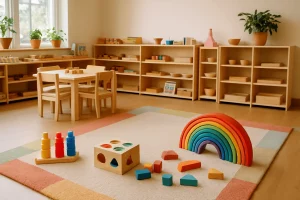
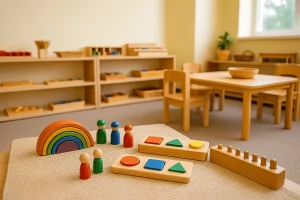
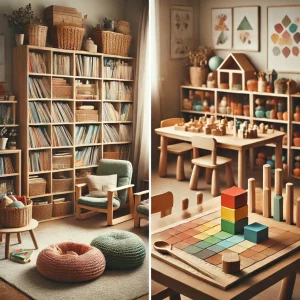
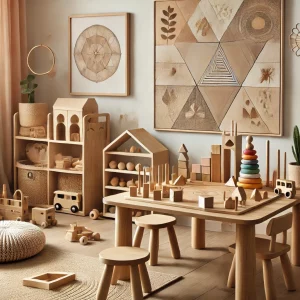
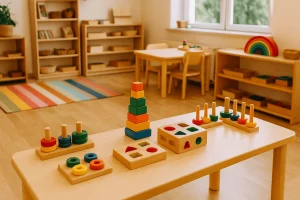
Both educators and parents can create Montessori-inspired environments that encourage independence and exploration. For instance, a teacher might choose to reorganize their classroom by designating specific areas for different activities—art, science, reading, and practical life skills. The furniture is typically child-sized, allowing easy access to materials. A parent preparing a child’s room for independence may set up a small nook with books, puzzle games, and materials that the child can easily reach, fostering a sense of ownership and responsibility. Such intentional arrangements resonate closely with the foundational principles of pedagogía Montessori.
Real-Life Applications of Montessori Philosophy
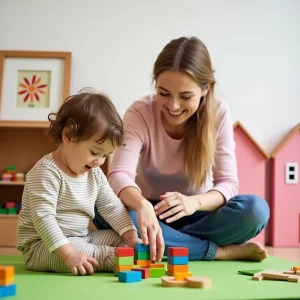
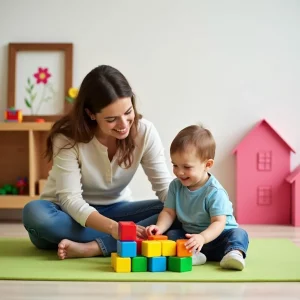
Implementing Montessori methods doesn’t only take place within the confines of a classroom; it can also be embedded in daily family routines. For example, during meal preparation, parents can involve their children by letting them wash vegetables, set the table, or mix ingredients—activities that cultivate fine motor skills and encourage responsibility. Additionally, in a Montessori school, teachers guide students in collaborative projects where they can learn from one another, share knowledge, and develop social skills.
Supporting Independence in Children
One powerful aspect of the Montessori approach is its emphasis on fostering independence from an early age. Parents can initiate this by establishing routines that allow children to contribute to family chores, like folding laundry or self-serving from a fruit bowl. This sense of autonomy boosts their confidence and lays the foundation for positive habits that last into adulthood. The principle extends to early childhood education as children learn to manage their workloads in a Montessori classroom, further instilling resilience and self-management skills. Engage with our comprehensive guide to understand more strategies that support these principles.
Challenges and Misconceptions about the Montessori Method
Despite its many benefits, misconceptions abound regarding the Montessori approach. One common misunderstanding is that Montessori education is unstructured or lacks discipline. In reality, Montessori classrooms offer freedom within clear boundaries, enabling children to thrive in a carefully prepared environment. Guides and teachers work closely with students to establish expectations and promote self-regulation. This dynamic nurtures the child’s inherent desire to learn while encouraging them to make responsible choices.
Montessori for Different Learning Styles
One of the beauties of the Montessori method is its adaptability to accommodate various learning styles. For instance, kinesthetic learners thrive in environments where they can manipulate materials, while visual learners benefit from the visually rich, hands-on experiences provided by Montessori materials. Furthermore, auditory learners find that the opportunities for discussion and social learning enhance their understanding. By recognizing and responding to a child’s learning preferences, parents and educators ensure a more personalized educational experience. Our website also offers insights into Montessori pedagogy that can aid in this pursuit.
Finding Montessori Resources and Support
Exploring the Montessori philosophy can be overwhelming at first, but resources abound. Parents and educators can turn to numerous online platforms, literature, and communities dedicated to Montessori education. Engaging with these resources allows them to share experiences, inspirations, and practical advice. One increasingly popular resource is our AI assistant, MarÍA, who is available on the Montessori Maria website to answer questions and provide tailored recommendations for your educational journey.
Conclusion
Understanding María Montessori’s profound impact on education is not just about recognizing her historical contributions; it’s also about applying her principles in today’s learning environments. As families increasingly search for “Montessori near me,” they are taking the first step toward enhancing their children’s educational experiences. Whether you are a parent preparing your home for your child’s independence or an educator embracing Montessori methods in your classroom, resources and communities stand ready to support you on this transformative journey. Visit our website to learn more through our blog, such as The Comprehensive Guide to Montessori Education or explore our findings in Discovering the Montessori Method. We welcome you to join us as we navigate the inspiring world of María Montessori and her lasting legacy in education.