Introduction
In today’s fast-paced world, many families find themselves searching for “Montessori near me” or “Montessori school near me” as they seek educational guidance for their children. The Montessori method, developed by Dr. María Montessori, has become increasingly popular among parents and educators who want to provide a nurturing and effective learning environment for their children. Whether you are looking for resources to implement Montessori principles at home or searching for a school that follows this approach, our website offers a Montessori locator and helpful guides to assist you in your journey. You can start exploring locally with our handy tool to find Montessori near me and our specific school options, such as the Montessori school in Terni, Umbria.
Who Was María Montessori?
Dr. María Montessori was an Italian physician and educator, born in 1870. She was one of the first women to graduate from medical school in Italy. Her early work with children with disabilities led her to develop a unique educational approach that emphasized hands-on learning and respect for a child’s natural psychological, physical, and social development. The principles she established over a hundred years ago laid the foundation for what we now refer to as the Método Montessori.
Montessori’s revolutionary ideas emphasized the importance of creating an environment where children could express themselves freely, choose their activities in line with their interests, and learn at their own pace. Her legacy continues today, inspiring educators and parents worldwide to adopt her principles, which focus on fostering independence, self-motivation, and respect for others. You can explore more about her influence in the educational landscape in our section on María Montessori y su legado.
Practical Applications of Montessori Principles
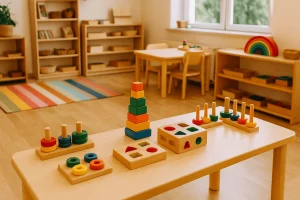
Implementing Montessori principles in everyday life can be incredibly rewarding. For example, consider a teacher who is looking to reorganize their classroom based on Montessori philosophy. Instead of traditional rows of desks, the teacher creates learning stations scattered throughout the room. These stations feature materials that promote various skills, such as puzzles for cognitive development, art supplies for creativity, and books for literacy. This setup encourages students to engage in self-directed learning, choose their activities, and collaborate with peers—core tenets of the pedagogía Montessori.
Creating Montessori Spaces at Home
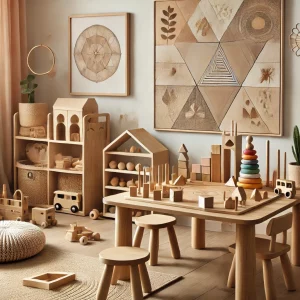
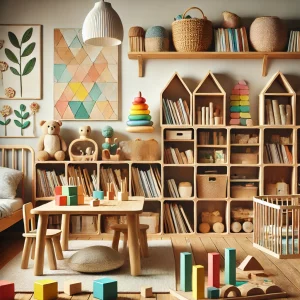
Parents can also create Montessori-friendly environments at home, which promote independence and creativity. For example, a parent might prepare their child’s room with accessible shelving that allows the child to choose their toys freely. Instead of placing books high on a shelf, the parent can arrange them at the child’s eye level to encourage reading. By offering children choices and fostering an environment that promotes exploration, parents are essentially inviting children to take charge of their learning experiences.
The Role of the Educator
Educators who embrace the Montessori philosophy serve as guides rather than traditional instructors. They observe students carefully, identifying their interests and guiding them toward resources that facilitate learning. For instance, a Montessori teacher may notice a child’s fascination with insects and subsequently provide related materials—books, models, and even hands-on activities such as garden projects—that allow the child to explore this interest deeply. This type of individualized attention and fostered curiosity is at the heart of the Montessori experience.
Case Study: A Real-Life Montessori Classroom
Consider a primary classroom that recently transitioned to a Montessori approach. The teacher took the time to carefully select materials for different educational areas—practical life, sensorial, language, mathematics, and cultural studies. Classroom walls are adorned with children’s artwork and educational materials indexed neatly, making them easy to access. This reorganization has drastically improved the children’s engagement. They move fluidly around the room, collaborating on projects, helping each other, and staying focused on tasks of interest. The results speak for themselves: improved self-regulation, a deeper love of learning, and remarkable friendships forming among students.
Finding the Right Montessori Educational Environment
The search for the right educational setting is crucial for parents seeking the Montessori approach. Many families today turn to the internet, commonly searching for “Montessori school near me.” Our website provides a comprehensive Montessori locator tool that allows families to explore diverse options in their area. This is an excellent starting point for finding a school that aligns with the Montessori philosophy and meets your child’s needs.
Additionally, it’s important to review various resources that detail the Montessori approach further, including guides for parents and educators. Dive into our articles such as Understanding Montessori: A Comprehensive Guide for Parents and Understanding Montessori Pedagogy for a deeper insight into creating learning spaces that resonate with cooperation and self-directed education.
The Importance of Family Involvement
Involving families in education is another essential element of the Montessori approach. Parents are encouraged to contribute to the learning process by setting educational goals and creating a supportive home environment that reflects Montessori ideals. Whether it’s by hosting family workshops or engaging in community activities centered around learning, parental involvement strengthens the child’s educational experience. Our AI assistant, MarÍA, available on the Montessori Maria website, offers additional tips for parents looking to deepen their understanding of Montessori’s approach.
Conclusion
The Montessori approach represents a transformative shift in how we view education, focusing on the individuality of each child and fostering an environment that nurtures their innate curiosity and desire to learn. By understanding the fundamental principles behind María Montessori’s philosophies and integrating them into both educational settings and home life, parents and educators can play a significant role in shaping a child’s future. Explore our resources to continue your journey toward a Montessori-inspired education for your child and find a great fit by searching for Montessori near me to discover local opportunities.
Additionally, if you’re keen to expand your knowledge, our article series includes valuable insights on topics pertinent to both educators and parents. Don’t miss out on reading Understanding the Montessori Method and Understanding María Montessori for even more enriching content.
As you embark on this transformative educational journey, remember that the Montessori approach emphasizes respect, independence, and a love for learning—principles that can profoundly impact a child’s life.