Introduction
In a world where parental and educational guidance plays a crucial role in a child’s development, many families today find themselves searching for “Montessori near me” or “Montessori school near me.” They seek environments that support independence, exploration, and learning tailored to each child’s unique needs. Our website provides a Montessori locator alongside helpful guides that can assist families in finding the right educational setting.
A Brief Biography of María Montessori
María Montessori was an Italian physician and educator born on August 31, 1870, in Chiaravalle, Italy. She was the first woman in Italy to graduate as a physician. Montessori dedicated her life to understanding child development and fostering an educational approach that respects the rights and capacities of children. In 1907, she opened the first Casa dei Bambini (Children’s House) in Rome, which laid the foundation for the Montessori legacy we know today. Her method emphasized hands-on learning, self-directed activity, and a prepared environment, making it a revolutionary approach to education.
The Montessori Method Explained
The Montessori method focuses on the importance of observing children and allowing them to learn at their own pace. It encourages autonomy, respect for a child’s natural psychological, physical, and social development, and promotes collaborative environment where children can engage with their peers. This method is not just confined to classrooms; it can also be applied at home and in everyday life. Parents and educators interested in Montessori principles are often keen to explore how they can implement these ideas to support children effectively.
Real-Life Examples of Montessori Principles in Action
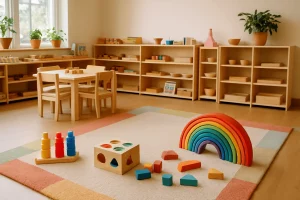
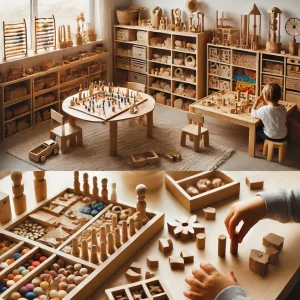
For example, let’s consider a kindergarten teacher named Sarah. After learning about the Montessori approach, she decided to reorganize her classroom to better support the learning principles she valued. Instead of traditional rows of desks, Sarah created learning stations around the room, each focused on different areas of development, such as practical life skills, sensory exploration, and math. By allowing children to choose where they wanted to work and what materials to use, Sarah noticed a significant increase in engagement and enthusiasm for learning.
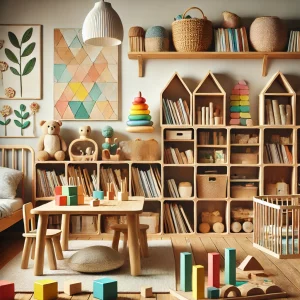
Similarly, many parents are eager to create a Montessori-inspired environment at home. One family chose to prepare their child’s room to support independence and exploration. They incorporated low shelves filled with accessible books, self-care tools, and toys that encourage imaginative play. The parents also made adjustments to the bathroom area by lowering a step stool and placing a mirror at the child’s height to foster self-reliance. These small yet meaningful changes empowered their child to engage with their surroundings actively and develop essential life skills.
Resources for Parents and Educators
For those seeking to further explore the pedagogía Montessori, our website is filled with valuable resources. You can find articles that guide both parents and educators in understanding the nuances of Montessori education, including practical applications and activities that can be incorporated at home. For instance, our recent article titled Understanding Montessori Education delves into its fundamental principles and how to recognize them in various settings.
Another great resource is An In-Depth Guide to Montessori for Parents, which offers actionable steps for implementing Montessori principles at home, thus creating a holistic learning environment for children at all stages of development.
The Role of Technology in Montessori Learning
Modern education inevitably intertwines with technology. While traditional Montessori education emphasizes hands-on, experiential learning, educators can integrate technology thoughtfully to enhance the learning experience. For instance, using educational apps that promote problem-solving and critical thinking can complement a Montessori approach when they align with its core principles. Parents who are interested in finding a balance between digital learning and Montessori values can explore resources like our post on Understanding the Montessori Method, providing insights into effective technology use.
Tools and Supports for Navigating Montessori Education
Navigating Montessori education can seem overwhelming, but it doesn’t have to be. Our Montessori locator is designed to assist families in finding schools and resources that align with their educational philosophy. By connecting with local Montessori institutions, parents and educators alike can gain insights into best practices and find communities that reflect their values. Furthermore, if you have questions or need personalized guidance, our AI assistant, MarÍA, is ready to assist you in your educational journey on the Montessori Maria website.
Conclusion
The Montessori approach offers a transformative perspective on education, emphasizing respect, independence, and responsibility in children’s learning. By understanding María Montessori’s philosophy, parents and educators can create enriched environments that cater to the diverse needs of children. Whether you are reorganizing a classroom or setting up a home learning environment, the principles of Montessori can guide you toward nurturing a love of learning that lasts a lifetime. As you embark on this journey, don’t forget to utilize our resources and guides to make the most of the Montessori experience. Happy learning!