A Global Search for Montessori Education
In today’s fast-paced world, many parents are searching for more enriching educational experiences for their children. With the growing interest in alternative education methods, searches for phrases like “Montessori near me” and “Montessori school near me” have surged globally. This reflects a desire for educational settings that foster independence, creativity, and holistic development. Our website offers a comprehensive Montessori locator tool, allowing parents and educators to find nearby Montessori schools and resources, ensuring they can continue their journey into this remarkable educational paradigm.
The Home Environment: Creating a Montessori-Inspired Space
A Montessori education begins at home, and creating a learning-friendly environment is crucial. Parents can foster independence by adapting their home spaces to suit children’s needs. For instance, a family might redesign their kitchen with child-sized shelves and utensils. By doing so, children can safely participate in meal preparation, which enhances their self-confidence and responsibility. This setup not only makes them feel included but cultivates essential life skills.
Practical Example: The Montessori-Inspired Kitchen
Consider a family where the mother has created a dedicated “Montessori-inspired kitchen space.” In this kitchen, lower shelves are stocked with child-friendly dishes, utensils, and simple recipes. This setup empowers the child to prepare their own snacks, encouraging autonomy while developing motor skills. In addition, sorting utensils and ingredients helps with cognitive growth. To delve deeper into creating a nurturing home environment, refer to our guide for parents.
Fostering Independence at Home
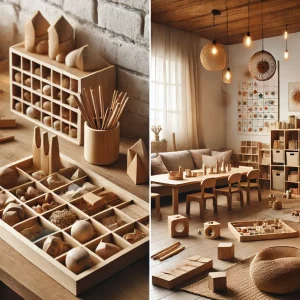
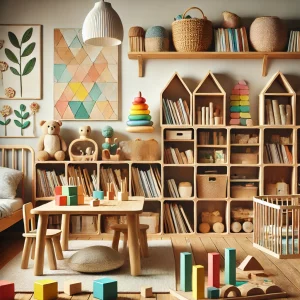
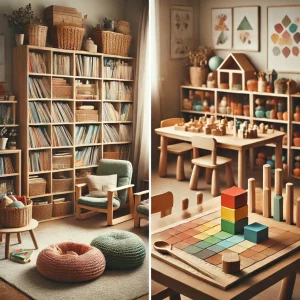
In a true Montessori spirit, every corner of the home can encourage learning and exploration. A living room can be transformed by incorporating low shelves filled with books and hands-on learning materials. This allows children to decide what interests them and engage at their own pace. By placing these resources within easy reach, children take ownership of their learning process, a vital aspect of the Montessori approach outlined in the introduction to Montessori pedagogy.
The School Environment: Enriching Learning Experiences
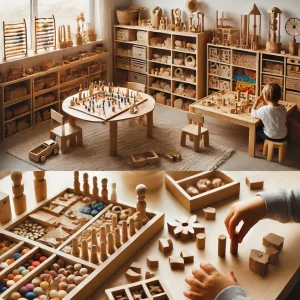
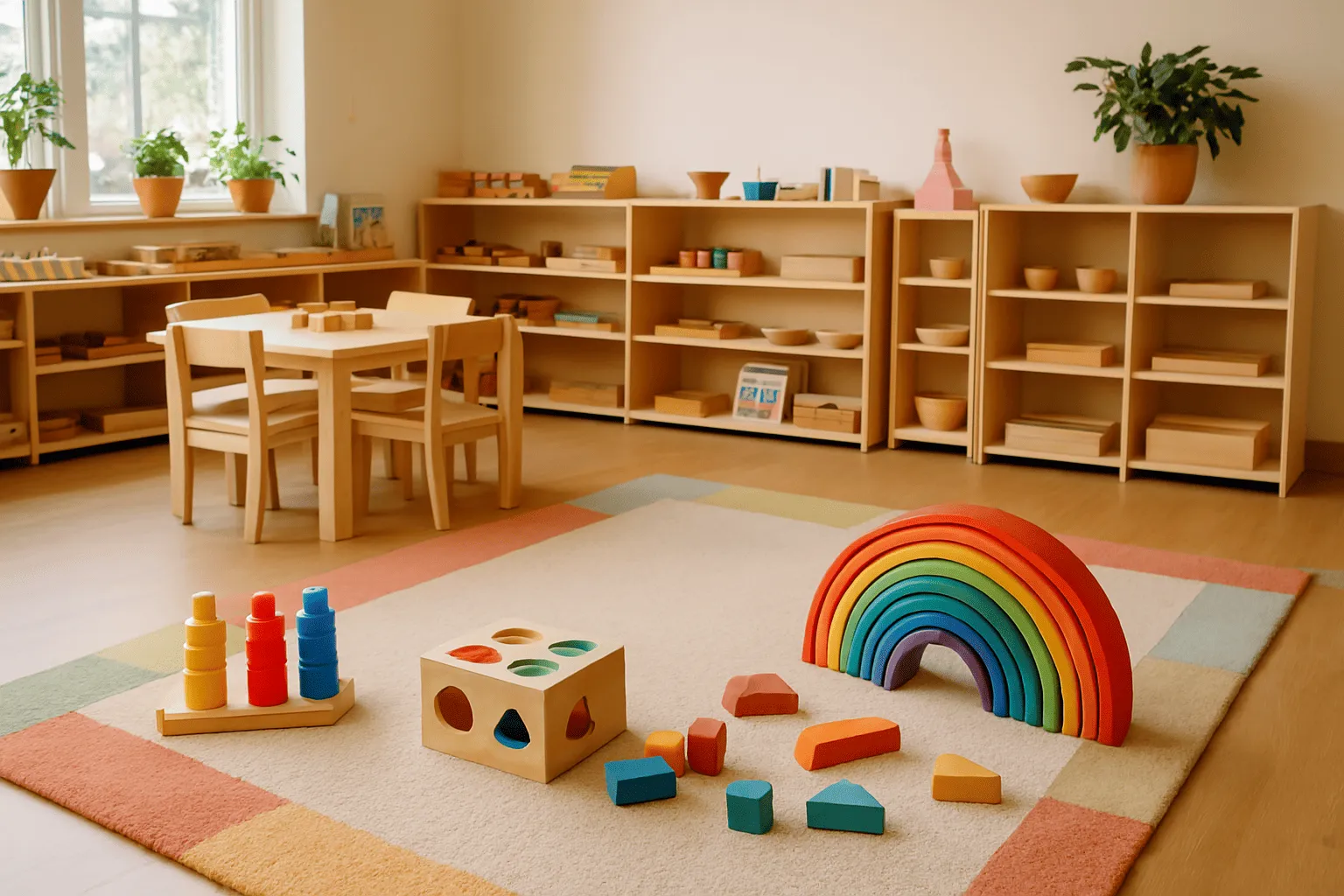
Once children enter a Montessori school, the environment continues to foster their independence and enthusiasm for learning. Teachers serve as guides—facilitating exploration rather than directing it. This approach encourages self-directed learning, allowing students to follow their interests. For example, a teacher might adapt classroom shelves to ensure that learning materials are accessible and inviting, promoting a sense of agency among students.
Practical Example: Shelves for Independence
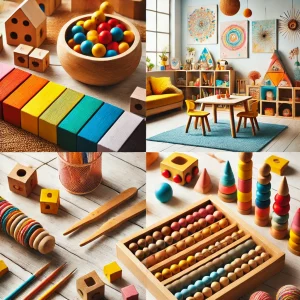
Imagine a classroom where a teacher has carefully organized shelves with a variety of Montessori materials, from geometric solids to practical life activities. This careful organization empowers students to select materials based on their interests. For instance, one child might be intrigued by a puzzle while another explores the intricacies of a sensory bin. Such choices build self-regulation and critical thinking skills as described in our comprehensive guide to Montessori education.
Emotional Development within the Classroom
Montessori education recognizes that emotional development is just as essential as academic achievement. Classrooms emphasize peace, respect, and collaboration. A teacher can facilitate conflict resolution exercises, teaching children to express their feelings and come to mutual agreements. For instance, a lesson might focus on how to communicate needs effectively, illustrating the importance of emotional intelligence in lifelong learning.
Emotional Development: A Key Component in Montessori Philosophy
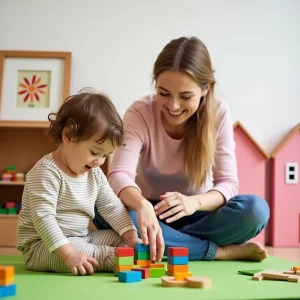
As children navigate their emotional landscapes, Montessori environments provide ample opportunities for growth. Facilitating peer discussions and collaborative projects helps children understand empathy and social cooperation. A child who once struggled with sharing might bloom in such settings, gradually learning to regulate their emotions in a supportive community.
Practical Example: Peer Collaboration
For example, during group work, children can share resources and negotiate on project ideas. In one instance, a student named Emma learned to express her frustration over sharing supplies. With guidance, she mastered the art of assertiveness, helping her articulate her feelings to peers. This strategy promotes emotional intelligence and skillful communication, vital in every child’s development.
Conclusion: Embrace Montessori Education for a Brighter Future
In conclusion, whether transforming your home environment or engaging with a supportive Montessori school community, embracing the principles of educación Montessori cultivates a robust foundation for a child’s growth. By integrating practical strategies at home and in school, parents and educators can nurture autonomy, social responsibility, and emotional resilience. The Montessori Maria platform and its AI assistant MarÍA serve as invaluable resources for families and teachers looking to implement these transformative practices effectively. The journey of Montessori education is indeed one of empowerment—of children, families, and the community as a whole.
‘