Exploring Montessori: A Journey Begins
Many families looking for the best education options for their children kickstart their journey by searching for “Montessori near me” or “Montessori school near me.” This is a natural step towards understanding a unique approach to education that has gained popularity worldwide. If you’re on this path, you’re in the right place. Our website provides a global Montessori locator at Montessori near me, offering families the opportunity to find Montessori schools and resources nearby. For specific examples, you can check out our local guide for Oberursel, Germany at Montessori in Oberursel.
Understanding Montessori Pedagogy
Montessori pedagogy, or “pedagogia Montessori” as it’s known in Spanish, revolves around a few key principles that can transform the learning experience for children. These principles include the prepared environment, autonomy, observation, and sensory learning. Each principle plays a critical role in nurturing the child’s natural desire to learn.
The Prepared Environment
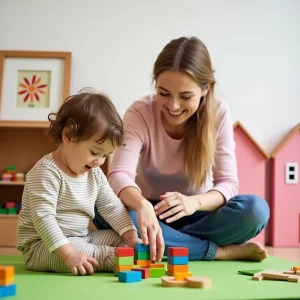
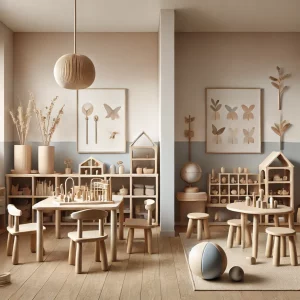
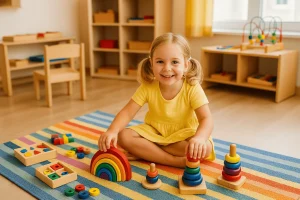
The prepared environment is one of the cornerstones of Montessori pedagogy. This carefully arranged environment allows children to explore freely and choose their own activities. For instance, in a traditional classroom being adapted to align with Montessori principles, teachers might organize learning materials on low shelves so children can access them independently. This accessibility empowers children to take charge of their learning experiences.
Autonomy
Another principle of Montessori education is autonomy. Children thrive when they are treated as capable individuals who can make choices about their learning. A practical example can be seen when a student teacher is planning their first Montessori environment. To foster autonomy, they might allow children to choose their work periods and select the tasks they wish to engage in during the day. This respect for individuality encourages a sense of responsibility and ownership over their learning.
Observation
Observation is a vital practice in Montessori pedagogy, where teachers observe children quietly to understand their interests and developmental stages. Using this principle, a teacher can adapt the classroom to meet the specific needs of their students. For habitually distracted children, a teacher might create a calm corner filled with soft furnishings and sensory activities to help them refocus.
Sensory Learning
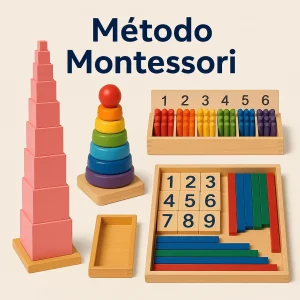
Sensory learning is at the heart of Montessori education. This principle emphasizes the importance of engaging all five senses in the learning process. For instance, in a Montessori classroom, a teacher may introduce materials that stimulate sensory exploration, such as sandpaper letters to teach the alphabet. Children can feel the textures and shapes while simultaneously learning the sounds associated with each letter, making the learning experience more tangible and memorable.
Implementing Montessori Pedagogy in Various Settings
Converting a traditional teaching methodology into a Montessori-based approach may seem daunting, but the transformation can be very rewarding. Whether you are a parent considering this approach at home or an educator embarking on this journey, it’s essential to understand how to implement these principles effectively.
Adapting a Traditional Classroom
Imagine a traditional classroom filled with rows of desks facing the teacher. To adapt this setup, teachers can rearrange the furniture to create distinct learning areas: a reading nook, a creative arts corner, and a quiet area for reflection. Each area should be equipped with appropriate materials that invite exploration and cater to different learning styles. Teachers might also incorporate multi-age groupings, allowing older students to mentor younger ones, thereby fostering a community of learners supporting one another.
Planning a Montessori Environment for Student Teachers
For student teachers, planning their first Montessori environment can be an enlightening experience. Understanding how to establish a prepared environment tailored to children’s needs is crucial. They’ll learn to select materials that cater to different age groups, interests, and developmental stages. The guía completa sobre la pedagogía Montessori can serve as a comprehensive roadmap as they embark on this journey, offering insights and practical examples.
The Role of Teachers in Montessori Education
In Montessori education, the role of the teacher shifts from a traditional lecturer to a facilitator. Montessori educators are tasked with guiding children rather than directing them. This requires a deep understanding of when to intervene and when to step back, allowing children to engage with their environment. Moreover, teachers must undergo proper training to understand the nuances of the Montessori method fully. An excellent starting point for educators is our introducción a la pedagogía Montessori, which provides foundational knowledge about the educator’s role.
Resources for Further Exploration
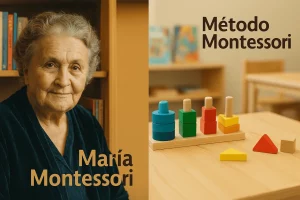
Montessori pedagogy is expansive and continually evolving. Educators, parents, and anyone interested in applying this method can greatly benefit from a wealth of resources available online. The Understanding Montessori Method article provides clear guidance on the principles and applications of Montessori education. Similarly, the Maria Montessori article offers an insightful overview of the woman behind the methodology and her teaching philosophy.
Joining the Montessori Community
Engaging in the Montessori community can provide additional support and camaraderie. Parents and educators are encouraged to connect with local Montessori groups and forums. These connections can help share experiences and best practices. You can explore connections through our Discovering Montessori article, which shares tips for getting involved in the Montessori community.
Conclusion: The Future of Education
In summary, Montessori pedagogy offers a transformative approach to education that prioritizes the individual child. By understanding and applying these principles—prepared environment, autonomy, observation, and sensory learning—parents, educators, and student teachers can radically change the educational landscape for future generations. The journey begins with finding the right resources, such as those provided on the Montessori Maria website, and embracing the values upheld by María Montessori.
Call to Action
If you’re ready to start your Montessori journey, explore our global locator for Montessori schools and resources, connect with local communities, and immerse yourself in valuable literature to deepen your understanding of this innovative educational approach.
For more information on Montessori pedagogy and resources, consider reading our latest articles: Understanding Montessori Pedagogy and Montessori Education.