Introduction: Finding Montessori Education
Parents and educators across the globe are increasingly interested in adopting the Montessori method for their children. Many find themselves searching for phrases like “Montessori near me” or “Montessori school near me” to identify local resources and support for this transformative education approach. On our website, we provide a helpful Montessori locator tool, making the search easier for families and educators alike. This article will explore practical strategies to implement Montessori principles at home and in school, along with focusing on emotional development.
Creating a Montessori Home Environment
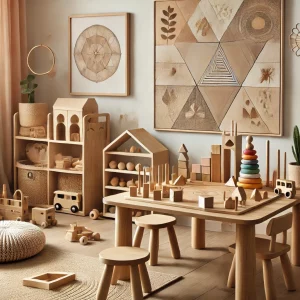
The first step towards a Montessori-inspired education often starts at home. Creating an environment that promotes independence, freedom of choice, and respect for a child’s natural development is essential. For instance, making changes to your home can greatly impact how your child interacts with their surroundings.
Adapting Spaces for Independence
One of the most effective ways to foster independence in young children is to organize their spaces thoughtfully. For example, if you create a Montessori-inspired kitchen space, you can include low shelves with child-sized utensils and containers. This setup allows children to help with meal preparation, understood as an essential part of their learning process. As a result, they develop vital life skills while enjoying the learning experience.
Montessori Principles in the Living Room
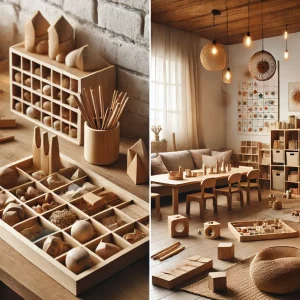
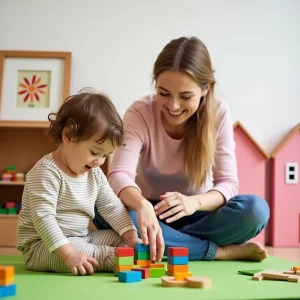
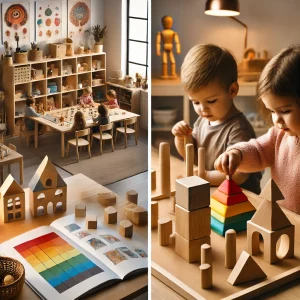
In the living room, consider integrating open-ended toys. Wooden blocks, puzzles, and art supplies promote creativity and allow children to use their imagination freely. This approach adheres to the Montessori philosophy that encourages self-directed learning. By offering a selection of choices in their play, children enhance their problem-solving skills and cognitive development.
Incorporating Montessori in the School Environment
The school environment plays a significant role in a child’s development. Montessori classrooms are designed to facilitate independence, social interactions, and focused learning through prepared environments.
Teacher’s Role in Fostering Independence
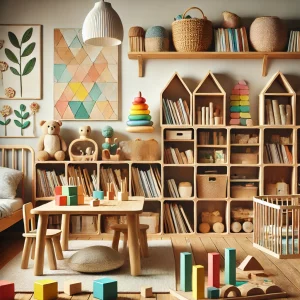
In a Montessori school, teachers play a crucial role in preparing the environment. For instance, a teacher might adapt classroom shelves to allow children easy access to materials. By using open shelving, children can choose their work freely, which fosters their ability to make decisions and promotes a sense of responsibility. The autonomy granted in this setting can lead to improved concentration and self-regulation.
Learning from Collaboration
Montessori classrooms typically integrate mixed-age groups, encouraging older students to mentor younger ones. This collaborative approach enhances social skills and instills a sense of community. A student might help a younger peer with a math problem, reinforcing their understanding while building confidence and leadership skills.
Emotional Development Through Montessori Education
Montessori education places a strong emphasis on emotional and social development, believing that a child learns best in a supportive environment attuned to their individual needs.
Promoting Self-Regulation
A prime example can be seen in the way a student benefits from self-regulation techniques taught in Montessori settings. For instance, when children feel overwhelmed, they might be guided to use a ‘calm corner’ — a quiet space with comforting items and activities that help them regroup emotionally. The training helps them learn how to manage their feelings and develop resilience through the ups and downs of daily life.
Creating an Inclusive Atmosphere
Understanding emotional cues is also a vital aspect of Montessori education. Teachers are trained to recognize when students may be struggling and to intervene appropriately. For example, if a child is hesitant to participate in group activities, the educator can gently encourage them while respecting their boundaries, promoting a healthy sense of self-esteem and community belonging.
Conclusion: A Transformational Path to Learning
Incorporating Montessori principles into both home and school environments creates a nurturing atmosphere conducive to independence and emotional growth. Parents and educators interested in this transformative approach should explore our guía completa sobre la pedagogía Montessori and delve into the introducción a la pedagogía Montessori for further understanding. For families still finding their way with Montessori, the Montessori Maria platform and its AI assistant MarÍA can offer tailored guidance and resources.
For more on understanding Montessori and how it can empower children through independence and self-discovery, check out our latest articles like A Comprehensive Guide to Montessori Education, and others listed on our website at Understanding Montessori Pedagogy for Parents and Educators.