Understanding the Search for Montessori Education
In today’s digital age, parents around the world often begin their journey into Montessori education by searching for phrases such as “Montessori near me” or “Montessori school near me“. This search indicates a growing interest in finding educational environments that align with Montessori principles, which emphasize independence, respect, and hands-on learning. Our website offers a helpful Montessori locator tool that assists parents in discovering nearby Montessori schools, ensuring that they can provide their children with the best possible start in education.
The Home Environment and Montessori Education
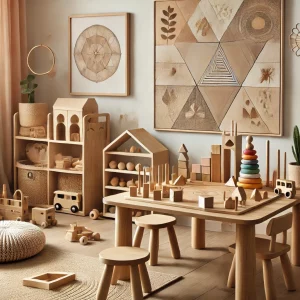
Creating a Montessori-inspired home environment is an essential aspect of supporting your child’s learning journey. The philosophy behind Montessori education is not confined to the classroom but extends into the home. One of the first steps parents can take is to declutter and organize their spaces so that children can access materials independently. For instance, consider setting up a dedicated area in your kitchen that allows children to participate in meal preparation. A simple step could be adjusting the shelves so that pots, pans, and utensils are within reach. This promotes independence and encourages children to take an active role in family activities.
Practical Examples of a Montessori Home
Imagine a family creating a Montessori-inspired kitchen space. They could install a low shelf filled with child-friendly cooking tools, such as measuring cups and small mixing bowls. Young children can explore cooking safely while developing fine motor skills, which can enhance their confidence and sense of accomplishment.
Moreover, adapting the living space to include materials that promote independence is vital. For example, providing a low mirror in the bathroom allows your child to engage in self-care routines. This small action encourages autonomy and fosters self-esteem, laying the foundation for lifelong skills.
The School Environment in Montessori Education
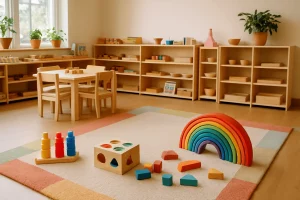
In the school environment, Montessori education encourages a child-centered approach that respects each student’s individual learning pace and interests. Educators play a crucial role in this setting as they act as guides rather than traditional instructors. A prime example of this is when a teacher adapts the classroom shelves to provide materials that are developmentally appropriate for each child. This customization allows students to select where their interest lies, thereby facilitating a personalized learning process.
Montessori Classrooms and Emotional Development
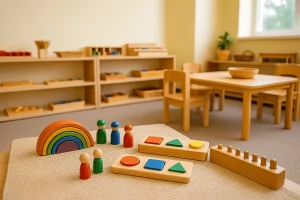
In a well-prepared Montessori classroom, students benefit significantly from opportunities for self-regulation. For instance, when students choose their own work, they practice decision-making and responsibility. This not only boosts their enthusiasm for learning but also cultivates their ability to manage time and priorities. Such skills are invaluable throughout life.
Another powerful element of the Montessori classroom is its focus on collaboration. Rather than competing for grades, students frequently work together on projects and problem-solving. This dynamic builds a sense of community and respect, crucial for promoting emotional intelligence. For many students, these interactions foster friendships and teach conflict resolution skills, which are essential in both school and later in life.
Emotional Development Through Montessori Education
Montessori education places a significant emphasis on nurturing emotional development. Parents and educators alike must understand that emotional well-being is as crucial as cognitive development. When children feel safe and respected in an environment that promotes autonomy, they are likely to thrive academically and socially.
Supporting Emotional Growth at Home and School
To support emotional growth, parents can create routines that encourage children to express their feelings. Incorporating regular family meetings where everyone shares their thoughts and experiences fosters open communication and strengthens family bonds. In the classroom, teachers can implement strategies like mindfulness exercises or reflective writing to help students become more aware of their emotions and develop coping strategies.
Moreover, it is essential to recognize the influence of role models in children’s lives. Parents can demonstrate emotional intelligence by showing how to navigate various feelings and situations. Similarly, educators can model respectful conflict resolution, providing students with tangible skills they can apply both in and out of the classroom.
Key Resources and Further Reading
To delve deeper into the principles and practices of Montessori education, we recommend exploring our introduction to Montessori pedagogy. It serves as a valuable resource for parents and educators to understand the foundation of this transformative educational approach. Additionally, you can access our complete guide on Montessori pedagogy to help navigate your Montessori journey.
For more articles that explore various aspects of Montessori education and related topics, consider checking out our recent blog posts:
- Understanding the Montessori Method: A Comprehensive Guide
- Discovering the Montessori Method
- Understanding Montessori: A Guide for Parents
- Understanding Montessori Pedagogy
- The Transformative Journey of Montessori Education
In summary, integrating Montessori principles at home and in school settings is essential for cultivating independence, emotional intelligence, and a lifelong love of learning in children. The Montessori Maria platform and its AI assistant MarÍA offer additional support and resources to guide you in implementing these principles effectively.