Introduction to Montessori Pedagogy
As families embark on their educational journey, many search for “Montessori near me” or “Montessori school near me.” This growing interest reflects a desire for teaching approaches that foster autonomy and holistic development. Our website offers a global Montessori locator, which can be accessed at Montessori near me, and highlights local examples like Montessori schools in Oberursel, Germany.
Understanding Montessori Principles
Montessori pedagogy is built upon fundamental principles that guide educators in creating effective learning environments. These principles include the prepared environment, autonomy, observation, and sensory learning, each contributing significantly to a child’s educational experience. To explore the depths of Montessori’s transformative approach, refer to our complete guide on Montessori pedagogy.
The Prepared Environment
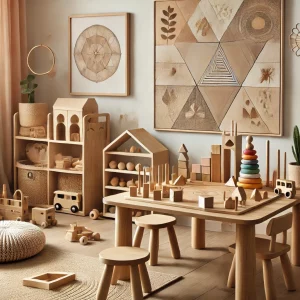
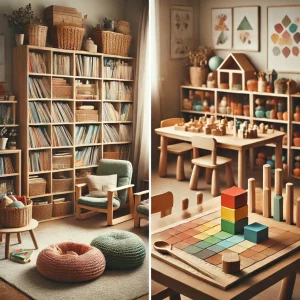
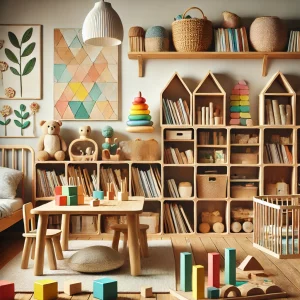
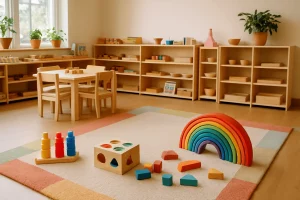
A prepared environment is carefully designed to meet the needs of children and facilitate learning. This involves creating spaces that are organized, aesthetically pleasing, and accessible. Imagine a traditional classroom transitioning into a Montessori environment; desks can be replaced with low tables and floor mats. Learning materials are arranged on shelves within reach, allowing children to explore freely. The key is to prepare areas that invite inquiry and exploration.
Autonomy
At the heart of Montessori education is the idea of autonomy. Children are encouraged to make choices about their learning, fostering independence and self-confidence. For instance, a student teacher planning their first Montessori classroom may implement a “choice time,” allowing children to select activities based on their interests. This process not only builds decision-making skills but also enhances motivation and engagement in learning.
Observation
Observation is crucial in Montessori pedagogy as it helps educators understand children’s needs, interests, and learning styles. By attentively observing learners, teachers can tailor their guidance and support. In a practical example, a teacher might notice a child gravitating towards a specific type of activity, such as threading beads. This observation allows the educator to provide more resources and challenges aligned with the child’s interests, optimizing their learning experience.
Sensory Learning
Montessori education emphasizes sensory learning, engaging children’s senses to develop cognitive and motor skills. For example, in a Montessori adapted art class, children could work with various materials such as clay, textured papers, and paint. This hands-on experience not only fosters creativity but also supports fine motor development. Through sensory-rich activities, students become active participants in their learning journey.
Bringing Montessori Principles to Life
Implementing Montessori principles requires thoughtful consideration and planning by educators and parents alike. Whether transforming a traditional classroom or setting up a home Montessori environment, it’s essential to recognize how these principles can guide practice. Resources available at Understanding the Montessori Method can assist both parents and educators in this journey.
Transitions for Traditional Classrooms
For those accustomed to conventional schooling, transitioning to a Montessori approach might feel overwhelming. Educators can start small by creating a corner of the classroom designed for independent work, equipped with accessible materials. Over time, they can expand this approach to encompass the entire classroom, gradually shifting their teaching methods to align with Montessori principles. In doing so, they will encourage critical thinking and self-directed learning among students.
For Student Teachers
As future educators plan their first Montessori classroom, it’s crucial to incorporate key principles from the onset. First, they can develop their observations skills by closely monitoring their peers’ engagement and motivation levels during activities. This information will be invaluable in adjusting lesson plans and ensuring each child is met at their point of interest and ability. Resources such as the revolutionary work of María Montessori provide valuable insights into the implementation of these principles.
Benefits of Montessori Pedagogy for Families and Communities
Families choosing Montessori education often observe various benefits for their children, including improved social skills, academic performance, and emotional intelligence. These outcomes not only enrich a child’s personal development but also contribute positively to the community as children grow into capable, empathetic adults. Engaging with resources from the Montessori Maria website equips parents with knowledge to enhance their child’s educational experience.
Real-Life Applications
To truly appreciate Montessori pedagogy, it’s essential to observe real-life applications and success stories. For example, a Montessori school that implemented flexible learning environments saw a marked increase in student engagement and collaboration. Children were able to select peers to work with, enhancing their social skills along with their academic learning.
Embracing the Montessori Lifestyle
Montessori principles extend beyond the classroom and into daily family life. Encouraging independence at home—such as allowing children to prepare simple meals or choose their clothes—reinforces the Montessori philosophy. Parents can also engage with materials and activities that promote sensory learning, through arts and crafts, nature exploration, and interactive games.
Conclusion
Exploring Montessori pedagogy opens doors to a unique approach to education, focusing on the child’s needs, autonomy, and holistic development. Whether you are a parent, educator, or a teacher-training student, understanding and implementing Montessori principles can greatly enhance children’s learning experiences. For more insights into Montessori education, please explore our additional resources like this guide and the growing array of articles available on the Montessori Maria website. Remember, the journey towards a Montessori education starts with inquiry—so don’t hesitate to search Montessori near me for schools and resources in your area.