The Beginning of the Montessori Journey
Many families initiate their exploration of educational options by searching for terms like “Montessori near me” or “Montessori school near me.” These searches reflect not only a desire for quality education but also a need for environments that foster independence, curiosity, and a lifelong love of learning. For families eager to find Montessori programs nearby, we offer a global Montessori locator on our website, Montessori Maria, where you can access a variety of local examples, such as Montessori schools in Oberursel, Germany.
Understanding Montessori Pedagogy
Montessori pedagogy, developed by Dr. Maria Montessori, is based on several key principles that emphasize respect for the child and the natural learning process. According to the complete guide to Montessori pedagogy, these principles include a prepared environment, autonomy, observation, and sensory learning. Let’s delve into each principle with practical examples to illustrate how they can transform traditional educational settings.
Prepared Environment
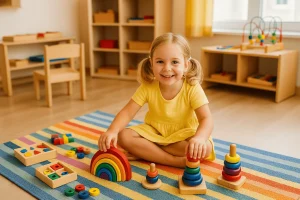
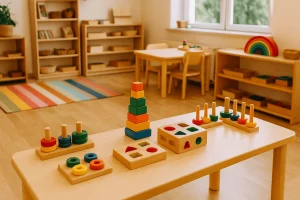
A prepared environment is essential in Montessori education. It is a space that is thoughtfully organized to encourage exploration and learning at the child’s own pace. Imagine a traditional classroom filled with rows of desks; now envision that same classroom adapted with various learning stations, each dedicated to different subjects.
Practical Example
For instance, a teacher might create a reading nook with comfortable seating, a math station with manipulatives, and an art corner equipped with diverse materials. This setup encourages students to choose where they want to focus their learning, promoting autonomy and curiosity.
Autonomy
Autonomy is a core tenet of Montessori pedagogy. It fosters independence in students, empowering them to make choices about their learning processes. When students have the freedom to decide what they want to learn and how they want to learn it, they become active participants in their education.
Practical Example
Consider a student teacher planning their first Montessori classroom. They could incorporate flexible scheduling that allows students to choose activities based on their interests, such as a science experiment, a creative writing project, or collaborative group work. This autonomy not only fosters confidence but also nurtures a sense of responsibility.
Observation
Observation is another critical aspect of Montessori education. Teachers are trained to quietly observe students rather than interrupt their learning. This allows educators to understand each child’s unique interests and needs, making it possible to tailor lessons that resonate with them.
Practical Example
In a Montessori classroom, a teacher might spend time observing how students interact with materials. If they notice a child gravitating towards geometry, the teacher could then introduce advanced geometric concepts, thereby aligning the curriculum with the student’s interests.
Sensory Learning
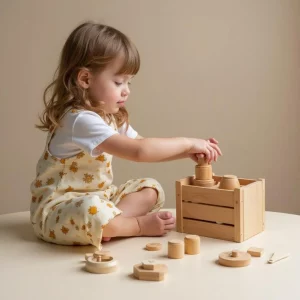
Sensory learning is integral in Montessori methodology. Children learn best through their senses, and Montessori classrooms are designed with tactile materials that engage students in hands-on learning.
Practical Example
For example, a traditional math lesson might involve rote memorization of multiplication tables. In contrast, a Montessori approach would use materials like bead representations to visually and physically demonstrate multiplication. This multi-sensory approach allows students to grasp abstract concepts more effectively.
The Role of Educators in Montessori Pedagogy
Educators in Montessori environments also take on a unique role. They act as guides rather than traditional instructors, facilitating a learning space where students feel safe to explore and express themselves. This role requires a distinct set of skills and an understanding of Montessori principles.
The Importance of Continuous Learning
If you are a teacher-training student or an educator interested in incorporating Montessori methods into your practice, it’s worthwhile to explore resources and additional training opportunities. The Montessori approach encourages continual professional growth and reflection, crucial for creating effective learning environments.
Inspirational Resources
To further deepen your understanding of Montessori pedagogy, check out our offers on the Montessori Maria website. We provide a wealth of resources, including articles like Understanding the Montessori Method and Understanding Maria Montessori.
Creating a Montessori Experience at Home
Parents can also create Montessori-inspired experiences at home. Use everyday activities to foster a child’s independence, such as involving them in household chores or decision-making processes like meal planning. These simple steps can instill a sense of responsibility and autonomy within your child.
Everyday Montessori Activities
For instance, design a shopping list together where your child selects items from the pantry they would like to prepare for dinner. This cultivates decision-making skills while engaging them in meaningful tasks.
Supporting Montessori Values
Moreover, to support Montessori values, incorporate sensory experiences in daily life. You might organize art materials in an accessible way or create designated spaces for learning and play, reinforcing the concept of a prepared environment.
Conclusion: The Power of Montessori Pedagogy
In conclusion, Montessori pedagogy offers a transformative approach to education by focusing on the child’s natural development and independence. Whether you are a parent searching for “Montessori near me,” a teacher in training, or an experienced educator adapting your classroom, embracing these principles can make a profound difference.
For further insights and extensive resources, please visit the Montessori Maria website and explore our various articles, such as Montessori Pedagogy Guide. We invite you to join in this journey, embracing the wonders of Montessori education!